Saroj Gourkanti, Gayathri Ramakrishnan, Jacqueline Cheung, Taylor J. Schoen, Yazmin Munoz, Rosa M. Chavez, Jan Dohnálek, Katie Martin, Matthew Lovett-Barron, Thomas Whisenant, Kvido Strisovsky, Sonya E. Neal
Gourkanti et al. show that the rhomboid protease Rhbdl2 restrains macrophage recruitment and wound repair in zebrafish. Loss of Rhbdl2 enhances macrophage accumulation and migration speed at wounds via elevated Rac2, accelerating tissue regeneration, positioning Rhbdl2 as a potential brake on macrophage-driven repair with relevance to inflammatory and fibrotic disease.
Jessica Sheu-Gruttadauria, Xiaowei Yan, Nico Stuurman, Riley O. Ogrean, Sabrina Lin, Stephen N. Floor, Ronald D. Vale
Sheu-Gruttadauria et al. show that the material properties of the nucleolus are shaped by the assembly state of ribosomal precursors, which tune nucleolar dynamics and morphology through their interactions with the nucleolar scaffolding protein NPM1.
Using computational protein–protein interaction screens, Vignogna and Fromme identify Avl9 as a GTPase-activating protein for Arf-family GTPases. They demonstrate that Avl9 and related DENN-domain proteins constitute a previously unrecognized group of GAPs, revealing unexpected functional diversity within this protein family.
Wenchao Qian, Hui Chen, Hongju Lee, Matthew C. Good
ZGA is a watershed event in early development essential for subsequent cell fate determination and morphogenesis. In this study, Qian et al. determined that proper spatial patterning of ZGA is required for embryogenesis and the existence of a surveillance system for embryo quality control exquisitely tuned to spatiotemporal ordering of genome activation.
Jayne Aiken, Carris Borland, Nicolas Marotta, Benjamin L. Prosser, Erika L. F. Holzbaur
Using iPSC-derived human neurons gene-edited to express pathogenic KIF1A variants, Aiken et al. demonstrate that distinct alterations in KIF1A motor function disrupt synaptic development through divergent cellular mechanisms, providing new insight into the pathogenesis of KIF1A-associated neurological disorder.
Chi et al. demonstrate that 12-HHT-BLT2 signaling protects alveolar epithelial cells from pore-forming toxin-induced damage by promoting membrane repair. BLT2 facilitates extracellular vesicle shedding and actin remodeling, revealing a host defense mechanism that may be exploited therapeutically against bacterial infections.
Shirish Mishra, Ali Khan, Vaisaly R. Nath, Tejaswini Manoj, Thejaswini Balavali Gangadhar, Preethi Alex, Amruta Naik, Ujjaini Dasgupta, Padinjat Raghu
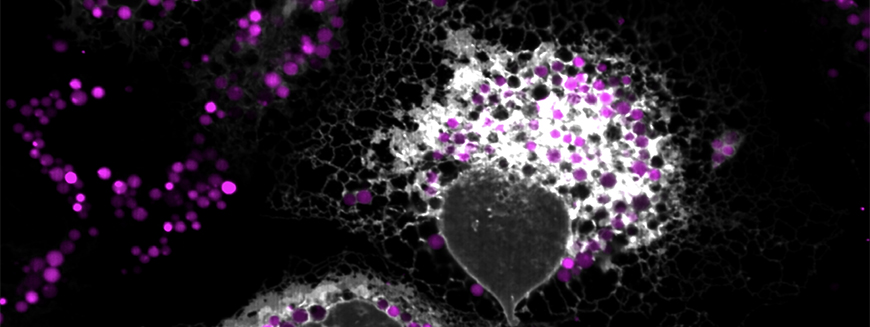
CERT protein regulates the levels of ceramide and PE-Cer in photoreceptor neurons. CERT function is required to maintain the structure of, and protein localization at, ER-PM MCS in Drosophila. In turn, intact MCS in these cells are required to maintain phosphoinositide levels at the plasma membrane during G-protein–coupled PLC signalling in neurons.
Harriet P. Lo, Stéphane Vassilopoulos, Nicholas Ariotti, Thomas E. Hall, Robert G. Parton
Lo et al. provide a perspective on the role of skeletal muscle caveolae, focusing on the cellular processes impaired by caveola dysfunction in muscle disease. They propose a new classification for disease-associated CAV3 variants.
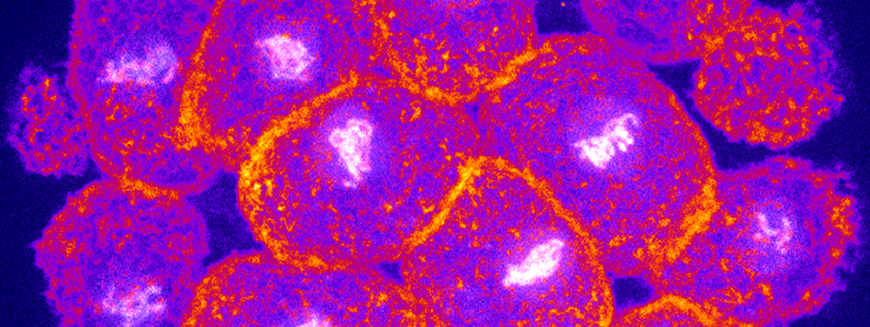
Geert Kops previews work from Tran and colleagues, which uses super resolution live imaging to show that condensin is required for local structural organization and microtubule attachment of kinetochores.
The Golgi responds to the mechanical force of cell spreading by increasing its secretory output, sustaining spreading through a self-reinforcing feedback loop.