


Newest Articles

Methods and Approaches
Yaw Akosah, Ioannis Azoidis, Dane D. Jensen, Paolo Bernardi, Evgeny V. Pavlov
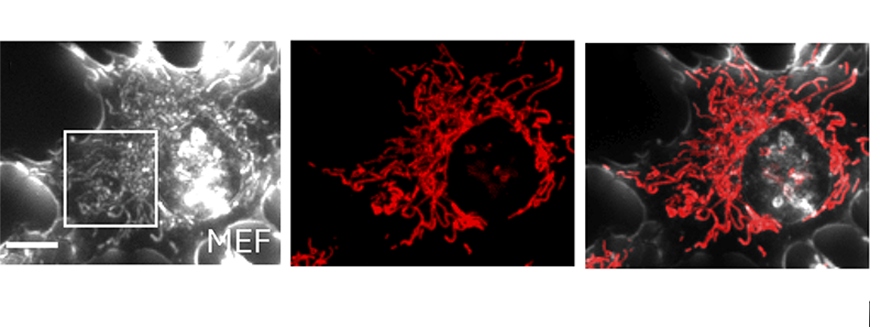
Along with membrane potential and respiration, mitochondrial matrix volume is a critical parameter that is linked to physiological and pathological states. Here, we present an assay for detection of the dynamic changes in mitochondrial matrix volume in living cells. This approach will become very useful for many researchers working in the field of cell biology.
Article
Nicolas Colmano, Daniel Self, Hang N. Nielsen, Rikke Holm, Chai C. Gopalasingam, Ryota Fujimura, Kazuhiro Abe, Bente Vilsen, Sho T. Yano, Pablo Artigas
Na/K pump α1 subunit variants cause several disease phenotypes. Here, we show that all variants known to cause hypomagnesemia and seizures carry aberrant leak currents and have both reduced function and reduced plasmalemma expression. The cryo-EM structure of variant W931R suggests that the leaking ions may permeate through the protein/lipid interface.
Communication | Voltage-Gated Na Channels 2026
Maxime Lammens, Jolien De Waele, Alain J. Labro, Filip Van Petegem, Frank Bosmans
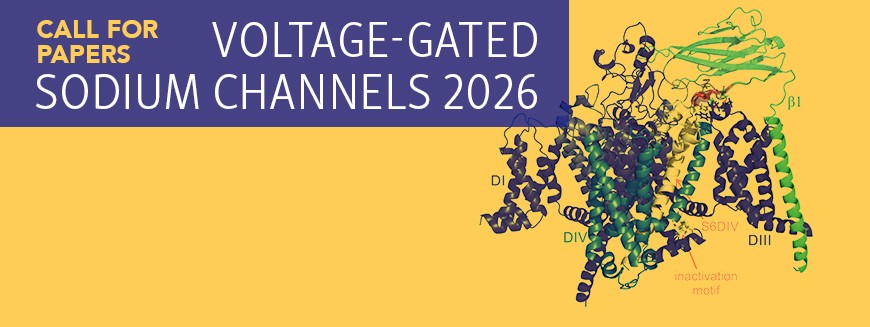
Lammens et al. show how an auxiliary β1 subunit tunes the activity of the human Na+ channel NaV1.6, a key regulator of electrical signaling in neurons. By identifying one extracellular residue required for this effect, the study links channel structure to mechanisms that shape neuronal excitability.
Communication | Ion Channels in Health and Disease
Jerome Clatot, Hubert Monnerie, Axel Panzer, Konrad Platzer, Ethan M. Goldberg
KCNC1 encodes the potassium channel subunit KV3.1 critical for high-frequency neuronal firing. Variants cause a spectrum of neurological disorders. While the recurrent p.Thr399Met variant shows complete loss of function alone, co-expression with wild-type subunits reveals a “dominant-positive” gain of function, highlighting complex potassium channel subunit interactions.
Article | Chloride Channels and Transporters
Héctor Gaitán-Peñas, Salomé Llabrés, Marina Pedrola, Marc González-Subías, Jordi Juárez-Jiménez, Michael Pusch, Rodolfo Lavilla, Raúl Estévez
Gaitán-Peñas et al. show that DCPIB inhibition of VRAC does not depend on a single residue but relies on adaptable binding modes combining electrostatic and hydrophobic interactions. Their findings reveal electrostatic complementarity as the main determinant of high-affinity block, providing a framework for rational design of improved VRAC inhibitors.
Article | Chloride Channels and Transporters
Samsudeen Ponissery Saidu, Alexander Kross, Michele Dibattista, Katharina Gaus, Johannes Reisert
Ponissery Saidu et al. address how the two olfactory transduction channels, the CNG channel and the Cl channel TMEM16B, are modulated by cholesterol. The channels are affected differentially: the Cl current amplitude and CNG channel ligand sensitivity are altered, which further depends on whether the channels are heterologously expressed or from native cells.
Article | Molecular evolution in the membrane
Sofia F. Nazarova, Vadim A. Alekhin, Vladislav V. Pavlov, Yury S. Semenov, Siarhei M. Bukhalovich, Fedor M. Tsybrov, Andrey O. Bogorodskiy, Diana F. Bagaeva, Olga V. Moiseeva, Anastasiia D. Vlasova, Anatolii E. Mikhailov, Yayu Wang, Andrey V. Rogachev, Semen V. Nesterov, Valentin I. Borshchevskiy, Chunlei Cang, Piotr D. Bregestovski, Valentin I. Gordeliy, Nikolay S. Ilyinsky
We present an interactive model of lysosomal ion homeostasis that remains robust during different biologically relevant stresses. Our simulations indicate that lysosomal Ca2+ depletion couples with organellar deacidification triggered by either increased proton leakage or vATPase inhibition, with potential involvement of TMEM165 inhibition.
Journal of General Physiology Cover Image for Volume 158, Issue 3
Current Issue
Volume 158,
Issue 3,
4 May 2026

Reviews & Opinions

Commentary | Ion Channels in Health and Disease
Richard D. Rainbow, Richard Barrett-Jolley
Rainbow and Barrett-Jolley discuss Scala et al., who combined genetic and pharmacological approaches to demonstrate that Kir6.2/SUR2-containing KATP potassium ion channels are the functionally relevant isoform that modulate contractile behavior of fast-twitch muscle during fatigue.
Research News
Ben Short
JGP study shows that, in the absence of full-length dysferlin, its C2A domain alone can support normal Ca2+ signaling and sarcolemma repair, suggesting that it could be used in gene replacement therapies.
Review
Shimon Schuldiner
Schuldiner recounts the decades-long journey of VMAT research, bridging foundational bioenergetics with recent high-resolution structural breakthroughs. This retrospective highlights the role of serendipity and “optimistic ignorance” in discovery, providing a comprehensive framework for understanding the essential mechanisms of neurotransmitter storage and their significant therapeutic potential.

Most Read

Advertisement

null

Special Collections

Highlighting recent articles addressing a wide variety of neuroscience research.

View Collections >