Skip to Main Content
Skip Nav Destination
1-20 of 129
Follow your search
Access your saved searches in your account

Would you like to receive an alert when new items match your search?
Close Modal
Sort by
Journal Articles
Images
Figure 1. Schematic of the Nrxn1 cKI mice and impaired survival following constitutive truncation of Nrxn1. (A) Diagram of WT, HA-tagged full-length, and HA-tagged truncated Nrxn1α, Nrxn1β, and Nrxn1γ. Top: WT Nrxn1 proteins. Middle: Nrxn1 proteins containing inserted tandem HA-epitopes and loxP sequences in cKI mice. Bottom: Truncated HA-tagged Nrxn1 proteins after Cre recombination (LNS1–6, LNS1-6 domains; E, EGF-like domain; C, cysteine-loop domain). (B) Amino acid sequences of the juxtamembranous region of WT Nrxn1 (top), Nrxn1 with the HA-epitope/loxP site knockin (middle), and Cre recombined truncated Nrxn1 (bottom; SS5 = alternative SS5). (C) Constitutive Nrxn1 truncation impairs postnatal survival as analyzed in newborn (P1) and 21-d old mouse (P21) offspring from heterozygous matings. Statistical significance was assessed by the chi-square test (**, P < 0.01). For further details, see Fig. S1.
Published: 01 July 2019
Figure 1. Schematic of the Nrxn1 cKI mice and impaired survival following constitutive truncation of Nrxn1. (A) Diagram of WT, HA-tagged full-length, and HA-tagged truncated Nrxn1α, Nrxn1β, and Nrxn1γ. Top: WT Nrxn1 proteins. Middle: Nrxn1 More about this image found in Schematic of the Nrxn1 cKI mice and impaired survival foll...
Images
Figure 2. Nrxn1 cKI mice express full-length HA-tagged Nrxn1 in the absence of Cre recombination, but truncated HA-tagged Nrxn1 after Cre recombination. (A) HA-tagged Nrxn1 exhibits a punctate surface-staining pattern in cultured hippocampal neurons. Representative images of HA-Nrxn1 cKI neurons expressing ΔCre (control, left) or Cre (to conditionally truncate HA-Nrxn1, right), and stained at DIV14 for surface-exposed and internal HA-Nrxn1 as well as for MAP2 (top, overview; bottom, zoomed-in to showcase synapses). White and yellow asterisks indicate synapsin puncta that do or do not colocalize with HA-Nrxn1 puncta, respectively. (B) Immunoblot analysis of proteins from hippocampal neurons treated as described in A reveals HA-Nrxn1 truncation but normal expression of selected synaptic proteins (top, representative blots; bottom, summary graph of protein levels). Data are means ± SEM; statistical significance was determined by one sample t test (**, P < 0.01; ***, P < 0.001; n = 3 cultures). For further details, see Fig. S1.
Published: 01 July 2019
Figure 2. Nrxn1 cKI mice express full-length HA-tagged Nrxn1 in the absence of Cre recombination, but truncated HA-tagged Nrxn1 after Cre recombination. (A) HA-tagged Nrxn1 exhibits a punctate surface-staining pattern in cultured hippocampal More about this image found in Nrxn1 cKI mice express full-length HA-tagged Nrxn1 in the ...
Images
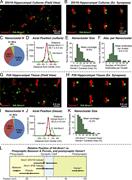
Figure 3. Super-resolution STORM imaging identifies synaptic Nrxn1 nanoclusters. (A) Representative image of cultured neurons at DIV18, showing multiple Homer1(+) synapses with a subset containing Nrxn1 nanoclusters. (B) Representative images of individual synapses from DIV18 neurons showing Homer1(+) synaptic junctions containing Nrxn1 nanoclusters. (C) Only a subset of Homer1(+) synapses contains Nrxn1 nanoclusters (NCs; 39%) in cultured neurons at DIV18. (D) Homer1 discs and Nrxn1 nanoclusters are separated by ∼85 nm across the synapse. The trans-axial distribution of Homer1 and HA-Nrxn1 localizations was determined by STORM imaging of hippocampal cultures at DIV18. (E) Nrxn1 nanoclusters occupy on average ∼19% area of the Homer1-defined synaptic junction. (F) Nrxn1 nanoclusters are on average labeled by approximately nine antibodies per nanocluster. (G–K) Same as A–E, except that cryostat sections of the hippocampal CA1 region from HA-Nrxn1 cKI mice were analyzed at P28. (L) Quantification of the axial distribution of STORM localizations of surface HA-Nrxn1 in hippocampal neurons or cryosections relative to those of Homer1, Piccolo, and Bassoon. Short vertical bars = SEMs; horizontal bars = SDs. For C–F, n = 54 synapses/three cultures; for I–K, n = 77 synapses/three mice. For further details, see Fig. S1.
Published: 01 July 2019
Figure 3. Super-resolution STORM imaging identifies synaptic Nrxn1 nanoclusters. (A) Representative image of cultured neurons at DIV18, showing multiple Homer1(+) synapses with a subset containing Nrxn1 nanoclusters. (B) Representative images More about this image found in Super-resolution STORM imaging identifies synaptic Nrxn1 nanoclusters. (A) ...
Images
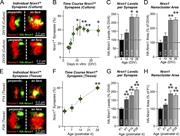
Figure 4. Synaptic Nrxn1 nanoclusters are dynamic across development. (A) Example synapses illustrating the features of Nrxn1 nanoclusters in cultured neurons at DIV18 (top) and DIV26 (bottom), including central and peripheral localizations of Nrxn1 nanoclusters (scale bars, 0.2 µm). (B) The percentage of Homer1(+) synapses with Nrxn1 nanoclusters in cultured neurons as a function of culture time. (C and D) The relative Nrxn1 content (C) and size of synaptic Nrxn1 nanoclusters (D) increase during development in hippocampal neurons analyzed at the indicated culture DIVs (shown as percentage of DIV4 levels). (E) Same as A, except of Nrxn1 nanoclusters in hippocampal CA1 region from HA-Nrxn1 cKI mice at P14 (top) and P28 (bottom; scale bars, 0.2 µm). (F) Same as B, except that cryostat sections of the hippocampal CA1 region from HA-Nrxn1 cKI mice were analyzed as a function of age. (G and H) Same as C and D, but for cryostat sections of the hippocampal CA1 region of HA-Nrxn1 cKI mice analyzed at P1–28 (values are expressed as percentage of P1). Numerical data are means ± SEM. Statistical significance was determined by two-sample t test to earliest time point (*, P < 0.05; **, P < 0.01; ***, P < 0.001). For B and F, n = 3 cultures or mice, averaged per culture or mouse; for C and D, n as number of synapses = 6, DIV4; 12, DIV10; 78, DIV18; 85, DIV26/three cultures; for G and H, n as number of synapses = 45, P1; 41, P7; 22, P14; 77, P28/three mice. For further details, see Fig. S1.
Published: 01 July 2019
Figure 4. Synaptic Nrxn1 nanoclusters are dynamic across development. (A) Example synapses illustrating the features of Nrxn1 nanoclusters in cultured neurons at DIV18 (top) and DIV26 (bottom), including central and peripheral localizations of More about this image found in Synaptic Nrxn1 nanoclusters are dynamic across development. (A) Example sy...
Images
Figure 5. Synaptic Nrxn1 nanoclusters are independent of HA-epitope tagging and contain other neurexins. (A) Labeling with a pan-neurexin antibody shows neurexin nanoclusters in DIV12 hippocampal neurons from Nrxn1 cKO mice that are not abolished following Cre expression (scale bar, 0.5 µm). (B–D) Neurexin content per nanocluster (B), proportion of neurexin(+) synapses (C), and area occupied by a nanocluster (D) are indistinguishable in Nrxn1 cKO mice expressing ΔCre or Cre. (E) Expression of Cre in hippocampal cultures (DIV12) from Nrxn1/2/3 triple cKO mice abolishes nanoclusters labeled with a pan-neurexin antibody (scale bar, 0.5 µm). (F–H) Pan-deletion of all neurexins abolishes neurexin content per nanocluster (F), proportion of neurexin(+) synapses (G), and area occupied by a nanocluster (H); n.d. indicates not detectable. (I) Representative field of view (top) and a subset of exemplary Homer1(+) synapses (bottom) containing HA-Nrxn1 (detected by anti-HA) and total neurexins (detected by pan-neurexin antibody) imaged using STORM. The Homer1 signal is imaged using conventional wide-field microscopy (scale bars, 0.5 µm). (J) Synaptic pan-Neurexin content of Homer1(+) synapses having one or more HA-Nrxn1 clusters compared with those without clusters. (K) Synaptic HA-Nrxn1 content of Homer1(+) synapses having one or more pan-Nrxn1 clusters compared with those without clusters. (L and M) Fraction of HA-Nrxn1(+) (L) or pan-Nrxn(+) (M) synapses also containing pan-Nrxn and HA-Nrxn1 signal, respectively. (N) Co-localization between neurexin nanoclusters defined by pan-Nrxn and HA-Nrxn1 using the coarse convex hull method (method 1) or convex hull method (method 2). Numerical data are means ± SEM. Statistical significance was determined by two-sample t test to ΔCre or synapses having 0 HA-Nrxn1 clusters (*, P < 0.05; **, P < 0.01). For B–D, n as number of synapses = 17, ΔCre; 9, Cre/three cultures; for F–H, n as number of synapses = 18, ΔCre; 14, Cre/three cultures; for J–M, n = 3 cultures; for N, n = 75 synapses). For further details, see Fig. S2.
Published: 01 July 2019
Figure 5. Synaptic Nrxn1 nanoclusters are independent of HA-epitope tagging and contain other neurexins. (A) Labeling with a pan-neurexin antibody shows neurexin nanoclusters in DIV12 hippocampal neurons from Nrxn1 cKO mice that are not More about this image found in Synaptic Nrxn1 nanoclusters are independent of HA-epitope tagging and conta...
Images
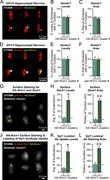
Figure 6. Excitatory synapses containing Nrxn1 nanoclusters exhibit higher surface GluA1 levels and more active presynaptic vesicle exocytosis. (A) Representative synapses from HA-Nrxn1 cKI hippocampal neurons (DIV12) showing synapses without (top row) and with (bottom row) Nrxn1 nanoclusters (scale bar, 0.5 µm). (B and C) Homer1 levels (B) and area (C) are indistinguishable at synapses having 0 or 1+ Nrxn1 nanoclusters. (D) Representative images of individual synapses from WT hippocampal neurons (DIVI2) showing synapses without (top row) and with (bottom row) pan-neurexin nanoclusters (scale bar, 0.5 µm). (E and F) Homer1 levels (E) and area (F) are indistinguishable at synapses having 0 or 1+ pan-neurexin nanoclusters. (G) Homer1(+) synapses containing Nrxn1 nanoclusters have higher levels of surface AMPA receptor subunit 1 (sGluA1; bottom row) than synapses without nanoclusters (top row; scale bar, 0.5 µm). (H and I) Surface GluA1 content (H) and area (I) are higher at Homer1(+) synapses containing one or more HA-Nrxn1 clusters relative to synapses without HA-Nrxn1 nanoclusters. (J) Homer1(+) synapses containing Nrxn1 nanoclusters have higher levels of presynaptic vesicle exocytosis visualized following uptake of an antibody recognizing the luminal domain of synaptotagmin-1 (Syt1; scale bar, 0.5 µm). (K and L) Luminal Syt1 antibody uptake levels (K) and area (L) are higher at Homer1(+) synapses containing one or more Nrxn1 nanoclusters relative to those that do not contain Nrxn1 nanoclusters. Numerical data are means ± SEM. Statistical significance was determined by a two-sample t test to neurexin cluster # = 0 (*, P < 0.05; **, P < 0.01). For B and C, n as number of synapses = 27, 0 nanoclusters; 20, 1+ nanoclusters/three cultures; for E and F, n as number of synapses = 24, 0 nanoclusters; 16, 1+ nanoclusters/three cultures; for H and I and K and L, n = 3 cultures.
Published: 01 July 2019
Figure 6. Excitatory synapses containing Nrxn1 nanoclusters exhibit higher surface GluA1 levels and more active presynaptic vesicle exocytosis. (A) Representative synapses from HA-Nrxn1 cKI hippocampal neurons (DIV12) showing synapses without More about this image found in Excitatory synapses containing Nrxn1 nanoclusters exhibit higher surface Gl...
Images
Figure 7. Nrxn1 is extensively cleaved across synaptic development in cultured neurons. (A) Cultured hippocampal neurons from HA-Nrxn1 cKI mice for defined DIV5–18 were analyzed by quantitative immunoblotting directly (cell lysates) or after immunoprecipitation with HA antibodies (medium). (B) Immunoblotting shows HA-Nrxn1α in cell lysates and in the medium of HA-Nrxn1 neurons expressing ΔCre, but detects only a faint amount of HA-Nrxn1α in either sample after Cre-mediated truncation of Nrxn1. (C) Levels of cellular and cleaved Nrxn1α rise in parallel with culture time. Images show representative immunoblots of hippocampal, cortical, and olfactory bulb neurons cultured from HA-Nrxn1 cKI mice and analyzed at DIV5, 7, 10 12, 15, and 18. (D and E) The levels of cellular Nrxn1α and of Nrxn1α released by proteolysis into the medium increase coordinately with culture time. Summary plots depict protein levels determined by quantitative immunoblotting in the cells (D) and medium (E, monitored after immunoprecipitation) as a function of culture time. Data are means ± SEM (n = 5, hippocampal; 6, cortical; 2, olfactory bulb cultures).
Published: 01 July 2019
Figure 7. Nrxn1 is extensively cleaved across synaptic development in cultured neurons. (A) Cultured hippocampal neurons from HA-Nrxn1 cKI mice for defined DIV5–18 were analyzed by quantitative immunoblotting directly (cell lysates) or after More about this image found in Nrxn1 is extensively cleaved across synaptic development in cultured neuron...
Images
Figure 8. Nrxn1 is cleaved physiologically by proteolysis at approximately twice the rate of neuroligin-1. (A) Brain subcellular fractionation protocol to obtain the total homogenate (H) and to separate soluble proteins (S) from membrane-associated proteins in the particulate fraction (P). (B) Validation of subcellular fractions isolated from the hippocampus of adult HA-Nrxn1 cKI (left) and WT mice (right) at P56. Lanes were loaded with equivalent amounts of H and P fractions, but 10 times more of the S fraction. (C) Nrxn1α and Nrxn1β are both detected in particulate and soluble brain fractions. Note that soluble Nrxn1α and Nrxn1β proteins are smaller than cellular Nrxn1α and Nrxn1β, as would be expected for fragments released by proteolytic cleavage. Note also that the HA antibody only detects HA-Nrxn1 from cKI mice, whereas the pan-neurexin antibody detects Nrxn1 in both Nrxn1 cKI and in WT brain lysates. (D and E) Soluble Nrxn1α fragments are produced in all brain regions, and are present at approximately twice the levels of soluble Nlgn1 fragments. Summary graphs show the amount of soluble Nrxn1α (left) and Nlgn1 (right) as percent of the total as determined by quantitative immunoblotting in subcellular fractions from the indicated brain regions of HA-Nrxn1 cKI mice analyzed at P56 (Hp, hippocampus; Cx, cortex; Ce, cerebellum; OB, olfactory bulb; BS, brain stem). Lanes were loaded with equivalent amounts of H and P fractions, but 20 times more of the S fraction. Data are means ± SEM; statistical significance was determined by a one-way ANOVA and Tukey’s post hoc test (*, P < 0.05; ***, P < 0.001; n = 6 mice for the Nrxn1α and 3 mice for the Nlgn1 quantification).
Published: 01 July 2019
Figure 8. Nrxn1 is cleaved physiologically by proteolysis at approximately twice the rate of neuroligin-1. (A) Brain subcellular fractionation protocol to obtain the total homogenate (H) and to separate soluble proteins (S) from More about this image found in Nrxn1 is cleaved physiologically by proteolysis at approximately twice the ...
Images
Figure 9. ADAM10 is the major Nrxn1 sheddase in dissociated hippocampal and cortical cultures. (A) Experimental design of metalloprotease inhibition experiments. (B) Protease inhibitors used for experiments. (C) Immunoblot analysis of the HA-Nrxn1α fragment released into the medium and of cellular HA-Nrxn1α in HA-Nrxn1 cKI hippocampal neurons and treated with the indicated protease inhibitors or vehicle control (VEH). See A and B for abbreviations and details. (D and E) Summary graphs of the levels of Nrxn1α fragments released in the medium (D) and of full-length Nrxn1α present in the cells (E) as a function of the treatment of hippocampal neurons with the indicated protease inhibitors, determined by quantitative immunoblotting of HA-Nrxn1 from HA-Nrxn1 cKI mice. (F–H) Same as C–E, except results are from cortical neurons. Data are means ± SEM. For D–H, statistical significance was determined by one-sample t test (*, P < 0.05; **, P < 0.01; ***, P < 0.001; ****, P < 0.0001). For D and E, n as number of cultures = for medium: 12, VEH; 12, GM; 12, TAP; 6, GW; 12, GI; 11, SB; 12, C3; for cellular: 9, VEH; 8, GM; 9, TAP; 5, GW; 8, GI; 9, SB; 9, C3; for F–H, n = 4 cultures for medium and cellular. For further details, see Fig. S5.
Published: 01 July 2019
Figure 9. ADAM10 is the major Nrxn1 sheddase in dissociated hippocampal and cortical cultures. (A) Experimental design of metalloprotease inhibition experiments. (B) Protease inhibitors used for experiments. (C) Immunoblot analysis of the More about this image found in ADAM10 is the major Nrxn1 sheddase in dissociated hippocampal and cortical ...
Images
Figure 10. ADAM10 inhibition dramatically enhances Nrxn1 nanocluster presence and content at excitatory synapses. (A) Representative 3D STORM images of Homer1(+) synapses with surface HA-Nrxn1 clusters visualized in hippocampal neurons treated with the indicated protease inhibitors from DIV10-12 (scale bars, 0.5 µm). Drugs are detailed in Fig. 9 B. (B) Pie charts of the number of nanoclusters per Nrxn1(+) synapse show that MMP/ADAM10 blockage increases the proportion of synapses containing Nrxn1 nanoclusters. (C–G) Summary graphs showing that ADAM10 inhibition substantially increases the content of Nrxn1 nanoclusters (C) and the fraction of synapses containing Nrxn1 nanoclusters (C). The areas of Nrxn1 nanoclusters (E), Homer1 levels (F), and Homer1 disc area (G) were not consistently and significantly affected by all metalloprotease inhibitors. Data are means ± SEM. Statistical significance was determined by two-sample t test to treatment with vehicle (*, P < 0.05; **, P < 0.01). For B–G, n as number of synapses = 20, VEH; 49, GM; 45, GW; 39, GI; 20, C3/three cultures. For further details, see Fig. S5.
Published: 01 July 2019
Figure 10. ADAM10 inhibition dramatically enhances Nrxn1 nanocluster presence and content at excitatory synapses. (A) Representative 3D STORM images of Homer1(+) synapses with surface HA-Nrxn1 clusters visualized in hippocampal neurons treated More about this image found in ADAM10 inhibition dramatically enhances Nrxn1 nanocluster presence and cont...
Journal Articles
Images
Figure 1. PI(3)P-dependent lipid binding of hSNX16 CC domain mutants. (A) Schematic of hSNX16 constructs. (B) Location of hSNX16 CC mutations on hSNX16 PX-CC dimer (PDB accession number 5GW0; Xu et al., 2017). CC domains are shown in green and glutamates in magenta. (C–F) Liposome cosedimentation assays. Purified hSNX16 variants were incubated with liposomes of the indicated composition and pelleted. Representative Coomassie staining of supernatant (S) and pellet (P) fractions is shown in C and E. (C and D) Liposomes composed of 80% DOPC (1,2-dioleoyl-sn-glycero-3-phosphocholine), 15% DOPE (1,2-dioleoyl-sn-glycero-3-phosphoethanolamine), 5% DOPS (1,2-dioleoyl-sn-glycero-3-phospho-L-serine), and PI(3)P (0.5%, 1%, 2.5%, 5%, and 10%; with a corresponding decrease in DOPC). PI(3)P-dependent lipid binding of purified hSNX16 CC domain mutants is not significantly different from wild-type hSNX16. Y145A mutsation abolishes PI(3)P binding of hSNX16 as previously reported (Choi et al., 2004b). (E and F) Binding of wild-type hSNX16 is more salt sensitive than hSNX163A. Liposomes (70% DOPC, 15% DOPE, 5% DOPS, and 10% PI(3)P) were incubated for 45 min with purified hSNX16 and the indicated NaCl concentrations before pelleting. In the last condition, hSNX16 and liposomes were incubated in 100 mM NaCl for 30 min, and then NaCl was added to a final concentration of 400 mM for 15 min before pelleting. Quantification is a result of three independent experiments, analyzed using a Kruskal–Wallis test followed by a Dunn’s multiple comparisons test. Data are presented as mean ± SEM. *, P < 0.05. ns, not significant.
Published: 28 June 2019
Figure 1. PI(3)P-dependent lipid binding of hSNX16 CC domain mutants. (A) Schematic of hSNX16 constructs. (B) Location of hSNX16 CC mutations on hSNX16 PX-CC dimer (PDB accession number 5GW0 ; Xu et al., 2017 ). CC domains are shown in green More about this image found in PI(3)P-dependent lipid binding of hSNX16 CC domain mutants. (A) Schematic ...
Images
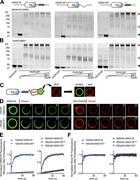
Figure 2. hSNX16 oligomerizes into higher-order assemblies on membranes via its CC domain. (A and B) hSNX16ΔCC reduces and hSNX163A promotes self-association compared with hSNX16WT on PI(3)P liposomes. 5 µM purified hSNX16, hSNX163A, or hSNX16ΔCC were incubated with 1% (5 µM) PI(3)P liposomes followed by BS3 cross-linking, and then tested for liposome cosedimentation. (A) Coomassie-stained gels of cross-linked high-molecular-weight assemblies in protein–liposome pellets with increasing BS3 concentration (125 nM, 2.5 µM, 5 µM, 12.5 µM, and 25 µM). (B) Coomassie-stained gels of unbound proteins in the lipid cosedimentation assay from same experiments as in A. Black, white, and red triangles point to monomers, dimers, and higher-order assemblies, respectively. (C) Schematic of the GUV assay. (D–F) hSNX163A fails to recover after photobleaching at lower protein concentrations compared with wild-type hSNX16, while hSNX16ΔCC retains high mobility at all concentrations measured. (D) Representative time-lapse images of 100 nM hSNX16 and hSNX163A before and after photobleaching. (E and F) Quantification of protein and lipid fluorescence of GUVs bound by hSNX16 variants at 100 nM and 500 nM. Protein and lipid fluorescence were normalized to a nonbleached region on the same GUV to correct for photobleaching. Protein fluorescence was then further normalized by subtracting from all time points the intensity at t = 0 and normalizing prebleach intensity to 1. Quantification is from five GUVs incubated with 100 nM hSNX16; six GUVs incubated with 100 nM hSNX163A, 500 nM hSNX16, or 500 nM hSNX16ΔCC; and eight GUVs incubated with 500 nM hSNX163A. Data are presented as mean ± SEM. Scale bars, 10 µm.
Published: 28 June 2019
Figure 2. hSNX16 oligomerizes into higher-order assemblies on membranes via its CC domain. (A and B) hSNX16ΔCC reduces and hSNX163A promotes self-association compared with hSNX16WT on PI(3)P liposomes. 5 µM purified hSNX16, hSNX163A, or hSNX16 More about this image found in hSNX16 oligomerizes into higher-order assemblies on membranes via its CC do...
Images
Figure 3. hSNX16 generates membrane tubules via its CC region. (A) Representative single confocal slices of rhodamine PE–labeled GUVs (0%, 1% [30 nM], or 10% [300 nM] PI(3)P) incubated with 100 nM or 500 nM hSNX16 CC variants. Scale bars, 10 µm. (B) Percentage of tubulated vesicles at the indicated PI(3)P and hSNX16 concentrations. Quantification is from at least 20 GUVs per condition. (C) Negative-stain EM of liposomes incubated with buffer, hSNX1, or hSNX16 CC variants (2 µM final protein concentration). Two representative fields are shown for each condition. Scale bar, 400 nm.
Published: 28 June 2019
Figure 3. hSNX16 generates membrane tubules via its CC region. (A) Representative single confocal slices of rhodamine PE–labeled GUVs (0%, 1% [30 nM], or 10% [300 nM] PI(3)P) incubated with 100 nM or 500 nM hSNX16 CC variants. Scale bars, 10 µm. More about this image found in hSNX16 generates membrane tubules via its CC region. (A) Representative si...
Images
Figure 4. hSNX16 CC mutants exhibit altered subcellular localization in vivo. hSNX16ΔCC reduces and hSNX163A enhances hSNX16 punctate localization in mammalian cells. (A) Representative images of cell body and neurites from immunostained DIV 7 rat hippocampal neurons transiently expressing the indicated myc-hSNX16 variants. (B) Representative images of the indicated cell lines expressing indicated hSNX16 CC variants and fixed 24 h after transfection. hSNX16-transfected U2OS cells were stained with α-EEA1 antibodies. (C) CoV (standard deviation/mean of pixel intensities) of myc-hSNX16 CC mutants in hippocampal cell bodies. Quantification is from ≥35 neurons per condition from three independent coverslips, tested for normality and analyzed using a one-way ANOVA followed by Tukey’s test. (D) Histograms depict fraction of pixels at the indicated intensities for hSNX16 and hSNX163A in HeLa cells. Quantification is from 14 cells per condition and analyzed using a Mann–Whitney U test within each bin. All images show 2D maximum intensity projections of confocal stacks. Data are shown as box-and-whisker plots with all data points superimposed in C and as mean + SEM in D. *, P < 0.05; ***, P < 0.001. ns, not significant. Scale bars, 10 µm.
Published: 28 June 2019
Figure 4. hSNX16 CC mutants exhibit altered subcellular localization in vivo. hSNX16ΔCC reduces and hSNX163A enhances hSNX16 punctate localization in mammalian cells. (A) Representative images of cell body and neurites from immunostained DIV 7 More about this image found in hSNX16 CC mutants exhibit altered subcellular localization in vivo. hSNX16...
Images
Figure 5. dSNX16 CC variants alter endosome structure, localization, and distribution in larval motor neurons. (A and B) Representative images of animals expressing indicated UAS-dSnx16-SNAP variants driven by VGlut-GAL4. Shown are muscle 4 NMJ, proximal axons (within 100 µm of the ventral ganglion), and MNISN-I cell bodies (motor neuron in the intersegmental nerve I [Choi et al., 2004a]; see Fig. S2 A for schematics). dSNX16ΔCC reduces and dSNX163A enhances dSNX16 punctate localization. dSNX163A levels are increased at the cell body and reduced at the NMJ. (B) dSNX16 localizes tubular structures at the cell body revealed by SIM. dSNX16ΔCC reduces and dSNX163A increases the quantity of tubulated SNX16 compartments. (C and D) CoV and mean intensity quantification of dSNX16-SNAPJF549. Quantification is from ≥20 NMJs, 42 axons, or 65 cell bodies and analyzed using a Kruskal–Wallis test followed by Dunn’s multiple comparisons test. Intensities were normalized to the mean intensity in the wild-type dSNX16 condition. All images show 2D maximum intensity projections of confocal stacks unless noted otherwise. Data are shown as box-and-whisker plots with all data points superimposed. *, P < 0.05; **, P < 0.01; ***, P < 0.001. Scale bars, 10 µm.
Published: 28 June 2019
Figure 5. dSNX16 CC variants alter endosome structure, localization, and distribution in larval motor neurons. (A and B) Representative images of animals expressing indicated UAS-dSnx16-SNAP variants driven by VGlut-GAL4. Shown are muscle 4 NMJ, More about this image found in dSNX16 CC variants alter endosome structure, localization, and distribution...
Images
Figure 6. dSNX16 CC variants regulate endosomal localization of Tkv to promote BMP signaling. (A) Quantification of the mean bouton number on muscle 4 in animals expressing VGlut-driven UAS-TkvQ199D and UAS-dSnx16-SNAP variants. (B) Representative images of α-pMad–stained animals expressing VGlut-driven TkvQ199D and dSnx16-SNAP variants in the ventral nerve cords. (C) Quantification of pMad intensity measured from single, central slices of dSNX16-positive cell bodies. (D) Representative images of animals expressing VGlut-driven Tkv-mCherry and dSnx16-SNAP variants at the muscle 4 NMJ, proximal axon, and cell body. (E) Representative axonal transport kymograph of VGlut-driven Tkv-mCherry and dSnx16-GFP (corresponds to Video 1). Arrowhead indicates a dSNX16 particle containing Tkv, and yellow box highlights the retrograde movement of this particle over time. (F) PCCs between Tkv-mCherry and dSNX16 CC variants. (G) Mean intensity quantification of Tkv-mCherry. (H) Representative SIM images of animals expressing VGlut-driven Tkv-mCherry and the indicated dSNX16-GFP in the cell body. dSNX163A-GFP (low) and dSNX163A-GFP (high) lines correspond to dSNX163A-GFPIIA and dSNX163A-GFPIIIF lines in Fig. S2. Arrowheads indicate tubular dSNX16 compartments that do not contain Tkv. Quantification is from ≥21 NMJs, 37 axons, or 61 cell bodies analyzed using Kruskal–Wallis tests followed by Dunn’s multiple comparisons test. All intensity measurements were normalized to mean intensity in the wild-type dSNX16 condition. All images show 2D maximum intensity projections of confocal stacks. Data are shown as box-and-whisker plots with all data points superimposed. *, P < 0.05; **, P < 0.01; ***, P < 0.001. ns, not significant. Scale bars, 10 µm; or 2 µm in the zoomed-in view of H.
Published: 28 June 2019
Figure 6. dSNX16 CC variants regulate endosomal localization of Tkv to promote BMP signaling. (A) Quantification of the mean bouton number on muscle 4 in animals expressing VGlut-driven UAS-TkvQ199D and UAS-dSnx16-SNAP variants. (B) More about this image found in dSNX16 CC variants regulate endosomal localization of Tkv to promote BMP si...

or Create an Account

Close Modal
Close Modal