Effective immunotherapy relies on the presentation of tumor-derived neoantigens on the major histocompatibility complex class I (MHC-I) to activate CD8+ T cells. Deficiencies in this process are a key mechanism of immune evasion and resistance to checkpoint blockade. In this study, using an in vivo CRISPR-Cas9 screen, we unexpectedly found that inactivation of calreticulin (CALR), and other selected components of the peptide-loading complex (PLC), induced robust CD8+ T cell–mediated immune responses. We show that this effect is dependent on the expression of classical MHC-I on tumor cells. Mechanistically, loss of CALR reshaped the MHC-I peptide repertoire, favoring the presentation of low-affinity peptides in murine and human cell lines. Genetic or pharmacological inhibition of PDIA3, another PLC component, similarly induced antitumor effects. These findings reveal a previously unrecognized role of CALR and the PLC in regulating antitumor immunity and suggest that targeting this pathway could be a promising strategy to overcome immune resistance and improve the efficacy of cancer immunotherapies.
Introduction
Antigen presentation is essential in regulating antitumor immune response. Genetic alterations related to antigen presentation, such as B2M inactivation, are often linked to poor response to immune checkpoint blockades (Abed et al., 2020; McGranahan et al., 2017; Pyke et al., 2022). The peptide-loading complex (PLC) plays a vital role in the antigen presentation process, facilitating the loading of peptides onto MHC-I molecules within the endoplasmic reticulum (ER) (Pishesha et al., 2022). The PLC consists of several critical components, including chaperones such as calreticulin (CALR) and tapasin, and peptide loading is facilitated by accessory enzymes like ER aminopeptidase 1 (ERAP1) (Blees et al., 2017). CALR contributes to the functions of the PLC through at least two distinct mechanisms. First, it recruits the PLC through interactions with PDIA3 and MHC-I heavy chain, helping to stabilize the steady-state levels of TAPBP and MHC-I heavy chains (Del Cid et al., 2010; Wearsch et al., 2011). Additionally, CALR can retrieve suboptimal assembled MHC-I molecules from post-ER compartments (Howe et al., 2009). Together, these components of PLC ensure the proper folding, modification, and loading of peptides onto MHC-I molecules, which are subsequently transported to the cell surface for recognition by CD8+ T cells (Pishesha et al., 2022). It has been reported that the inactivation of accessory PLC components, such as ERAP1, can alter the repertoire of peptides presented by MHC-I (Cifaldi et al., 2011; Hammer et al., 2007) and inhibit generation of tumor antigen epitopes (Keller et al., 2015; Textoris-Taube et al., 2020), potentially impacting T cell recognition and subsequent immune responses. Despite the established importance of the PLC in shaping the antigen presentation landscape, the functional consequences of perturbations within this complex in the context of cancer remain poorly understood.
Results and discussion
Disruption of PLC enhances tumor sensitivity to anti-PD-1 therapy
In our previous work, we identified tumor-intrinsic pathways whose inactivation sensitizes tumor cells to CD8+ T cell–mediated killing through in vitro genome-wide CRISPR screen in murine lung cancer LLC cells (Wu et al., 2023). This screen led to the discovery of 431 total hits, including 340 depleted targets (where knockout [KO] causes sensitization to T cell–mediated killing) and 91 enriched targets (where KO confers resistance to T cell–mediated killing) (Wu et al., 2023). In the current study, we investigated whether these targets modulate the response to immune checkpoint blockade using the Lewis lung carcinoma (LLC) tumor model. To this end, we performed an in vivo CRISPR screen where LLC cells were transduced with a focused single guide RNA (sgRNA) library targeting 433 genes, including top candidates identified in our in vitro screen and control genes Tap1,Tap2 (Fig. 1 A). We transplanted library-infected tumor cells into mice treated with anti-PD-1 to impose CD8+ T cell pressure, or with anti-CD8 to abrogate that pressure. Genes whose sgRNAs were specifically depleted under anti-PD-1 versus anti-CD8 treatment therefore sensitize tumors to PD-1 blockade via CD8+ T cell–dependent mechanisms.

Inactivation of CALR potentiates antitumor immunity and synergizes with anti-PD-1 therapy. (A) Schematic representation of the in vivo CRISPR screen design. Figure created using https://BioRender.com. (B) Scatterplot depicting the top enriched and depleted sgRNAs based on the mean log2 fold change of sgRNA counts in the anti-PD-1 treatment group (200 μg/mice on days 6, 9, and 12; n = 15 mice) compared with the CD8+ T cell depletion group (n = 14 mice) in LLC tumors. Annotated genes represent MHC-I antigen presentation components (green), enriched genes (red), and depleted genes (blue). (C) GSEA of top 40 depleted hits identified from the in vivo screen. (D) Diagram illustrating pathways regulating the expression of MHC-I and the PLC. (E) Surface level of H2-Kb measured by flow cytometry in LLC and B16F10 cells upon IFN-γ stimulation (20 ng/ml) for 16 h. Data are presented as the mean ± SD and representative of two independent experiments. *P < 0.05; **P < 0.01; ***P < 0.001; ****P < 0.001 by ordinary one-way ANOVA (compared with control cells). (F) Tumor volume measurements of control (transduced with control sgRNA), Erap1 KO, Pdia3 KO, and Calr KO LLC tumors in WT C57BL/6 mice (n = 8–9 per group). *P < 0.05; **P < 0.01; ****P < 0.001 by two-way ANOVA. (G) Tumor volume measurements of control or Calr KO B16F10 tumors in WT C57BL/6 mice (n = 4 per group). Data are presented as the mean ± SEM and representative of two independent experiments. **P < 0.01 by two-way ANOVA. (H) Tumor volume measurements of control or Calr KO B16F10 tumors in WT C57BL/6 mice (n = 6 per group) with anti-PD-1 treatment (200 μg/mice on days 4, 7, and 10). Data are presented as the mean ± SEM. **P < 0.01 by two-way ANOVA. GSEA, gene set enrichment analysis.
Inactivation of CALR potentiates antitumor immunity and synergizes with anti-PD-1 therapy. (A) Schematic representation of the in vivo CRISPR screen design. Figure created using https://BioRender.com. (B) Scatterplot depicting the top enriched and depleted sgRNAs based on the mean log2 fold change of sgRNA counts in the anti-PD-1 treatment group (200 μg/mice on days 6, 9, and 12; n = 15 mice) compared with the CD8+ T cell depletion group (n = 14 mice) in LLC tumors. Annotated genes represent MHC-I antigen presentation components (green), enriched genes (red), and depleted genes (blue). (C) GSEA of top 40 depleted hits identified from the in vivo screen. (D) Diagram illustrating pathways regulating the expression of MHC-I and the PLC. (E) Surface level of H2-Kb measured by flow cytometry in LLC and B16F10 cells upon IFN-γ stimulation (20 ng/ml) for 16 h. Data are presented as the mean ± SD and representative of two independent experiments. *P < 0.05; **P < 0.01; ***P < 0.001; ****P < 0.001 by ordinary one-way ANOVA (compared with control cells). (F) Tumor volume measurements of control (transduced with control sgRNA), Erap1 KO, Pdia3 KO, and Calr KO LLC tumors in WT C57BL/6 mice (n = 8–9 per group). *P < 0.05; **P < 0.01; ****P < 0.001 by two-way ANOVA. (G) Tumor volume measurements of control or Calr KO B16F10 tumors in WT C57BL/6 mice (n = 4 per group). Data are presented as the mean ± SEM and representative of two independent experiments. **P < 0.01 by two-way ANOVA. (H) Tumor volume measurements of control or Calr KO B16F10 tumors in WT C57BL/6 mice (n = 6 per group) with anti-PD-1 treatment (200 μg/mice on days 4, 7, and 10). Data are presented as the mean ± SEM. **P < 0.01 by two-way ANOVA. GSEA, gene set enrichment analysis.
Anti-PD-1 treatment resulted in substantial immune selection pressure on LLC tumors, and we have subsequently obtained high-quality sequencing data based on the correlation of sgRNA distribution among biological replicates (Fig. S1, A and B). sgRNAs targeting key components of the interferon-γ (IFN-γ)–sensing pathway (Jak1, Jak2, and Stat1) were significantly depleted in mice treated with αPD-1 (Fig. 1 B). In contrast, sgRNAs targeting genes involved in the transcriptional regulation of antigen presentation, such as Rfx5 and Rfxank, were highly enriched (Fig. 1 B). RFX5 and RFXANK are transcription factors that associate with the key MHC-I transactivator NLRC5 and induce the transcription of MHC-I and related genes (Kobayashi and van den Elsen, 2012; Ludigs et al., 2015; Yoshihama et al., 2017). Their enrichment in our screen suggests that their KO confers resistance to CD8 T cell immunity and anti-PD-1 therapy, which can be explained by previous studies reporting that KO of these genes reduces MHC-I expression (Meissner et al., 2012). Interestingly, IFN-γ signaling also induces NLRC5 and MHC-I expression (Kobayashi and van den Elsen, 2012). The observation that sgRNAs targeting IFN-γ pathway components are depleted while MHC-I transcription factors are enriched in the screen underscores the dual role of IFN-γ—promoting genes that enhance T cell–mediated killing (e.g., MHC-I) yet simultaneously upregulating counter-regulatory molecules such as PD-L1, SerpinB9, and HLA-E, in agreement with prior studies (Chen et al., 2019; Dubrot et al., 2022). Based on our CRISPR screen, the net effect of IFN-γ signaling deficiency in vivo appears to promote antitumor immunity, consistent with other studies (Dubrot et al., 2022; Wang et al., 2021).
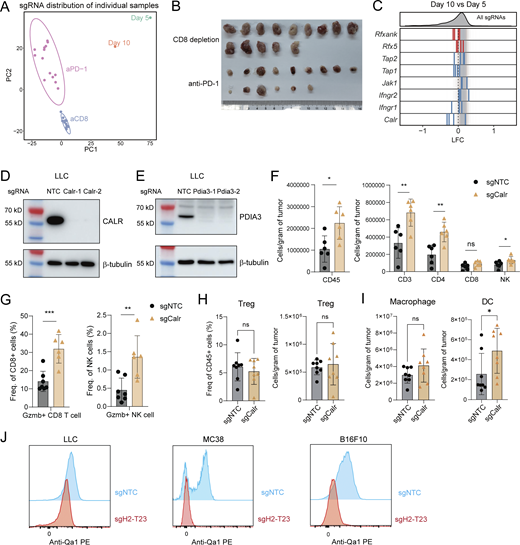
Inactivation of CALR potentiates antitumor immunity. (A) Principal component analysis of sgRNA abundance under each condition of the in vivo screens. (B) Images of dissected tumor from the anti-PD-1 and CD8 depletion treatment groups. (C) Effect of sgRNAs on cell proliferation. LFC of sgRNAs in LLC cell culture in vitro at day 10 compared with day 5 is shown. Dark gray lines represent control sgRNAs. Blue and red lines represent depleted and enriched sgRNAs. (D and E) Western blots showing the KO of CALR (D) and PDIA3 (E) in LLC cells. β-tubulin was used as an endogenous control. Results are representative of two independent experiments. (F) Number of immune cells (CD45+, CD3+, CD4+, CD8+, NK1.1+) infiltrating Calr KO and control LLC tumor, analyzed by flow cytometry. Data are presented as the mean ± SD. ns, not significant; *P < 0.05; **P < 0.01 by an unpaired t test. (G) Percentage of granzyme B+ CD8+ T cells and granzyme B+ NK cells within the total CD8+ T cell and NK cell populations, as measured by flow cytometry in Calr KO and control LLC tumor. Data are presented as the mean ± SD. **P < 0.01, *** P < 0.001 by an unpaired t test. (H) Percentage and number of regulatory T cells (CD4+ Foxp3+) in Calr KO and control LLC tumor measured by flow cytometry. Data are presented as the mean ± SD. ns, not significant by an unpaired t test. (I) Number of macrophage and DC in Calr KO and control LLC tumor measured by flow cytometry. Data are presented as the mean ± SD. *P < 0.05 by an unpaired t test. (J) Representative flow cytometry plots showing Qa1 (H2-T23) expression levels in H2-T23 KO and control LLC, MC38, and B16F10 cells, respectively. LFC, log2 fold change. Source data are available for this figure: SourceData FS1.
Inactivation of CALR potentiates antitumor immunity. (A) Principal component analysis of sgRNA abundance under each condition of the in vivo screens. (B) Images of dissected tumor from the anti-PD-1 and CD8 depletion treatment groups. (C) Effect of sgRNAs on cell proliferation. LFC of sgRNAs in LLC cell culture in vitro at day 10 compared with day 5 is shown. Dark gray lines represent control sgRNAs. Blue and red lines represent depleted and enriched sgRNAs. (D and E) Western blots showing the KO of CALR (D) and PDIA3 (E) in LLC cells. β-tubulin was used as an endogenous control. Results are representative of two independent experiments. (F) Number of immune cells (CD45+, CD3+, CD4+, CD8+, NK1.1+) infiltrating Calr KO and control LLC tumor, analyzed by flow cytometry. Data are presented as the mean ± SD. ns, not significant; *P < 0.05; **P < 0.01 by an unpaired t test. (G) Percentage of granzyme B+ CD8+ T cells and granzyme B+ NK cells within the total CD8+ T cell and NK cell populations, as measured by flow cytometry in Calr KO and control LLC tumor. Data are presented as the mean ± SD. **P < 0.01, *** P < 0.001 by an unpaired t test. (H) Percentage and number of regulatory T cells (CD4+ Foxp3+) in Calr KO and control LLC tumor measured by flow cytometry. Data are presented as the mean ± SD. ns, not significant by an unpaired t test. (I) Number of macrophage and DC in Calr KO and control LLC tumor measured by flow cytometry. Data are presented as the mean ± SD. *P < 0.05 by an unpaired t test. (J) Representative flow cytometry plots showing Qa1 (H2-T23) expression levels in H2-T23 KO and control LLC, MC38, and B16F10 cells, respectively. LFC, log2 fold change. Source data are available for this figure: SourceData FS1.
Interestingly, sgRNAs targeting genes that encode key components of peptide loading and processing, including the peptide transporter Tap1/Tap2 and calreticulin (Calr), an ER-resident protein in the PLC, were strongly depleted (Fig. 1, B–D). KO of these genes did not result in an intrinsic growth defect of tumor cells (Fig. S1 C). Thus, it suggests that targeting various antigen presentation regulators produced distinct outcomes.
We then performed systematic validation experiments by knocking out genes related to the PLC, including Calr, Pdia3, and Erap1 (Fig. S1, D and E). KO of these PLC components resulted in a modest reduction of MHC-I surface levels, whereas KO of B2m led to the complete absence of surface MHC-I (Fig. 1 E). Consistent with our screening results, inactivation of PLC components significantly inhibited tumor growth in the LLC model (Fig. 1 F). Additionally, we validated that KO of Calr substantially slowed tumor growth in the B16F10 model, and the addition of anti-PD-1 treatment further enhanced the therapeutic effect (Fig. 1, G and H). Together, these data suggest that KO of Calr and other PLC components can significantly slow tumor growth in multiple mouse models.
CALR inactivation strongly enhances CD8+ T cell–mediated antitumor response through the classical MHC-I antigen presentation pathway
We then investigated which effector immune cells were responsible for mediating the phenotype in Calr KO tumor cells. To this end, we depleted either natural killer (NK) cells or CD8+ T cells by using corresponding antibodies. Strikingly, depletion of NK cells had no impact on the phenotype, whereas depletion of CD8+ T cells completely rescued the phenotype in Calr KO tumors (Fig. 2, A–C). This indicates that CD8+ T cells are responsible for the enhanced killing of Calr KO tumors. To further validate this finding, we inoculated Calr KO and control tumors into Rag1 KO and wild-type (WT) mice, respectively. Across different tumor models, including LLC, MC38, and B16F10 cells, while Calr KO resulted in substantial growth defect in WT B6 mice, the phenotype associated with Calr KO was completely rescued in Rag1 KO mice (Fig. 2, D–F). These results suggest that the growth inhibition of Calr KO is dependent on T cells. Analysis of tumor-infiltrating lymphocytes (TILs) revealed substantially enhanced immune cell infiltration in Calr KO tumors, including total CD3+ T cells, CD4+ T cells, and granzyme B–expressing cytotoxic CD8+ T and NK cells (Fig. S1, F–H). Analysis of tumor-infiltrating myeloid cells found the number of macrophages unchanged, while the infiltration of DC increased in Calr KO tumor, suggesting an enhanced antitumor immune response and elevated antigen presentation within the tumor microenvironment (Fig. S1 I).

Calr inactivation potentiates CD8 + T cell–mediated antitumor response through the classical MHC-I antigen presentation pathway. (A–C) Tumor volumes of control and Calr-deficient LLC tumors in WT mice (A), WT mice treated with anti-NK1.1 depletion antibodies (B), and WT mice treated with anti-CD8 depletion antibodies (C) (n = 6–8 per group). Data are presented as the mean ± SEM and representative of two independent experiments. ns, not significant; ***P < 0.001; ****P < 0.0001 by two-way ANOVA. (D–F) Tumor volumes of control and Calr-deficient LLC tumors (D, n = 6–8 per group), MC38 tumors (E, n = 6–8 per group), and B16F10 tumors (F, n = 4–6 per group) in WT mice and Rag1 KO mice. Data are presented as the mean ± SEM and representative of two independent experiments. ns, not significant; *P < 0.05; ***P < 0.001; ****P < 0.0001 by two-way ANOVA. (G) Schematic diagram illustrating the outcomes resulting from B2m KO and H2-T23 KO. In B2m KO cells, both classical and nonclassical MHC-I molecules are defective. In H2-T23 KO, only the nonclassical MHC-I H2-T23 is defective. (H–J) Volume of control and Calr KO LLC tumors in H2-T23 KO LLC (H, n = 5–7 per group), H2-T23 KO MC38 (I, n = 6 per group), and H2-T23 KO B16F10 (J, n = 8–9 per group) tumors in WT C57BL/6 mice. Results are representative of two independent experiments. Data are presented as the mean ± SEM and analyzed by two-way ANOVA. *P < 0.05; ***P < 0.001; ****P < 0.0001. (K–M) Tumor volumes of control and Calr-deficient tumors in B2m KO LLC (K, n = 5–6 per group), B2m KO MC38 (L, n = 5–6 per group), and B2m KO B16F10 (M, n = 6 per group) tumors in WT mice. Data are presented as the mean ± SEM and representative of two independent experiments. ns, not significant by two-way ANOVA.
Calr inactivation potentiates CD8 + T cell–mediated antitumor response through the classical MHC-I antigen presentation pathway. (A–C) Tumor volumes of control and Calr-deficient LLC tumors in WT mice (A), WT mice treated with anti-NK1.1 depletion antibodies (B), and WT mice treated with anti-CD8 depletion antibodies (C) (n = 6–8 per group). Data are presented as the mean ± SEM and representative of two independent experiments. ns, not significant; ***P < 0.001; ****P < 0.0001 by two-way ANOVA. (D–F) Tumor volumes of control and Calr-deficient LLC tumors (D, n = 6–8 per group), MC38 tumors (E, n = 6–8 per group), and B16F10 tumors (F, n = 4–6 per group) in WT mice and Rag1 KO mice. Data are presented as the mean ± SEM and representative of two independent experiments. ns, not significant; *P < 0.05; ***P < 0.001; ****P < 0.0001 by two-way ANOVA. (G) Schematic diagram illustrating the outcomes resulting from B2m KO and H2-T23 KO. In B2m KO cells, both classical and nonclassical MHC-I molecules are defective. In H2-T23 KO, only the nonclassical MHC-I H2-T23 is defective. (H–J) Volume of control and Calr KO LLC tumors in H2-T23 KO LLC (H, n = 5–7 per group), H2-T23 KO MC38 (I, n = 6 per group), and H2-T23 KO B16F10 (J, n = 8–9 per group) tumors in WT C57BL/6 mice. Results are representative of two independent experiments. Data are presented as the mean ± SEM and analyzed by two-way ANOVA. *P < 0.05; ***P < 0.001; ****P < 0.0001. (K–M) Tumor volumes of control and Calr-deficient tumors in B2m KO LLC (K, n = 5–6 per group), B2m KO MC38 (L, n = 5–6 per group), and B2m KO B16F10 (M, n = 6 per group) tumors in WT mice. Data are presented as the mean ± SEM and representative of two independent experiments. ns, not significant by two-way ANOVA.
CD8+ T cells can kill tumor cells through defects in nonclassical MHC-I molecules, such as Qa-1b (encoded by H2-T23). It has been shown that a defect of Qa-1b could result in enhanced CD8+ T cell–mediated elimination through interaction with CD94 receptor (Dubrot et al., 2022). To this end, we generated Calr KO and control cells on a B2m KO background, where both classical and nonclassical MHC-I were defective, or on an H2-T23 KO background, where only the nonclassical MHC-I molecule was defective (Fig. 2 G and Fig. S1 J). We next inoculated Calr KO and control H2-T23 KO cells into immunocompetent B6 mice. Interestingly, H2-T23 KO did not alter the phenotype of Calr KO tumors, as Calr KO tumors continued to grow significantly smaller compared with control tumors (Fig. 2, H–J). In contrast, Calr KO did not further slow tumor growth in B2m-deficient tumors (Fig. 2, K–M). These results indicate that the MHC-I antigen presentation pathway is important for Calr KO–mediated antitumor effect.
CALR inactivation induces ER stress response without directly sensitizing tumor cells to T cell–mediated killing
We then performed RNA sequencing (RNA-seq) analysis of Calr KO cells and found that many ER chaperone proteins were substantially upregulated in Calr KO cells compared with controls (Fig. 3 A), indicating that Calr KO cells were undergoing an ER stress response, consistent with prior reports (Jutzi et al., 2023). Consistently, proteome analysis showed an upregulation of proteins related to ER stress in Calr KO LLC cells (Fig. 3, B and C). To examine whether Calr KO enhanced the sensitivity to T cell–mediated killing, we cocultured control and Calr KO OVA-expressing B16F10 or LLC cells with OT-I T cells. However, Calr KO did not result in elevated levels of killing by OT-I T cells (Fig. S2, A and B), suggesting that Calr inactivation and ER stress response did not directly sensitize tumor to T cell–mediated killing.

Inactivation of Calr induces an ER stress response and alters the peptidome presented on MHC-I. (A) Volcano plot of upregulated and downregulated genes in Calr KO versus control in LLC cells from RNA-seq data (n = 3 biological replicates). Genes related to ER stress response are highlighted. (B) Heatmap of upregulated and downregulated proteins in Calr KO versus control in LLC cells from proteomics data (n = 3 biological replicates). (C) Gene Ontology (GO) term analysis shows the top enriched pathway for upregulated genes (Calr KO versus control) from proteomics data as in B. (D) Venn diagram of MHC-I peptides in Calr KO and control in LLC cells identified by immunoprecipitation-mass spectrometry (IP-MS). Results are pooled from three biological replicates. (E) Volcano plot showing MHC-I peptides identified in both Calr KO and control LLC cells (n = 901). The x axis represents the log2 fold change (Calr KO versus control) of each peptide, and the y axis represents the P value. (F) Top: Violin plot showing the log2-transformed H2-Kb binding affinity (nM) of sgCalr-specific peptides (n = 56), sgNTC-specific peptides (n = 248), and peptides common to both groups (n = 860). The point represents the median log2 affinity value of each group. Bottom: Table of the raw median affinity of sgCalr-specific, common, and sgNTC-specific peptides. sgCalr-specific peptides are defined as peptides unique to or over-presented in Calr KO cells, and sgNTC-specific peptides are defined as peptides unique to or over-presented in control cells. Affinity was predicted by netMHCpan 4.1. (G) Levels of SIINFEKL-bound H2Kb measured by flow cytometry using the 25-D1.16 antibody in Calr KO and control LLC cells upon pulsing or left unpulsed with SIINFEKL peptide (100 ng/ml, 4 h), with or without IFN-γ treatment (20 ng/ml) for 16 h. Data are presented as the mean ± SD and representative of two independent experiments. *P < 0.05; **P < 0.01; ***P < 0.001 by an unpaired t test. (H) Levels of SIINFEKL-bound H2Kb measured by flow cytometry using the 25-D1.16 antibody in Calr KO and control LLC cells after pulsing with WT SIINFEKL (WT) and low-affinity variants SIINFEKV (V8) and SIINYEKL (Y5). Tumor cells were pretreated with 20 ng/ml IFN-γ for 16 h, then pulsed with peptides for 4 h at 200 ng/ml or 800 ng/ml as indicated. Data are presented as the mean ± SD and representative of two independent experiments. ns, not significant; **P < 0.01; ***P < 0.001; ****P < 0.0001 by an unpaired t test. (I) Boxplot demonstrating the binding affinity rank (BA rank) of HLA peptides identified from control or CALR KO A375 cells: sgCALR-specific peptides (n = 86), sgNTC-specific peptides (n = 166), and common peptides (n = 586). Affinity rank was predicted by netMHCpan 4.1. ns, not significant; ****P < 0.0001 by a Mann–Whitney U test. (J–L) HLA affinity analysis of peptides identified by HLA IP-MS by Shapiro et al. (2025) in CALR KO and WT cells. HLA-binding peptides were divided into three groups: those unique to or over-presented in CALR KO cells (sgCALR-specific, n = 1,403), unique to or over-presented in WT cells (WT-specific, n = 2,014), and common peptides (n = 13,648). The binding affinity (nM) of peptides presented on HLA-A*02:01 (J), HLA-B*40:01 (K), or HLA-C*03:04 (L) was predicted by netMHCpan 4.1 and shown as log2-transformed values. The point represents the median of each group. *P < 0.05; **P < 0.01; ***P < 0.001; ****P < 0.0001 by a Mann–Whitney U test.
Inactivation of Calr induces an ER stress response and alters the peptidome presented on MHC-I. (A) Volcano plot of upregulated and downregulated genes in Calr KO versus control in LLC cells from RNA-seq data (n = 3 biological replicates). Genes related to ER stress response are highlighted. (B) Heatmap of upregulated and downregulated proteins in Calr KO versus control in LLC cells from proteomics data (n = 3 biological replicates). (C) Gene Ontology (GO) term analysis shows the top enriched pathway for upregulated genes (Calr KO versus control) from proteomics data as in B. (D) Venn diagram of MHC-I peptides in Calr KO and control in LLC cells identified by immunoprecipitation-mass spectrometry (IP-MS). Results are pooled from three biological replicates. (E) Volcano plot showing MHC-I peptides identified in both Calr KO and control LLC cells (n = 901). The x axis represents the log2 fold change (Calr KO versus control) of each peptide, and the y axis represents the P value. (F) Top: Violin plot showing the log2-transformed H2-Kb binding affinity (nM) of sgCalr-specific peptides (n = 56), sgNTC-specific peptides (n = 248), and peptides common to both groups (n = 860). The point represents the median log2 affinity value of each group. Bottom: Table of the raw median affinity of sgCalr-specific, common, and sgNTC-specific peptides. sgCalr-specific peptides are defined as peptides unique to or over-presented in Calr KO cells, and sgNTC-specific peptides are defined as peptides unique to or over-presented in control cells. Affinity was predicted by netMHCpan 4.1. (G) Levels of SIINFEKL-bound H2Kb measured by flow cytometry using the 25-D1.16 antibody in Calr KO and control LLC cells upon pulsing or left unpulsed with SIINFEKL peptide (100 ng/ml, 4 h), with or without IFN-γ treatment (20 ng/ml) for 16 h. Data are presented as the mean ± SD and representative of two independent experiments. *P < 0.05; **P < 0.01; ***P < 0.001 by an unpaired t test. (H) Levels of SIINFEKL-bound H2Kb measured by flow cytometry using the 25-D1.16 antibody in Calr KO and control LLC cells after pulsing with WT SIINFEKL (WT) and low-affinity variants SIINFEKV (V8) and SIINYEKL (Y5). Tumor cells were pretreated with 20 ng/ml IFN-γ for 16 h, then pulsed with peptides for 4 h at 200 ng/ml or 800 ng/ml as indicated. Data are presented as the mean ± SD and representative of two independent experiments. ns, not significant; **P < 0.01; ***P < 0.001; ****P < 0.0001 by an unpaired t test. (I) Boxplot demonstrating the binding affinity rank (BA rank) of HLA peptides identified from control or CALR KO A375 cells: sgCALR-specific peptides (n = 86), sgNTC-specific peptides (n = 166), and common peptides (n = 586). Affinity rank was predicted by netMHCpan 4.1. ns, not significant; ****P < 0.0001 by a Mann–Whitney U test. (J–L) HLA affinity analysis of peptides identified by HLA IP-MS by Shapiro et al. (2025) in CALR KO and WT cells. HLA-binding peptides were divided into three groups: those unique to or over-presented in CALR KO cells (sgCALR-specific, n = 1,403), unique to or over-presented in WT cells (WT-specific, n = 2,014), and common peptides (n = 13,648). The binding affinity (nM) of peptides presented on HLA-A*02:01 (J), HLA-B*40:01 (K), or HLA-C*03:04 (L) was predicted by netMHCpan 4.1 and shown as log2-transformed values. The point represents the median of each group. *P < 0.05; **P < 0.01; ***P < 0.001; ****P < 0.0001 by a Mann–Whitney U test.
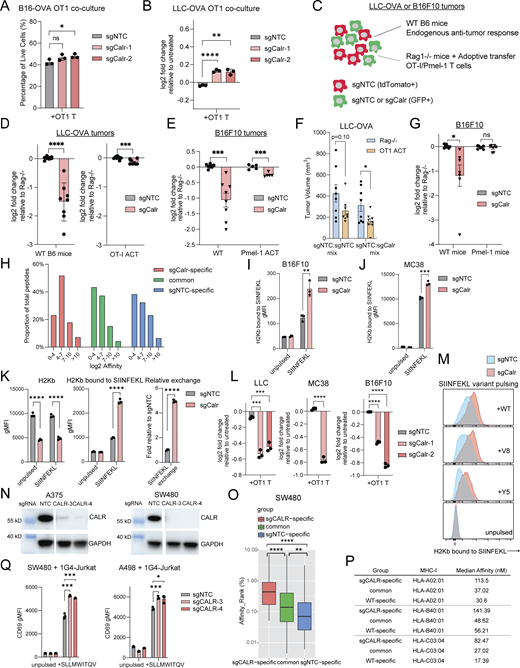
Inactivation of CALR does not intrinsically sensitize tumor cells to T cell–mediated killing but alters the MHC-I peptidome. (A) Coculture assay of OT-I T cells and control or Calr KO B16-OVA tumor. Tumor cells were either untreated or cocultured with preactivated OT-I T cells for 24 h at an effector-to-target ratio of 1:1. The number of tumor cells after coculture was measured by flow cytometry, and the percentage of remaining tumor cells relative to untreated control was shown. Data are presented as the mean ± SD and representative of two independent repeats. ns, not significant; *P < 0.05 by an unpaired t test. (B)In vitro competition assay based on tumor-CTL coculture. CTV-labeled LLC-OVA cells were mixed with either unlabeled cells transduced with control sgRNA (sgNTC) or sgRNA targeting Calr, then cocultured with preactivated OT-I T cells (at an effector-to-target ratio of 1:2), or left untreated. The proportion of unlabeled sgNTC or sgCalr tumor cell was determined by FACS, and then the proportion in the coculture group was compared with that in the untreated group, and shown as log2 fold change. Data are presented as the mean ± SD and representative of two independent repeats. **P < 0.01; ****P < 0.0001 by an unpaired t test. (C) Schematic diagram of in vivo competition assay using Calr KO and control LLC-OVA or B16F10 cells. Mixture of Calr KO and control cells (∼1:1 ratio) was inoculated in WT C57BL/6 mice, and Rag1 KO mice transferred with OT-I or Pmel-1 T cells, respectively. Rag1 KO mice without adoptive transfer were used as a control. Tumors were then collected, and the ratio of GFP+Calr KO to control cells was examined by FACS. (D) Summary of log2 fold change of percentages of LLC-OVA control or Calr KO cells in WT C57BL/6 mice (n = 8) and Rag1 KO mice transferred with OT-I T cells (n = 8–9). The proportion of GFP+ control or Calr KO cells in the mixed tumor was determined by FACS, then compared with the proportion obtained from Rag1 KO mice (without adoptive transfer) and shown as log2 fold change. Data are presented as the mean ± SD and analyzed by an unpaired t test. ***P < 0.001; ****P < 0.0001. (E) Summary of log2 fold change of percentages of Calr KO B16F10 cells in WT C57BL/6 mice (n = 9), and Rag1 KO mice transferred with Pmel-1 T cells (n = 5), as compared to the percentage in Rag1 KO mice (without adoptive transfer). Data are presented as the mean ± SEM and analyzed by an unpaired t test. ***P < 0.001. (F) Tumor volume of mixed LLC-OVA tumors at the day of tumor collection from Rag1 KO mice, with or without OT-I adoptive transfer, as in D. Data are presented as the mean ± SEM. *P < 0.05 by an unpaired t test. (G) Summary of log2 fold change of percentages of Calr KO B16F10 cells grown in WT C57BL/6 mice (n = 7–8), and Pmel-1 transgenic mice (n = 7), as compared to the percentage in Rag1 KO mice. Data are presented as the mean ± SEM and analyzed by an unpaired t test. ns, not significant; *P < 0.05. (H) Distribution of binding affinity of sgCalr-specific, common, and sgNTC-specific peptides identified by H2-Kb IP-MS, as in Fig. 3 F. The proportion of peptides of each group that fall into the indicated range of affinity was shown. Results are pooled from three biological replicates. (I) Level of H2-Kb bound to SIINFEKL measured by flow cytometry using the antibody 25-D1.16 in control and Calr KO B16F10 cells. Cells were pretreated with 20 ng/ml of IFN-γ for 18 h and then pulsed with SIINFEKL peptide (100 ng/ml) for 4 h prior to analysis. Data are presented as the mean ± SD and representative of two independent experiments. **P < 0.01 by an unpaired t test. (J) Level of H2-Kb bound to SIINFEKL measured by flow cytometry using the antibody 25-D1.16 in control and Calr KO MC38 cells. Cells were pulsed with SIINFEKL peptide (100 ng/ml) for 4 h prior to analysis. Data are presented as the mean ± SD and representative of two independent experiments. ***P < 0.001 by an unpaired t test. (K) Levels of H2Kb (using the antibody AF6-88.5) and SIINFEKL-bound H2Kb (using the antibody 25-D1.16) in LLC Calr KO or control cells after SIINFEKL pulsing. Cells were pretreated with 20 ng/ml IFN-γ for 16 h, then pulsed with 100 ng/ml SIINFEKL peptide for 4 h (or unpulsed), and analyzed by FACS. Relative exchange of H2Kb was calculated by normalizing the level of SIINFEKL-bound H2Kb to the level of total H2Kb, and shown as fold change relative to control cells. Data are presented as the mean ± SD and representative of two independent repeats. ****P < 0.0001 by an unpaired t test. (L)In vitro competition coculture assay of Calr KO and control tumor cells with effector OT-I T cells. Calr KO or control tumor cells were first mixed with CTV-labeled control cells at 1:1 ratio, then pulsed with SIINFEKL peptide (100 ng/ml) for 4 h, and cocultured with OT-I T cells (or untreated) at an E:T of 1:2 (LLC and MC38) or 1:1 (B16F10) for 24 h. The percentage of unlabeled Calr KO or control cells was then determined by FACS. The fold change of the proportion of unlabeled Calr KO or control cell after coculture compared with that in the untreated group was calculated, and shown as the log2-transformed value. Data are presented as the mean ± SD and representative of two independent repeats. ***P < 0.001; ****P < 0.0001 by an unpaired t test. (M) Representative histograms of H2-Kb bound to SIINFEKL measured by flow cytometry in Calr KO and control LLC cells, as in Fig. 3 H. Cells were pretreated with 20 ng/ml IFN-γ for 16 h, then either unpulsed or pulsed with 800 ng/ml of WT (SIINFEKL), V8 (SIINFEKV), or Y5 (SIINYEKL) peptides for 4 h. (N) Western blot of control or CALR KO A375 and SW480 cells. GAPDH was used as a loading control. (O) Boxplot demonstrating the binding affinity rank (BA rank) of HLA peptides identified from control or CALR KO SW480 cells: sgCALR-specific peptides (n = 30), sgNTC-specific peptides (n = 64), and common peptides (n = 740). Affinity rank was predicted by netMHCpan 4.1. **P < 0.01; ****P < 0.0001 by a Mann–Whitney U test. (P) Table of the raw median affinity of sgCALR-specific, common, and WT-specific peptides identified by HLA IP-MS by Shapiro et al. (2025), as shown in Fig. 3, J–L. Affinity was predicted by netMHCpan 4.1. (Q) Coculture of control or CALR KO SW480 cells or A498 cells with Jurkat-expressing 1G4 TCR. Tumor cells were pulsed with 200 ng/ml SLLMWITQV (NY-ESO-1157-165 peptide variant) for 4 h, then cocultured with 1G4-Jurkat for 24 h at 1:1 ratio. The gMFI of CD69 on Jurkat cells was measured by flow cytometry. Data are presented as the mean ± SD. Significance was evaluated by an unpaired t test. *P < 0.05; ***P < 0.001. ACT, adoptive cell transfer. gMFI, geometric mean fluorescence intensity; E:T, effector-to-target ratio. Source data are available for this figure: SourceData FS2.
Inactivation of CALR does not intrinsically sensitize tumor cells to T cell–mediated killing but alters the MHC-I peptidome. (A) Coculture assay of OT-I T cells and control or Calr KO B16-OVA tumor. Tumor cells were either untreated or cocultured with preactivated OT-I T cells for 24 h at an effector-to-target ratio of 1:1. The number of tumor cells after coculture was measured by flow cytometry, and the percentage of remaining tumor cells relative to untreated control was shown. Data are presented as the mean ± SD and representative of two independent repeats. ns, not significant; *P < 0.05 by an unpaired t test. (B)In vitro competition assay based on tumor-CTL coculture. CTV-labeled LLC-OVA cells were mixed with either unlabeled cells transduced with control sgRNA (sgNTC) or sgRNA targeting Calr, then cocultured with preactivated OT-I T cells (at an effector-to-target ratio of 1:2), or left untreated. The proportion of unlabeled sgNTC or sgCalr tumor cell was determined by FACS, and then the proportion in the coculture group was compared with that in the untreated group, and shown as log2 fold change. Data are presented as the mean ± SD and representative of two independent repeats. **P < 0.01; ****P < 0.0001 by an unpaired t test. (C) Schematic diagram of in vivo competition assay using Calr KO and control LLC-OVA or B16F10 cells. Mixture of Calr KO and control cells (∼1:1 ratio) was inoculated in WT C57BL/6 mice, and Rag1 KO mice transferred with OT-I or Pmel-1 T cells, respectively. Rag1 KO mice without adoptive transfer were used as a control. Tumors were then collected, and the ratio of GFP+Calr KO to control cells was examined by FACS. (D) Summary of log2 fold change of percentages of LLC-OVA control or Calr KO cells in WT C57BL/6 mice (n = 8) and Rag1 KO mice transferred with OT-I T cells (n = 8–9). The proportion of GFP+ control or Calr KO cells in the mixed tumor was determined by FACS, then compared with the proportion obtained from Rag1 KO mice (without adoptive transfer) and shown as log2 fold change. Data are presented as the mean ± SD and analyzed by an unpaired t test. ***P < 0.001; ****P < 0.0001. (E) Summary of log2 fold change of percentages of Calr KO B16F10 cells in WT C57BL/6 mice (n = 9), and Rag1 KO mice transferred with Pmel-1 T cells (n = 5), as compared to the percentage in Rag1 KO mice (without adoptive transfer). Data are presented as the mean ± SEM and analyzed by an unpaired t test. ***P < 0.001. (F) Tumor volume of mixed LLC-OVA tumors at the day of tumor collection from Rag1 KO mice, with or without OT-I adoptive transfer, as in D. Data are presented as the mean ± SEM. *P < 0.05 by an unpaired t test. (G) Summary of log2 fold change of percentages of Calr KO B16F10 cells grown in WT C57BL/6 mice (n = 7–8), and Pmel-1 transgenic mice (n = 7), as compared to the percentage in Rag1 KO mice. Data are presented as the mean ± SEM and analyzed by an unpaired t test. ns, not significant; *P < 0.05. (H) Distribution of binding affinity of sgCalr-specific, common, and sgNTC-specific peptides identified by H2-Kb IP-MS, as in Fig. 3 F. The proportion of peptides of each group that fall into the indicated range of affinity was shown. Results are pooled from three biological replicates. (I) Level of H2-Kb bound to SIINFEKL measured by flow cytometry using the antibody 25-D1.16 in control and Calr KO B16F10 cells. Cells were pretreated with 20 ng/ml of IFN-γ for 18 h and then pulsed with SIINFEKL peptide (100 ng/ml) for 4 h prior to analysis. Data are presented as the mean ± SD and representative of two independent experiments. **P < 0.01 by an unpaired t test. (J) Level of H2-Kb bound to SIINFEKL measured by flow cytometry using the antibody 25-D1.16 in control and Calr KO MC38 cells. Cells were pulsed with SIINFEKL peptide (100 ng/ml) for 4 h prior to analysis. Data are presented as the mean ± SD and representative of two independent experiments. ***P < 0.001 by an unpaired t test. (K) Levels of H2Kb (using the antibody AF6-88.5) and SIINFEKL-bound H2Kb (using the antibody 25-D1.16) in LLC Calr KO or control cells after SIINFEKL pulsing. Cells were pretreated with 20 ng/ml IFN-γ for 16 h, then pulsed with 100 ng/ml SIINFEKL peptide for 4 h (or unpulsed), and analyzed by FACS. Relative exchange of H2Kb was calculated by normalizing the level of SIINFEKL-bound H2Kb to the level of total H2Kb, and shown as fold change relative to control cells. Data are presented as the mean ± SD and representative of two independent repeats. ****P < 0.0001 by an unpaired t test. (L)In vitro competition coculture assay of Calr KO and control tumor cells with effector OT-I T cells. Calr KO or control tumor cells were first mixed with CTV-labeled control cells at 1:1 ratio, then pulsed with SIINFEKL peptide (100 ng/ml) for 4 h, and cocultured with OT-I T cells (or untreated) at an E:T of 1:2 (LLC and MC38) or 1:1 (B16F10) for 24 h. The percentage of unlabeled Calr KO or control cells was then determined by FACS. The fold change of the proportion of unlabeled Calr KO or control cell after coculture compared with that in the untreated group was calculated, and shown as the log2-transformed value. Data are presented as the mean ± SD and representative of two independent repeats. ***P < 0.001; ****P < 0.0001 by an unpaired t test. (M) Representative histograms of H2-Kb bound to SIINFEKL measured by flow cytometry in Calr KO and control LLC cells, as in Fig. 3 H. Cells were pretreated with 20 ng/ml IFN-γ for 16 h, then either unpulsed or pulsed with 800 ng/ml of WT (SIINFEKL), V8 (SIINFEKV), or Y5 (SIINYEKL) peptides for 4 h. (N) Western blot of control or CALR KO A375 and SW480 cells. GAPDH was used as a loading control. (O) Boxplot demonstrating the binding affinity rank (BA rank) of HLA peptides identified from control or CALR KO SW480 cells: sgCALR-specific peptides (n = 30), sgNTC-specific peptides (n = 64), and common peptides (n = 740). Affinity rank was predicted by netMHCpan 4.1. **P < 0.01; ****P < 0.0001 by a Mann–Whitney U test. (P) Table of the raw median affinity of sgCALR-specific, common, and WT-specific peptides identified by HLA IP-MS by Shapiro et al. (2025), as shown in Fig. 3, J–L. Affinity was predicted by netMHCpan 4.1. (Q) Coculture of control or CALR KO SW480 cells or A498 cells with Jurkat-expressing 1G4 TCR. Tumor cells were pulsed with 200 ng/ml SLLMWITQV (NY-ESO-1157-165 peptide variant) for 4 h, then cocultured with 1G4-Jurkat for 24 h at 1:1 ratio. The gMFI of CD69 on Jurkat cells was measured by flow cytometry. Data are presented as the mean ± SD. Significance was evaluated by an unpaired t test. *P < 0.05; ***P < 0.001. ACT, adoptive cell transfer. gMFI, geometric mean fluorescence intensity; E:T, effector-to-target ratio. Source data are available for this figure: SourceData FS2.
To further investigate whether Calr KO tumors are intrinsically sensitized to T cell–mediated killing, we designed an in vivo competition assay. In this assay, Calr KO LLC-OVA tumor cells were labeled with GFP and mixed with control cells labeled with td-Tomato. This mixed cell population was then subcutaneously (s.c.) inoculated into either WT or Rag1 KO mice. Tumor-specific T cells (OT-I for LLC-OVA and Pmel-1 for B16F10) were subsequently adoptively transferred into Rag1 KO mice (Fig. S2 C). Consistent with prior data, Calr KO tumors were substantially depleted in immunocompetent mice, indicating that they were more sensitive to T cell–mediated elimination in vivo (Fig. S2, D and E). However, this phenotype was not observed when OT-I T or Pmel-1 T cells were transferred into Rag1 KO mice, suggesting that Calr KO tumors were not more sensitive to OT-I or Pmel-1 T cell–mediated killing in vivo (Fig. S2, D–F). We then inoculated control and Calr KO B16F10 cells into either WT C57BL/6 mice or Pmel-1 transgenic mice (which express only the Pmel-1 TCR). We observed enhanced clearance of Calr KO tumors compared with control in WT mice, whereas no difference was seen in Pmel-1 mice (Fig. S2 G). Together, these data suggest that Calr KO tumor cells are not intrinsically more sensitive to T cell–mediated killing when only a single TCR–antigen pair is present. Instead, their elimination requires a diverse endogenous TCR repertoire, pointing to a potential alteration in the antigens presented by Calr KO cells.
Altered MHC-I peptide properties in Calr KO cells
Next, we profiled the MHC-I peptidome using mass spectrometry of immunoprecipitated H2-Kb in control and Calr KO LLC cells. Our analysis identified a total of 1,164 peptides across both conditions. We found that 901 peptides were commonly presented in both control (sgNTC) and Calr KO (sgCalr) cells, while 211 peptides were unique to sgNTC and 52 were unique to sgCalr, respectively (Fig. 3 D). Among the 901 common peptides recovered from both control and Calr KO cells, some of these peptides showed differential abundance in Calr KO as compared to control (Fig. 3 E). Additionally, we analyzed the affinity of the identified peptides and compared the distribution across three groups: sgCalr-specific peptides (unique to or over-presented in Calr KO cells), sgNTC-specific peptides (unique to or over-presented in control cells), and peptides common to both conditions. The Calr KO–specific group exhibited a distinct distribution of peptide affinities, with an enrichment of peptides having lower median affinity (indicated by higher log2Aff values) compared with control-specific or common peptides (Fig. 3 F and Fig. S2 H). This suggests that Calr deficiency may alter the binding characteristics of peptides presented on MHC-I molecules.
To validate a potential differential peptide binding affinity to MHC-I in Calr KO and control cells, we pulsed LLC cells with the OVA-derived peptide SIINFEKL to displace lower affinity peptides (Brunnberg et al., 2024). We observed significantly higher levels of SIINFEKL-bound H2-Kb, measured by staining with SIINFEKL-MHC-I–specific antibodies, in Calr KO cells compared with control cells upon peptide pulsing (Fig. 3 G and Fig. S2, I and J). While the level of H2-Kb remained lower in Calr KO cells after pulsing, the level of SIINFEKL-bound H2-Kb was increased, indicating a greater proportion of surface H2-Kb that has undergone extracellular peptide exchange by SIINFEKL (Fig. S2 K). Consistently, upon pulsing SIINFEKL peptide, the Calr KO tumor cells were substantially more sensitive to OT-I T cell–mediated killing, aligning with the higher level of SIINFEKL-MHC-I on Calr KO tumor cells (Fig. S2 L). In contrast, when OVA was endogenously expressed, Calr KO and control tumors showed equal sensitivity to killing (Fig. S2, A and B), indicating that only in the peptide-exchange setting, SIINFEKL presentation is substantially enhanced by Calr KO. We also examined the binding of SIINFEKL and its variants of lower affinity (V8 and Y5) of OVA antigen to H2-Kb at different concentrations. As expected, SIINFEKL and its variants exhibited stronger binding in Calr KO cells compared with control, especially at 800 ng/ml (Fig. 3 H). While the binding of SIINFEKL and V8 variant was greatly enhanced in Calr KO cells, the binding of Y5, the variant of lowest affinity, was increased to a much lesser extent, especially at 200 ng/ml (Fig. 3 H and Fig. S2 M). Together, these peptide-exchange experiments suggest that Calr KO increases the presentation of suboptimal peptides on the cell surface, which are more readily replaced by high-affinity peptides upon pulsing. This observation aligns with our immunopeptidome analysis, which shows an enrichment of low-affinity peptides in Calr KO cells.
To evaluate our finding that CALR inactivation alters the MHC-I peptidome in human tumors, we profiled the HLA peptidome in control or CALR KO A375 and SW480 cells by HLA immunoprecipitation followed by mass spectrometry (Fig. S2 N). We identified 838 and 834 HLA-binding peptides in A375 and SW480 cells, respectively, and classified them as CALR-KO–specific, control-specific, or common. Consistently, CALR KO–specific peptides had significantly weaker HLA affinity (higher rank) than control-specific or common peptides (Fig. 3 I and Fig. S2 O). Additionally, analysis of a published HAP1 immunopeptidome dataset (Shapiro et al., 2025) confirmed that CALR KO–specific peptides exhibit significantly weaker binding affinity (higher log2Aff) than common or WT-specific peptides (Fig. 3, J–L; and Fig. S2 P).
To functionally assess the altered HLA-peptide affinity in human cells, we utilized the antigen-TCR pair NY-ESO-1 peptide (SLLMWITQV) and 1G4 TCR, and generated 1G4-expressing Jurkat cells (Brunnberg et al., 2024). CALR KO SW480 and A498 cells pulsed with SLLMWITQV activated 1G4-Jurkat (based on CD69 expression) more than controls, indicating enhanced peptide exchange in the absence of CALR (Fig. S2 Q), consistent with the enriched low-affinity peptides upon CALR inactivation.
Characterization of tumor-infiltrating T cells and TCR clonotypes in Calr KO tumors
To assess Calr KO’s impact on T cell dynamics, we performed single-cell RNA-seq with paired TCR profiling on tumor-infiltrating T cells from Calr KO and control tumors. Clustering by CDR3 sequences, we revealed 3,126 clonotypes in controls versus 1,685 in Calr KOs (Fig. S3 A). While the relative distribution of T cell subsets remained similar, TILs from Calr KO tumors displayed greater TCR clonal expansion compared with control tumors (Fig. 4, A–C; and Fig. S3, B and C). We then used GLIPH2 to cluster CDR3 sequences and found a few shared but many uniquely enriched TCR clusters in control versus Calr KO tumors (Fig. 4 D and Fig. S3, D and E), indicating distinct antigen landscapes between control and Calr KO tumors.

Establishing an in vitro system to validate antigen specificity of TCRs from Calr KO tumors. (A) Venn diagrams showing the number of CDR3 TCR clonotypes in Calr KO and control tumor, analyzed by single-cell TCR-seq. Results are pooled from five mice for each group. (B) Top 20 most abundant TCR CDR3 clonotypes from single-cell TCR-seq of sgNTC and sgCalr tumors. Clonal size is represented as the percentage of each clonotype relative to the total number of TCRs. (C) Proportion of CD8 T cell subsets from single-cell RNA-seq in sgNTC and sgCalr tumors. (D) Venn diagram depicting the number of TCR patterns in sgNTC and sgCalr tumors. Single-cell TCR-seq data were analyzed and clustered using the GLIPH2 algorithm, with TCR patterns defined as the cluster types identified in the GLIPH2 output. (E) Enrichment of TCR patterns identified by GLIPH2 in sgNTC and sgCalr tumors. Fold change represents the frequency of each TCR pattern in sgCalr tumors relative to sgNTC tumors. P values were calculated using the Poisson test. (F) Representative flow cytometry plots showing the expression of mouse CD8 and TCRβ in Jurkat cells transduced with OT-I TCR. (G) Coculture of OT1-Jurkat cells with LLC cells that were either untreated or pulsed with SIINFEKL peptide. The percentage of human CD69+ cells within the TCRβ+ population was measured by flow cytometry. Results are presented as the mean ± SD and representative of two independent experiments. ****P < 0.0001 by an unpaired t test. (H) Representative flow cytometry plots showing the expression of mouse CD8 and TCRβ in engineered Jurkat cell lines expressing TCR-1, TCR-2, TCR-3, and TCR-5. (I) Level of SIINFEKL-bound H2Kb of control or Pdia3 KO LLC tumors after SIINFEKL pulsing, measured by flow cytometry using the antibody 25-D1.16. Tumor cells were pretreated with 20 ng/ml IFN-γ for 16 h, and then pulsed with 100 ng/ml SIINFEKL peptide for 4 h. Results are presented as the mean ± SD and representative of two independent experiments. ***P < 0.001; ****P < 0.0001 by an unpaired t test. (J and K) Number of CD45+ and CD8+ T cells infiltrating LLC tumors after vehicle or LOC14 treatment, measured by flow cytometry. Data are presented as the mean ± SEM and evaluated by an unpaired t test. ns, not significant. (L and M) Frequency of granzyme B+ CD8 T cells and granzyme B+ NK cells in total CD8 or NK cells from vehicle or LOC14-treated LLC tumors, respectively. Data are presented as the mean ± SEM and evaluated by an unpaired t test. *P < 0.05.
Establishing an in vitro system to validate antigen specificity of TCRs from Calr KO tumors. (A) Venn diagrams showing the number of CDR3 TCR clonotypes in Calr KO and control tumor, analyzed by single-cell TCR-seq. Results are pooled from five mice for each group. (B) Top 20 most abundant TCR CDR3 clonotypes from single-cell TCR-seq of sgNTC and sgCalr tumors. Clonal size is represented as the percentage of each clonotype relative to the total number of TCRs. (C) Proportion of CD8 T cell subsets from single-cell RNA-seq in sgNTC and sgCalr tumors. (D) Venn diagram depicting the number of TCR patterns in sgNTC and sgCalr tumors. Single-cell TCR-seq data were analyzed and clustered using the GLIPH2 algorithm, with TCR patterns defined as the cluster types identified in the GLIPH2 output. (E) Enrichment of TCR patterns identified by GLIPH2 in sgNTC and sgCalr tumors. Fold change represents the frequency of each TCR pattern in sgCalr tumors relative to sgNTC tumors. P values were calculated using the Poisson test. (F) Representative flow cytometry plots showing the expression of mouse CD8 and TCRβ in Jurkat cells transduced with OT-I TCR. (G) Coculture of OT1-Jurkat cells with LLC cells that were either untreated or pulsed with SIINFEKL peptide. The percentage of human CD69+ cells within the TCRβ+ population was measured by flow cytometry. Results are presented as the mean ± SD and representative of two independent experiments. ****P < 0.0001 by an unpaired t test. (H) Representative flow cytometry plots showing the expression of mouse CD8 and TCRβ in engineered Jurkat cell lines expressing TCR-1, TCR-2, TCR-3, and TCR-5. (I) Level of SIINFEKL-bound H2Kb of control or Pdia3 KO LLC tumors after SIINFEKL pulsing, measured by flow cytometry using the antibody 25-D1.16. Tumor cells were pretreated with 20 ng/ml IFN-γ for 16 h, and then pulsed with 100 ng/ml SIINFEKL peptide for 4 h. Results are presented as the mean ± SD and representative of two independent experiments. ***P < 0.001; ****P < 0.0001 by an unpaired t test. (J and K) Number of CD45+ and CD8+ T cells infiltrating LLC tumors after vehicle or LOC14 treatment, measured by flow cytometry. Data are presented as the mean ± SEM and evaluated by an unpaired t test. ns, not significant. (L and M) Frequency of granzyme B+ CD8 T cells and granzyme B+ NK cells in total CD8 or NK cells from vehicle or LOC14-treated LLC tumors, respectively. Data are presented as the mean ± SEM and evaluated by an unpaired t test. *P < 0.05.

Characterization of tumor-infiltrating T cells and TCR clonotypes in Calr KO tumors. (A) UMAP plot of CD8+ T cells from single-cell RNA-seq with paired TCR analysis, combined from Calr KO and control LLC tumors. Data are pooled from five mice for each group. (B and C) Single-cell TCR clonotype size projected onto UMAP plot of CD8+ cells from control (B) and Calr KO (C) tumor. Clonal size (%) is calculated as the proportion of cells of each clonotype in total cell count. (D) TCR antigen recognition patterns in Calr KO and control tumors analyzed by the GLIPH2 algorithm based on CDR3 sequences. (E) Schematic representation of the Jurkat-tumor cell coculture system used to assess TCR reactivity to tumor cells. The Jurkat cells are engineered to express a chimeric CD8α/β receptor with a murine extracellular domain. (F) Chart displaying the count of candidate TCRs enriched in Calr KO LLC tumors. (G and H) Jurkat cells expressing candidate TCRs, including TCR-1, TCR-2, TCR-5 (G), and TCR-3 (H) are cocultured with H2-Kb H2-Db KO (MHC-I KO), Calr KO, and control tumors, respectively. The level of CD69 in Jurkat cells was determined by FACS. Data are presented as the mean ± SD and representative of at least two independent experiments. ns, not significant; ***P < 0.001; ****P < 0.0001 by an unpaired t test. Representative flow cytometry histograms of Jurkat cells expressing TCR-3 cocultured with Calr KO and control tumors are shown in H. gMFI, geometric mean fluorescence intensity.
Characterization of tumor-infiltrating T cells and TCR clonotypes in Calr KO tumors. (A) UMAP plot of CD8+ T cells from single-cell RNA-seq with paired TCR analysis, combined from Calr KO and control LLC tumors. Data are pooled from five mice for each group. (B and C) Single-cell TCR clonotype size projected onto UMAP plot of CD8+ cells from control (B) and Calr KO (C) tumor. Clonal size (%) is calculated as the proportion of cells of each clonotype in total cell count. (D) TCR antigen recognition patterns in Calr KO and control tumors analyzed by the GLIPH2 algorithm based on CDR3 sequences. (E) Schematic representation of the Jurkat-tumor cell coculture system used to assess TCR reactivity to tumor cells. The Jurkat cells are engineered to express a chimeric CD8α/β receptor with a murine extracellular domain. (F) Chart displaying the count of candidate TCRs enriched in Calr KO LLC tumors. (G and H) Jurkat cells expressing candidate TCRs, including TCR-1, TCR-2, TCR-5 (G), and TCR-3 (H) are cocultured with H2-Kb H2-Db KO (MHC-I KO), Calr KO, and control tumors, respectively. The level of CD69 in Jurkat cells was determined by FACS. Data are presented as the mean ± SD and representative of at least two independent experiments. ns, not significant; ***P < 0.001; ****P < 0.0001 by an unpaired t test. Representative flow cytometry histograms of Jurkat cells expressing TCR-3 cocultured with Calr KO and control tumors are shown in H. gMFI, geometric mean fluorescence intensity.
We engineered Jurkat cells to express chimeric murine CD8αβ, using CD69 upregulation as a readout of TCR activation (Fig. 4 E and Fig. S3, F and G). Next, we cloned the four most enriched TCRs from Calr KO tumors and expressed each of these TCRs in the engineered Jurkat cells (Fig. 4 F and Fig. S3 H). These Jurkat cells were then cocultured with either control or Calr KO LLC tumor cells. TCR-1, TCR-2, and TCR-5 induced equivalent CD69 upregulation in control and Calr KO cells, indicating similar antigen presentation levels (Fig. 4 G). In contrast, Jurkat cells expressing TCR-3 showed weak activation in response to control LLC cells but were strongly activated by Calr KO cells, suggesting that Calr KO cells present a higher level of antigens recognized by TCR-3 (Fig. 4 H). Together, these data indicate that certain TIL clones are more reactive to Calr KO cells.
Genetic or pharmacological inhibition of the PLC potentiates antitumor immunity
To evaluate additional components of the PLC, we next focused on PDIA3, another key PLC member. We analyzed the HLA-I peptidome of WT and PDIA3 KO cells in a published dataset (Shapiro et al., 2025). Similar to the change observed in CALR KO cells, peptides unique to or enriched in PDIA3 KO cells (sgPDIA3-specific peptides) are found to have significantly weaker binding affinity to HLA-I (Fig. 5, A–C). Additionally, SIINFEKL pulsing experiment on LLC tumors also demonstrated higher levels of SIINFEKL-bound MHC-I on Pdia3 KO cells, indicating that Pdia3 KO cells exhibit an enrichment of lower affinity peptides bound to MHC-I, similar to that observed in Calr KO cells (Fig. S3 I).

Genetic or pharmacological inhibition of the PLC pathway potentiates antitumor immunity. (A–C) HLA affinity analysis of peptides identified by HLA IP-MS by Shapiro et al. in PDIA3 KO and WT cells. HLA-binding peptides were divided into three groups: those unique to or over-presented in PDIA3 KO cells (sgPDIA3-specific, n = 623), unique to or over-presented in WT cells (WT-specific, n = 4,739), and common peptides (n = 10,651). The binding affinity (nM) of peptides presented on HLA-A*02:01 (A), HLA-B*40:01 (B), or HLA-C*03:04 (C) was predicted by netMHCpan 4.1 and shown as log2-transformed values. The point represents the median of each group. ****P < 0.0001 by a Mann–Whitney U test. (D) Volume of WT or Pdia3 KO LLC tumors following treatment with LOC14 or vehicle control in WT C57BL/6 mice (n = 7–8 per group). Mice were treated with 350 μg LOC14 per mouse via intratumoral injection at days 6, 9, 12, and 15 after tumor implantation. Data are presented as the mean ± SEM. ns, not significant; ****P < 0.0001 by two-way ANOVA. Data are representative of two independent repeats. (E) Survival curve of WT or Pdia3 KO LLC tumors after LOC14 or vehicle treatment at days 6, 9, 12, and 15 after tumor implantation. Significance was evaluated by a log-rank (Mantel–Cox) test. ns, not significant; *P < 0.05. Data are representative of two independent repeats. (F and G) LLC tumor volume following treatment with LOC14 or vehicle control in Rag1 KO (F, n = 6–7 per group) and WT C57BL/6 mice (G, n = 5–6 per group). Mice were treated with 350 μg LOC14 per mouse via intratumoral injection every 3 days, starting at 4 days after tumor implantation, for a total of four injections. Data are presented as the mean ± SEM. ns, not significant; ****P < 0.0001 by two-way ANOVA. Data are representative of two independent experiments. (H) Multivariate Cox regression analysis of PLC gene alterations in a curated cancer cohort of 31,365 patients. Hazard ratios and P values for each gene alteration are shown. (I) Comparison of immune cell infiltration levels between WT and mutated CALR in UCEC. Each plot shows the LFC and P value for immune cell (CD8+ T cell subtypes and myeloid dendritic cell) infiltration level estimated from the indicated method, including TIMER and XCELL. (J) Differential immune infiltration levels between variant and WT B2M, ERAP1, PDIA3, TAP1, TAP2, and TAPBP in UCEC. Colors represent the LFC with significance levels denoted. LFC, log2 fold change.
Genetic or pharmacological inhibition of the PLC pathway potentiates antitumor immunity. (A–C) HLA affinity analysis of peptides identified by HLA IP-MS by Shapiro et al. in PDIA3 KO and WT cells. HLA-binding peptides were divided into three groups: those unique to or over-presented in PDIA3 KO cells (sgPDIA3-specific, n = 623), unique to or over-presented in WT cells (WT-specific, n = 4,739), and common peptides (n = 10,651). The binding affinity (nM) of peptides presented on HLA-A*02:01 (A), HLA-B*40:01 (B), or HLA-C*03:04 (C) was predicted by netMHCpan 4.1 and shown as log2-transformed values. The point represents the median of each group. ****P < 0.0001 by a Mann–Whitney U test. (D) Volume of WT or Pdia3 KO LLC tumors following treatment with LOC14 or vehicle control in WT C57BL/6 mice (n = 7–8 per group). Mice were treated with 350 μg LOC14 per mouse via intratumoral injection at days 6, 9, 12, and 15 after tumor implantation. Data are presented as the mean ± SEM. ns, not significant; ****P < 0.0001 by two-way ANOVA. Data are representative of two independent repeats. (E) Survival curve of WT or Pdia3 KO LLC tumors after LOC14 or vehicle treatment at days 6, 9, 12, and 15 after tumor implantation. Significance was evaluated by a log-rank (Mantel–Cox) test. ns, not significant; *P < 0.05. Data are representative of two independent repeats. (F and G) LLC tumor volume following treatment with LOC14 or vehicle control in Rag1 KO (F, n = 6–7 per group) and WT C57BL/6 mice (G, n = 5–6 per group). Mice were treated with 350 μg LOC14 per mouse via intratumoral injection every 3 days, starting at 4 days after tumor implantation, for a total of four injections. Data are presented as the mean ± SEM. ns, not significant; ****P < 0.0001 by two-way ANOVA. Data are representative of two independent experiments. (H) Multivariate Cox regression analysis of PLC gene alterations in a curated cancer cohort of 31,365 patients. Hazard ratios and P values for each gene alteration are shown. (I) Comparison of immune cell infiltration levels between WT and mutated CALR in UCEC. Each plot shows the LFC and P value for immune cell (CD8+ T cell subtypes and myeloid dendritic cell) infiltration level estimated from the indicated method, including TIMER and XCELL. (J) Differential immune infiltration levels between variant and WT B2M, ERAP1, PDIA3, TAP1, TAP2, and TAPBP in UCEC. Colors represent the LFC with significance levels denoted. LFC, log2 fold change.
We further conducted in vivo studies using Pdia3 KO LLC cells, with or without treatment with the PDIA3 inhibitor LOC14. Both Pdia3 KO and LOC14 treatment led to slower tumor growth and prolonged survival (Fig. 5, D and E). Importantly, LOC14 had no additional effect on Pdia3 KO tumors, indicating that its therapeutic efficacy depends on PDIA3 inhibition (Fig. 5, D and E). To evaluate whether the effect of Pdia3 inactivation is mediated by T cells, we treated LLC tumors with LOC14 in WT and Rag1 KO mice, respectively. Consistent with our data from the genetic deletion of Calr, LOC14 treatment only mildly affected LLC tumor growth when tumors were implanted into Rag1 KO mice (Fig. 5 F). In comparison, treatment with LOC14 resulted in a more substantial growth inhibition of LLC tumor in immunocompetent mice (Fig. 5 G). To examine the effect of LOC14 on the tumor immune microenvironment, we analyzed the TILs in the presence and absence of LOC14 treatment in the LLC model. Although LOC14 treatment did not increase the number of infiltrating immune cells including CD8+ T cells, it did increase the proportion of cytotoxic GZMB+ CD8+ and GZMB+ NK cells (Fig. S3, J–M), indicating enhanced antitumor immunity. Overall, targeting Pdia3 produced a consistent yet modest therapeutic effect in our tumor model. This limited efficacy may reflect uncharacterized impacts on tumor-infiltrating immune cells, which warrant further investigation.
Finally, we explored clinical relevance of our finding by analyzing the relationship between mutation of genes from PLC and overall survival in TCGA cohort. We found that mutations of these genes correlated with better survival, whereas mutations in B2M did not provide such an advantage (Fig. 5 H). Next, we focused on uterine corpus endometrial carcinoma (UCEC) to examine the relationship between CALR mutations and immune cell infiltration, because UCEC exhibits a relatively high frequency of mutations in PLC components. Tumors with mutations in CALR and other PLC genes showed increased inferred infiltration of CD8+ T cells and dendritic cells (Fig. 5, I and J), consistent with the enhanced infiltration of GZMB+ CD8+ T cells following genetic inactivation of Calr in the LLC tumor model.
In summary, our findings reveal a critical role of CALR in shaping the repertoire of peptides presented on canonical MHC-I molecules and thereby influencing T cell activation. We showed that inactivation of Calr induced a shift of immunopeptidome with an enrichment of low-affinity (suboptimal) peptides bound to MHC-I, consistent with biochemical studies carried out in other studies (Brunnberg et al., 2024; Shapiro et al., 2025). To explain how suboptimal peptides elicit stronger antitumor responses, we propose that under homeostatic conditions, a subset of Calr KO–specific peptides is inefficiently loaded onto MHC-I and therefore seldom presented at the cell surface of B16F10, LLC, MC38 cells, and their variants. Loss of CALR lifts this constraint, allowing display of these suboptimal yet immunogenic peptides. Moreover, the emergence of novel peptide–MHC-I complexes in Calr-deficient cells may also alter the pattern of antigen-dominance hierarchies, thereby altering the programming and expansion of tumor-specific progenitor CD8+ T cells (Burger et al., 2021). Further work is needed to elucidate the specific antigens induced by Calr or Pdia3 KO that drive the antitumor immune response.
Materials and methods
Cell lines
B16F10, LLC, MC38, and A375 cells were cultured in DMEM supplemented with 10% fetal bovine serum, 100 mg/ml penicillin, and 100 U/ml streptomycin. SW480 and A498 cells were cultured in RPMI supplemented with 10% fetal bovine serum, 100 mg/ml penicillin, and 100 U/ml streptomycin. All cells were cultured at 37°C in 5% CO2.
Animal studies
8- to 12-wk-old C57BL/6J, Rag1−/−, and Pmel-1 mice were used for all animal experiments. All mice were used in accordance with the guidelines accredited by the Association for Assessment and Accreditation of Laboratory Animal Care International and Institutional Animal Care and Use Committee (IACUC) of Tsinghua University under protocol number 19-PD-1.G24-1. C57BL/6J, Rag1−/−, and Pmel-1 mice were bred at the Laboratory Animal Resources Center of the Tsinghua University. All mice were maintained in pathogen-free facilities.
In vivo CRISPR screens
Focused library of 2,732 sgRNAs targeting 433 genes with 4 sgRNAs per gene along with nontargeting control guides was cloned into the lentiGuide-Puro backbone (Addgene_52963). Genes in the library are as follows: Stat1, Rab7, Ifngr1, Hgs, Tmed2, Ifngr2, Stk11, Ube2m, Casp8, C1galt1c1, Rela, Csnk2a1, Jak1, Calr, Commd3, B2m, Ilf2, Cul5, Nf2, Rnf7, Adnp, Bbx, Capzb, C1galt1, Traf2, Tial1, Tap1, Kat7, Chd4, Stub1, Tap2, Ankrd52, Slc25a26, Slc35a2, Tfap4, Vhl, Cmip, Otulin, Traf3, Taf8, Arih2, Cog4, Mau2, Qrsl1, F8a, Cand1, Dgkd, Nfkbia, Dnajc13, Otub1, Srgap2, Dcaf7, Tceb2, Slc35a1, Rab1, Socs3, Emc1, Dars2, Wtap, Ap2s1, Cog2, Actr2, Med24, Ambra1, Atg5, Usp7, Actr5, Trub2, Ssbp1, Scaf4, Wbscr16, Stag2, Ewsr1, Mgrn1, Ptbp1, Socs1, Hsd17b10, Adar, Slc33a1, Fam122a, Manf, Cycs, Trmu, Pdpk1, Mtmr9, Tssc1, Tnfaip3, Tnpo1, E130309D02Rik, Polrmt, Commd10, Ei24, Med16, Pnpt1, Mars2, Pars2, Fdxr, Krtap20-2, Dgcr8, Epn2, Dhx36, Psenen, Cyc1, Drosha, Mtor, N4bp1, Opa1, Tpi1, 1110008L16Rik, Bcorl1, Ripk1, Tmem165, Glrx3, Birc2, Mesdc2, Sars2, Htt, Lonp1, Uba5, Rbbp4, Rars2, Ap1m1, Mob4, Hdac1, Cflar, Megf8, Tab2, Ikbkb, Uqcrc1, Rnf31, Pi4kb, Igf1r, Brd2, Lars2, Cetn3, Chic2, Gm561, Ppa2, Alg9, Rnf113a1, Peo1, Myd88, Sec23ip, Kmt2b, Ube2k, Gatb, Pih1d1, Cmtr1, Mgat2, Atg13, Pqbp1, Smg7, Pten, Tomm70a, Tufm, Gdi2, Rtn4ip1, Ube2n, Vars2, Eif4b, Map2k3, Cog3, H2afz, Atg9a, Cars2, Wdr45b, Nrbp1, Slc7a5, Aars2, Fars2, Gatc, Xiap, Uqcc1, Fadd, Atf6, Vwa9, Ajuba, Fbxo48, Trim28, Gtpbp8, Rpusd4, Ralgapb, Nhlrc2, Alg3, Chtf8, Hccs, Bend3, Wars2, Lrpprc, Phf12, Mib1, Atg101, Traf6, Cog8, Gatad1, Ubtd1, Zbtb2, Tmem208, Iba57, Sdha, BC030336, Tsfm, Wdr48, Cbll1, Tefm, 1700019A02Rik, Itgav, Slc10a7, Zbtb14, Glrx5, Supv3l1, Med25, Qtrtd1, Fibp, B4galt1, Polg, Pde12, Idh3a, Tfb1m, Rbck1, Ppm1g, Trmt10c, Prkar1a, Tlr4, Ptcd3, Pgm3, Birc3, Gid8, Usp14, Ddx6, Pyurf, Tmem127, Ctu2, Mxi1, 2210018M11Rik, Lats1, Fam120a, Irs1, Slc25a19, Isca1, Timmdc1, Egln3, Tkt, Ly96, Fbxw11, Casp3, Sharpin, Irak1, Got2, Furin, Ubr4, Gpi1, Peli1, Tnfrsf1a, Dohh, 4933402D24Rik, Ap2a2, Frmd8, Bahd1, Siva1, Golga7, Tradd, Faf1, Fastkd5, Fabp3, Tab1, Cdc42bpb, Naa60, Gfm1, Tmem50a, Pdhb, Sco2, Ints5, Uqcrc2, Vwa5a, Ap3d1, Zdhhc7, Yars2, Limd1, Srd5a3, Spns1, Fbxo7, 9130011E15Rik, Gnpnat1, Fam58b, Becn1, Tsc22d2, Mettl14, Pcgf6, Tmem230, Tm2d1, Alg10b, Phlpp1, Fh1, Hk2, Mgea5, Papola, Ugp2, Fen1, Hexim1, Pcdhga5, Nprl2, Rexo2, Orai2, Ost4, Pet117, Xbp1, Tirap, Pus3, Larp7, Tmem126b, Fam102b, Alg5, Krtcap2, Tjp3, Mbd2, Cfap97, Tnfrsf1b, Stk24, Rgl1, Ncor2, Dhx30, Map3k7, Ikbkg, Dap3, Slc2a1, Wwp2, Hif1a, Tbck, Tm2d2, Slc25a37, Ddx28, Chuk, Mapk14, Susd6, Slc30a9, Abcc1, Ptcd1, Nfat5, Pprc1, Ngrn, N6amt1, Pgd, Scaf8, Golph3, Mdh2, Arglu1, Bola2, Jun, Capn7, Nfkb2, Prmt1, Emc8, Pik3ca, C1qbp, Ago2, Dnajc8, Fbxo11, Akt1, Sap18, Zcchc6, Alx1, Slc25a22, Ctcf, Nfkbib, Eif1ax, Sdhb, Fas, Gfpt1, Rbbp7, Ndrg3, Smarcb1, Ppp1r7, Wdr20, Gadd45gip1, Ppp1r2, Alg6, Mecr, Usp46, Ccnt1, C1rl, Tm2d3, Aurkaip1, Dicer1, Ecsit, Acad9, Alg8, Zc3h18, Fosl1, Xpo5, Acaca, Clk2, Sdhd, Armc5, Dph5, Dpm2, Ubr5, Cnbp, Dcps, Pigl, Btg1, Dpm1, Junb, Slc25a28, Cpd, Rac1, Nckap1, Ric8, Setd2, Wdr26, Ptpn2, Hdac3, Zmynd8, Ccdc130, Map2k7, Wdr83, Ssr1, Ppp1ca, Irf2, Gcn1l1, Pcbp2, Rfx5, Cnot8, Cnot3, Stip1, Ssr2, Rfxank, Shoc2, Braf, Grb2, Ptpn11, Raf1, Mapk1.
LLC-Cas9 cells were generated by transfection with lentivirus encoding Cas9-Blast (RRID: Addgene_52962) and selected with 10 mg/ml blasticidin (Cat# ant-bl-05; InvivoGen) for 10 days. LLC-Cas9 cells were transfected into the focused lentivirus library at an infection rate around 10%. After 36 h of transfection, cells that had been transduced were selected using 2 μg/ml of puromycin (Cat# ant-pr-1; InvivoGen) for 4 days. Cells were maintained in culture at >1,000× library coverage.
For the tumor challenges, 4.0 × 10⁶ cells per tumor in a 50:50 mix of growth factor–reduced Matrigel (Corning) and Hank’s Balanced Salt Solution (HBSS) were implanted s.c. into the right flank of WT mice. We used 15 tumors per experimental setting. For the immunotherapy group, mice were treated as indicated with 200 μg of rat monoclonal anti-PD-1 (clone 29F.1A12; Bio X Cell) on days 6, 9, and 12 via intraperitoneal (i.p.) injection. For the depletion group, mice were treated with 200 μg of anti-CD8b (clone 53-5.8; Bio X Cell) via i.p. injection every 4 days for the duration of the experiment starting 1 day before tumor implantation. Tumors were collected 13 days after implantation, minced with tissue grinder (TIANGEN OSE-Y30/500). The genomic DNA was extracted from the cells using the NucleoSpin Blood XL kit (Cat# 740950.50; MACHEREY-NAGEL), following the manufacturer’s instructions. Amplification of the sgRNA cassettes by PCR was performed according to the broad GPP protocol (https://portals.broadinstitute.org/gpp/public/resources/protocols).
Data analysis for CRISPR screens
MaGeCK was used to process and analyze the CRISPR screen data. Fastq reads from the CRISPR screen were processed using the count module. The RRA module (default setting) was used to calculate log2 fold changes and P values of the genes. Custom R (v4.1.3) scripts were used to visualize the data.
Generation of KO cell lines
The sgRNA sequences used to generate KO cell lines are listed in Table 1. sgRNA was cloned into Cas9-sgRNA-EGFP, a construct generated in-house by replacing the pX459 plasmid puromycin resistance protein with EGFP, and confirmed using Sanger sequencing. KO cells were generated using transient transfection with Lipofectamine transfection reagent (L3000015; Thermo Fisher Scientific). EGFP+ cells were sorted 2 days after transfection. 7 days after infection, KO efficiency was determined by western blot or FACS.
sgRNA sequences used to generate control and KO cell lines
| sgRNA name | Sequence (5′-3′) |
|---|---|
| sgNTC-1 | 5′-TTTTCGTCGACTAAGTCAAG-3′ |
| sgNTC-2 | 5′-AAGATCCTCTCGGCGTTTAT-3′ |
| sgCalr-1 | 5′-TATGTTTGGATTCGACCCAG-3′ |
| sgCalr-2 | 5′-GCGGCCAGACAACACCTATG-3′ |
| sgCALR-3 | 5′-CATGAGCAGAACATCGACTG-3′ |
| sgCALR-4 | 5′-GTTGCTGAAAGGCTCGAAAC-3′ |
| sgH2-T23 | 5′-GGAACTTCAGAGTAAACCTG-3′ |
| sgB2m | 5′-GTCAGATATGTCCTTCAGCA-3′ |
| sgPdia3-1 | 5′-CTGCTACTTACCCACCACTG-3′ |
| sgPdia3-2 | 5′-ATAGTCCACATCATAGTAAG-3′ |
| sgErap1 | 5′-CTCACAGTGATGGTTATCAG-3′ |
Western blot
Whole-cell lysates were solubilized in cell lysis buffer (Cat# 9803; Cell Signaling Technology) with protease inhibitors (Sigma-Aldrich) and clarified using a sonicator at 25% amplitude using 5-s pulses. Samples were then loaded per lane onto 4–12% gradient, SurePAGE, Bis-Tris gels (Cat# M00654; GenScript). Gels were transferred to Immobilon PVDF membranes (Millipore). Membranes were blocked in TBST containing 5% nonfat milk for 1 h at room temperature and were overnight incubated with indicated antibodies followed by incubating with anti-rabbit HRP (Cat# 7074; Cell Signaling Technology, RRID: AB_2099233). Blots were incubated in Immobilon Western HRP Substrate (Millipore). Chemiluminescence was captured using Amersham Imager 600 (GE).
Tumor-CTL coculture experiments
0.6 × 10⁶ tumor cells in a 6-well plate were cocultured with in vitro–activated OT-I CD8+ T cells at the indicated effector-to-target ratios in a 6-well plate or left untreated. After 24 h of coculture, T cells were removed and the tumor was recovered for another 24 h. Cells were collected and stained with 0.1 mg/ml CD45-APC (Cat# 157606; BioLegend, RRID: AB_2876537), 1 mg/ml DAPI (Cat# 4083S; Cell Signaling Technology) in 50 ml FACS buffer for 20 min at room temperature, resuspended in 200 ml FACS buffer, and analyzed by FACS (CytoFLEX S, Beckman). For the competition assay, control tumor cells were CFSE-labeled and mixed with control or Calr KO cells at 1:1 ratio prior to T cell addition. Fold change was calculated by comparing the proportion of unlabeled Calr KO (or control) tumor cell in the OT-I group with its proportion in the untreated group.
TCR-Jurkat cell line generation and coculture assay
To assist antigen recognition of mouse TCRs, we first constructed a CD8-Jurkat cell line by expressing a chimeric CD8α/β into Jurkat cells depleted of its endogenous TCR (kindly gifted by X. Lin, Tsinghua University, Beijing, China). Jurkat cells were spin-transduced by lentivirus at 1,200 × g, 32°C for 2 h with 8 μg/ml polybrene. The chimeric CD8α/β was constructed by replacing the extracellular domains of CD8α/β with their murine counterparts. TCR-Jurkat cell lines were then generated by introducing candidate TCRs into CD8-Jurkat cells. The sequence of TCRα/β variable region of each clonotype was obtained by single-cell TCR sequencing (TCR-seq), synthesized, and cloned upstream of the TCRα/β constant region sequence. The full TCR α and β chain sequences were then consecutively linked by P2A sequence and cloned into lentiviral backbone, driven by the EF1α promoter. After transduction, TCR-Jurkat cells were purified by FACS sorting using anti-mouse TCRβ antibody. For 1G4-Jurkat, Jurkat lacking endogenous TCR was transduced by HA-1G4 TCR and sorted to purity by HA+. For the coculture assay, tumor cells were seeded into a 48-well plate at 105 per well and treated with IFN-γ (20 ng/ml) overnight. The wells were then washed with PBS twice before TCR-Jurkat was added at 105 per well. Cells were collected at 30 h of coculture and analyzed by FACS staining of DAPI, anti-mouse TCRβ, and anti-human CD69.
Mouse tumor experiments
For tumor challenges, 1 × 10⁶ LLC, 1 × 10⁶ B16F10, or 1 × 10⁶ MC38 cells were resuspended in HBSS and injected s.c. into the flanks of mice. For anti-PD-1 treatment, mice bearing tumors were i.p. injected with 200 μg of anti-PD1 antibodies on days 4, 7, and 10 for B16F10. The length and width were measured every 3–4 days when the tumors became palpable, and tumor volume was calculated using the formula: . The endpoint was recorded when the tumor diameter reached 2.0 cm or mice died. Randomization was performed on age- and sex-matched mice when possible.
Mouse tumor experiments with LOC14 treatment
For tumor challenges, 1 × 10⁶ cells of the LLC cell line were resuspended in HBSS and injected s.c. into the flanks of mice. Treatment with LOC14 or vehicle control began 4 days or 6 days after tumor injection as specified in figure legends, with Rag1 KO and WT C57BL/6 mice receiving 350 µg of LOC14 via intratumoral injection every 3 days for a total of four injections. The length and width were measured every 3–4 days when the tumors became palpable, and tumor volume was calculated using the formula: . The endpoint was recorded when the tumor diameter reached 2.0 cm or mice died. Randomization was performed on age- and sex-matched mice when possible. For survival analysis, the endpoint was recorded when the tumor volume exceeded 2,000 mm3, and the survival time was represented by the time before tumor volume reached 2,000 mm3.
In vivo competition experiments
Two mixtures of LLC-OVA or B16F10 tumor cells were generated for in vivo competition experiments. For control mixture, tdTomato-expressing control tumor was 1:1 mixed with GFP-expressing control tumor. For Calr KO mixture, tdTomato+ control tumor was 1:1 mixed with GFP-expressing Calr KO tumor. These tumor mixtures were then implanted into WT C57BL/6 mice, Rag1 KO mice with or without adoptive transfer of OT-I or Pmel-1 T cells, or Pmel-1 transgenic mice. For the adoptive transfer experiment, 2 × 10⁶ activated OT-I or Pmel-1 T cells were transferred by tail vein injection on day 7. On days 14–16, tumors were harvested and analyzed by flow cytometry to determine the EGFP:tdTomato ratio. The percentage of EGFP+ cells (control or Calr KO) in each group was calculated, and compared with the percentage in Rag1 KO mice to calculate the log2 fold change.
RNA-seq analysis of tumor cells
0.5 × 10⁶ LLC control and Calr KO cells were seeded into 3 wells of a 6-well plate or left untreated for 24 h. The cells were washed with PBS and lysed using TRIzol (Cat# 15596026; Invitrogen). The samples were sent to Annoroad for sequencing. The reads were aligned to the mouse reference genome mm10 using STAR64 (RRID: SCR_004463). Feature count was used to map aligned reads to genes and generate a gene count matrix. Statistical analysis of the differentially expressed genes was performed using the DESeq2 R package (RRID: SCR_000154).
Analysis of TILs
Tumors were dissociated in gentleMACS Dissociator with 1 mg/ml collagenase type IV, 20 U/ml DNase type IV, and 0.1 mg/ml hyaluronidase type V for 30 min at 37°C. Cells were passed through a 70-mm filter, and a small fraction was used for FACS. The following antibodies were used: anti-mouse CD45 (Cat#103133; BioLegend, RRID: AB_10899570), anti-mouse CD3 (Cat#100204; BioLegend, RRID: AB_312661), anti-mouse CD8a (Cat# 100708; BioLegend, RRID: AB_312747), anti-mouse CD4 (Cat# 100559; BioLegend, RRID: AB_2562608), anti-mouse NK1.1 (Cat# 17–5941-81; eBioscience, RRID: AB_469478), anti-granzyme B-PE/CY7 (Cat# 372214; BioLegend, RRID: AB_2728381), anti-mouse FOXP3 (Cat# 12-5773-82; eBioscience, RRID: AB_465936), anti-mouse CD8a (Cat# 100712; BioLegend, RRID: AB_312751), anti-mouse Ly-6G/Ly-6C (Gr-1) (Cat# 108438; BioLegend, RRID: AB_2562215), anti-mouse/human CD11b (Cat# 101227; BioLegend, RRID: AB_893233), anti-mouse F4/80 (Cat# 25-4801-82; eBioscience, RRID: AB_469653), anti-mouse CD11c (Cat# 117305; BioLegend, RRID: AB_313774), and anti-mouse MHC-II (Cat# 17-5321-82; eBioscience, RRID: AB_469455). Cells were first stained with Zombie-NIR Fixable Viability Kit (Cat# 423106; BioLegend) in PBS, and then stained with anti-mouse CD16/32 (Cat# 101320; BioLegend, RRID: AB_1574975) to block the IgG Fc receptor. The cells were stained with surface markers, fixed, and permeabilized for intracellular staining. Beckman Coulter CytoFLEX S was used for data collection, and FlowJo (RRID: SCR_008520) was used for data analysis. Macrophage was gated as CD45+, CD11b+, F4/80+ Gr1− in live single cells. DC was gated as CD45+, F4/80 low Gr1−, CD11c+ MHC-II high in live single cells.
Single-cell RNA-seq analysis
CD8+ T cells were sorted from both control and Calr KO tumors. An equal number of CD8+ T cells from five tumors in each group were pooled together. The paired scRNA-seq and TCR-seq was conducted by Singleron. For quality control, the SingleCellExperiment package (v1.16.0) was utilized. Cells were considered low-quality and discarded if they exhibited low log-transformed library size, low log-transformed number of expressed genes, or high mitochondrial content, defined as >3 median absolute deviations (MADs) from the median. Seurat (v4.1.1) was employed for integration, normalization, dimensionality reduction, clustering, UMAP visualization, and marker gene detection, which facilitated manual annotation of each cluster. Additional downstream analyses were carried out using custom R scripts (v4.1.3).
Identification and analysis of MHC-I immunopeptidome
Isolation of MHC-I peptides on control and Calr KO cells by immunoprecipitation was performed as previously described (Sirois et al., 2021). 7.7 × 10⁸ cells were used for each replicate, and 3 biological replicates were prepared for each sample (LLC sgNTC, LLC sgCalr-1). Cells were pretreated with 20 ng/ml IFN-γ for 18 h to upregulate MHC-I presentation. MHC-I peptides were immunoprecipitated with anti-mouse MHC-I (H-2Kb) clone Y-3 antibody (Bio X Cell), purified on polypropylene columns (Bio-Rad), and desalted on 100-μl C18 tips (Pierce). Samples were eluted with 28% acetonitrile/0.1% trifluoroacetic acid, and reconstituted in 0.1% trifluoroacetic acid prior to LC-MS/MS analysis. MS spectra were acquired on Thermo Orbitrap Exploris 480 spectrometer in a data-dependent acquisition mode. MS1 spectra were acquired at a resolution of 60,000 and an automatic gain control (AGC) of 300%. MS2 spectra were acquired at a resolution of 15,000 and an AGC of 75%. Collision energy was set to 30%. Spectra were searched with PEAKS Studio 8.5 against a mouse reference proteome (UniProt, downloaded 4/9/2024) with a false discovery rate (FDR) of 1%. Resulting peptides were filtered by length 8–12mer, and peptides predicted by netMHCpan 4.1 as H-2Kb nonbinders (EL Rank ≥ 2%) were filtered out. For higher analytical confidence, only peptides identified in at least two out of three biological replicates of either condition were included in downstream analysis. Peptides unique to control or Calr KO cells were defined as those identified exclusively in at least two replicates of one condition. For quantitative analysis, peptides were quantified by label-free quantification, and peptides below quantification threshold were given an intensity value of 8,000. Peptides identified in both conditions were tested for differential expression by limma. Significance threshold was set at P < 0.05, fold change > 5. Peptides significantly overexpressed in or unique to Calr KO cells were defined as sgCalr-specific, and those significantly overexpressed in or unique to control cells were defined as sgNTC-specific. The H-2Kb binding affinity of peptides was predicted using netMHCpan 4.1.
For identification of the human immunopeptidome, 1.5 × 10⁶ A375 or SW480 sgNTC, sgCALR-3, or sgCALR-4 cells were used for each sample. HLA-associated peptides were immunoprecipitated by the anti-HLA-A, anti-HLA-B, anti-HLA-C antibody W6/32, and purified as described above for murine cells. MS spectra were acquired on Thermo Orbitrap Eclipse Tribrid mass spectrometer in a data-independent mode. Cycles consisted of an MS1 scan (Scan Range = 400–1,200, Resolution = 120,000, Normalized AGC Target = 100%, Maximum IT = 246 ms) and 40 MS scans (Precursor Mass Range = 400–1,000, Isolation Window = 15, Window Overlap = 0, Resolution = 30,000, Scan Range = 150–2,000, Normalized AGC Target = 2,000%, Maximum IT = custom). Peptides were searched and quantified by direct data-independent acquisition using Spectronaut with an FDR threshold of 0.01. Peptides of length 8–14 that were predicted by netMHCpan 4.1 to bind any of HLA allotypes on A375 (HLA-A01:01, HLA-A02:01, HLA-B44:03, HLA-B57:01, HLA-C06:02, HLA-C16:01; EL Rank < 2%) or SW480 (HLA-A02:01, HLA-A24:02, HLA-B07:02, HLA-B15:18, HLA-C07:04; EL Rank < 2%) were filtered as true HLA-binding peptides (Scholtalbers et al., 2015). Peptides were assigned to each HLA allotype based on best binding affinity (lowest EL Rank). Peptides identified in both CALR KO and WT cells were tested for differential expression by limma. Significance threshold was set at P < 0.05, fold change > 3. Peptides significantly over-presented in or unique to CALR KO cells were defined as sgCALR-specific, and those significantly over-presented in or unique to control cells were defined as sgNTC-specific. The binding affinity of each peptide to their corresponding HLA allotype was predicted by netMHCpan 4.1 (BA Rank).
Analysis of a recently published dataset of human immunopeptidome was performed as follows (Shapiro et al., 2025). Peptides predicted by netMHCpan 4.1 as nonbinders (EL Rank ≥ 2%) to all of three HLA allotypes A*02:01, B*40:01, and C*03:04 were filtered out, and peptides identified in B2M KO samples were also filtered out as impurities. Resulting HLA-binding peptides were quantified as the average of intensities across technical replicates. Peptides were assigned to each HLA allotypes based on the best binding affinity (lowest EL Rank). For higher analytical confidence, only peptides identified in at least two biological replicates were included in downstream analysis. Peptides identified in both CALR/PDIA3 KO or WT cells were tested for differential expression by limma. Significance threshold was set at P < 0.01, fold change > 5. Peptides significantly over-presented in or unique to CALR/PDIA3 KO cells were defined as sgCALR/PDIA3-specific, and those significantly over-presented in or unique to control cells were defined as WT-specific. The binding affinity of peptides associated with each HLA was predicted by netMHCpan 4.1.
Online supplemental material
Fig. S1 demonstrates the high quality of the in vivo CRISPR screen and the insignificant impact of related genes on cell proliferation. It also describes the KO efficiency of Calr, Pdia3, and H2-T23, and the tumor microenvironment in Calr KO tumor. Fig. S2 validates that Calr inactivation does not intrinsically sensitize tumor to T cell killing in vitro and in vivo, but alters the MHC-I peptidome on both murine and human tumor cells. Fig. S3 shows top TCR clonotypes identified in Calr KO tumor and their expression in the Jurkat-based system. It also characterizes the effect of PDIA3 inhibitor LOC14 on the tumor microenvironment.
Data availability
Raw and processed RNA-seq data related to this study can be found using the GEO accession number GSE285113.
Acknowledgments
We thank all the members of the Pan and Zeng laboratories for their comments and suggestions. We thank Dr. Kai Wucherpfennig (Dana-Farber Cancer Institute) for helpful comments and suggestions on this work. We also acknowledge the Tsinghua University Laboratory Animal Resources Center for their support. Schematic illustrations were created using https://BioRender.com.
This work was supported by National Natural Science Foundation of China grants 82341026 and 82073163 (to D. Pan), the National Key Research and Development Program of China grant no. 2022YFC2505400 (to D. Pan), Tsinghua University Initiative Scientific Research Program (to D. Pan), the Tsinghua-Peking University Center of Life Science (to D. Pan and Z. Zeng), and Tsinghua-Peking Joint Centre for Life Sciences.
Author contributions: K. Tang: data curation, formal analysis, investigation, methodology, software, validation, and writing—review and editing. L. Wu: conceptualization, data curation, formal analysis, investigation, methodology, project administration, validation, visualization, and writing—original draft. Y. Hu: validation. T. Xue: investigation and resources. Y. Jin: formal analysis, software, and visualization. X. Zhou: investigation and methodology. C. Luo: data curation, formal analysis, investigation, methodology, software, validation, visualization, and writing—original draft. Y. Zhao: methodology and validation. L. Tong: formal analysis, investigation, and validation. J. Dai: data curation and software. D. Feng: data curation and software. Z. Zeng: conceptualization, funding acquisition, investigation, resources, and supervision. D. Pan: conceptualization, data curation, formal analysis, funding acquisition, investigation, methodology, project administration, resources, supervision, validation, visualization, and writing—original draft, review, and editing.
References
D. Pan is the lead contact.