Skip to Main Content
Skip Nav Destination
1-20 of 107
Follow your search
Access your saved searches in your account

Would you like to receive an alert when new items match your search?
Close Modal
Sort by
Journal Articles
Images
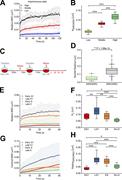
Figure 1. Relative and centroid dynamics of a locus pair situated at a 4.6-kb distance. (A and B) Diagram of CRISPR-Sirius design. (C) Genomic location of IDR2 and IDR3 with their 4.6-kb inter-locus distance. (D and E) Contrasting mobilities of the IDR2/IDR3 locus pair in two cells. Phase contrast images, gyration radius of trajectory (RIDR2 and RIDR3), and dual-color time-lapse images were shown in for each cell. (F) Schematic of relative movement (RA/B) using the IDR3 locus as a reference point. (G and H) Relative gyration radii of IDR2 and IDR3 (RIDR2/IDR3) in cell 1 and cell 2. (I) Diagram of the centroid movement. (J and K) Centroid radius of gyration of IDR2 and IDR3 (RC) in two cells. (L) The RNA-Seq of U2OS showed the transcription of genes adjacent to IDR2 and IDR3.
Published: 07 March 2019
Figure 1. Relative and centroid dynamics of a locus pair situated at a 4.6-kb distance. (A and B) Diagram of CRISPR-Sirius design. (C) Genomic location of IDR2 and IDR3 with their 4.6-kb inter-locus distance. (D and E) Contrasting mobilities More about this image found in Relative and centroid dynamics of a locus pair situated at a 4.6-kb distanc...
Images
Figure 2. Distinct chromosome dynamics during cell cycle progression in interphase. (A) Relative MSD of IDR2 and IDR3 pair from asynchronous cells was classified into low, middle, and high MSD groups. n = 13 trajectories for high, n = 11 for middle, and n = 5 for low MSD. The error bars of the MSD plot represent 1 SD. (B) Box-and-Whisker plots of relative trajectory radius (RIDR2/IDR3) in the low, middle, and high MSD groups. (C) Schematic of cell synchronization using double thymidine block. Sync, synchronous; Async, asynchronous. (D) Box-and-whisker plots of IDR3/IDR3 (zero genomic distance, n = 24) and IDR2/IDR3 (4.6-kb genomic distance, n = 63). (E and F) Relative MSD plot and relative radius (RIDR2/IDR3) of IDR2/IDR3 in early G1 (EG1), late G1 (LG1), early S (ES), and mid-late S (M-LS), respectively. n = 5 trajectories for early G1, n = 19 for late G1, n = 21 for early S, and n = 24 for mid-late S. The error bars of the MSD plot represent 1 SD. (G and H) Centroid MSD plot and centroid radius of IDR2/IDR3 in early G1, late G1, early S, and mid-late S, respectively. n = 5 trajectories for early G1, n = 19 for late G1, n = 21 for early S, and n = 24 for mid-late S. Significance tests were performed using an unpaired t test: significant difference *, P < 0.05; **, P < 0.01; ***, P < 0.001. The error bars of the MSD plot represent 1 SD.
Published: 07 March 2019
Figure 2. Distinct chromosome dynamics during cell cycle progression in interphase. (A) Relative MSD of IDR2 and IDR3 pair from asynchronous cells was classified into low, middle, and high MSD groups. n = 13 trajectories for high, n = 11 for More about this image found in Distinct chromosome dynamics during cell cycle progression in interphase. (...
Images
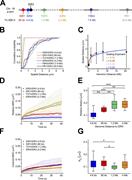
Figure 3. Spatial distance and dynamics of locus pairs situated at kilobase to megabase apart. (A) Diagram of loci on the p-arm of chromosome 19 with distances from IDR3 of 4.6 kb (IDR2), 80 kb (IDR1), 1.2 Mb (TCF3), 4.2 Mb (IDR4), 7.8 Mb (FBN3), and 20.6 Mb (PR1). (B) Cumulative probability plot showing the difference of spatial distances distribution of inter-locus distances of each pair. (C) Mean spatial distance versus genomic distance for all loci pairs. The scaling exponents γ are given by fitting the data to the power law relationship, Mean spatial distance ∝ (genomic distance)γ. The error bars of the plot represent 1 SD. (D and E) Relative MSD and relative radius of loci pairs from IDR2/IDR3 (4.6 kb), IDR1/IDR3 (80 kb), TCF3/IDR3 (1.2 Mb), to IDR4/IDR3 (4.2 Mb). n = 19 trajectories for IDR2/IDR3, n = 7 for the IDR1/IDR3 pair, n = 12 for TCF3/IDR3, and n = 11 for IDR4/IDR3. The error bars of the MSD plot represent 1 SD. (F and G) Centroid MSD and centroid radius of the indicated locus pairs. n = 19 trajectories for IDR2/IDR3, n = 7 for the IDR1/IDR3 pair, n = 12 for TCF3/IDR3, and n = 11 for IDR4/IDR3. Significance tests were performed using an unpaired t test: significant difference *, P < 0.05; **, P < 0.01; ***, P < 0.001. The error bars of the MSD plot represent 1 SD.
Published: 07 March 2019
Figure 3. Spatial distance and dynamics of locus pairs situated at kilobase to megabase apart. (A) Diagram of loci on the p-arm of chromosome 19 with distances from IDR3 of 4.6 kb (IDR2), 80 kb (IDR1), 1.2 Mb (TCF3), 4.2 Mb (IDR4), 7.8 Mb More about this image found in Spatial distance and dynamics of locus pairs situated at kilobase to megaba...
Images
Figure 4. Model of cell cycle–dependent chromosome dynamics. Top: Two distinct dynamic modes (local movement and domain movement). Middle: Chromosomal fiber relaxation and dynamics during interphase progression. Bottom: Contrasting dynamics of genomic length–dependent locus pairs.
Published: 07 March 2019
Figure 4. Model of cell cycle–dependent chromosome dynamics. Top: Two distinct dynamic modes (local movement and domain movement). Middle: Chromosomal fiber relaxation and dynamics during interphase progression. Bottom: Contrasting dynamics of More about this image found in Model of cell cycle–dependent chromosome dynamics. Top: Two distinct dynam...
Journal Articles
Images
Figure 1. Single-nucleosome imaging in living RPE-1 cells. (A) Expression of H2B-Halo in RPE-1 cells was confirmed by Western blotting with αH2B antibody (lane 1). In lane 2, parental RPE-1 cells show no H2B-Halo signals. (B) RPE-1 cells expressing H2B-Halo fluorescently labeled with TMR-HaloTag ligand (center). The left panel is DNA stained with DAPI. The merged image (DNA, blue; H2B-Halo, red) is shown at right. Putative inactive X chromosome, which is highly condensed, is marked with an arrowhead. Note that the TMR labeling pattern is very similar to the DNA staining one. (C) Scheme of oblique illumination microscopy. This illumination laser (green) can excite fluorescent molecules within a limited thin optical layer (red) of the nucleus and reduce background noise. (D) A small fraction of H2B-Halo was fluorescently labeled with TMR-HaloTag ligand (red). The labeled nucleosome movements can be tracked at super-resolution. (E) A single-nucleosome (H2B-Halo-TMR) image of a living RPE-1 nucleus after background subtraction. (F) Representative three trajectories of the tracked single nucleosomes. (G) MSD plots (±SD among cells) of single nucleosomes in living interphase (black) and FA-fixed (red) RPE-1 cells from 0.05 to 0.5 s. For comparison, MSD plots of single nucleosomes labeled with PA-mCherry (H2B-PA-mCherry) in living interphase RPE-1 cells (gray) are also shown. For each sample, n = 20–25 cells. N.S. (not significant, P = 0.47) and ***, P < 0.0001 (P = 1.5 × 10⁻¹¹) for H2B-Halo versus FA-fixed cells by the Kolmogorov–Smirnov test. (H) MSD plots (±SD among cells) of single nucleosomes in living (black) and FA-fixed (red) RPE-1 cells in a longer tracking time range from 0.05 to 3 s. For each sample, n = 20 cells. In the MSD analyses for single nucleosomes, the originally calculated MSD was in two dimensions. To obtain 3D values, the original values of MSD were multiplied by 1.5 (4 to 6 Dt). The plots were fitted as a subdiffusive curve: MSD = 0.018t0.28 in a living cell; MSD = 0.003t0.01 in an FA-fixed cell. Rc (estimated radius of constraint of the nucleosome motion), 141 ± 19.2 nm (mean ± SD) in living cells; 56 ± 6.7 nm in FA-fixed cells. Their Rc values are significantly different: P = 2.2 × 10⁻¹⁰ by the Kolmogorov-Smirnov test.
Published: 01 March 2019
Figure 1. Single-nucleosome imaging in living RPE-1 cells. (A) Expression of H2B-Halo in RPE-1 cells was confirmed by Western blotting with αH2B antibody (lane 1). In lane 2, parental RPE-1 cells show no H2B-Halo signals. (B) RPE-1 cells More about this image found in Single-nucleosome imaging in living RPE-1 cells. (A) Expression of H2B-Hal...
Images
Figure 2. Decrease in the amount of active RNAPII and RNA synthesis by RNAPII inhibitors. (A) Scheme for RNAPII regulation by phosphorylation of its CTD repeats, (YSPTSPS) × 52. In the initiation process, RNAPII, in which Ser5 of CTD is phosphorylated, stays around the initiation site (red, RNAPII-Ser5P) on the template DNA. For elongation, with phosphorylation of Ser2 of CTD, the RNAPII complex goes along the template DNA (green, RNAPII-Ser2P). Note that the scheme is highly simplified. (B) Left: Effect of RNAPII inhibitors on RNAPII activity. RNAPII activity in RPE-1 cells was monitored by immunostaining of the active RNAPII marker (Stasevich et al., 2014), Ser5P, of RNAPII CTD. The inhibitors used were α-AM, DRB, and ActD. As solvent controls, DMSO and ultrapure water (MQ) were used. First row, DNA staining with DAPI; second row, immunostaining of Ser5P of RNAPII CTD; third row, merged images. Right: The quantification of RNAPII-Ser5P signal intensity is shown as a box plot. The median intensities of Ser5P: 32.6 (n = 118 cells) in control; 22.4 (n = 121 cells) in DRB; 17.5 (n = 141 cells) in α-AM; 29.0 (n = 130 cells) in ActD. ***, P < 0.0001 by the Wilcoxon rank sum test for control versus DRB (P < 2.2 × 10⁻¹⁶), and for control versus α-AM (P < 2.2 × 10⁻¹⁶). (C) Left: Active RNAPII (Ser5P) distribution in RPE-1 cells with DRB or α-AM or without inhibitors (untreated control) observed by immunostaining. Typical images with deconvolution by DeltaVision Softworx software are shown. RNAPII-Ser5P formed clusters and distributed in the nucleoplasm except for nuclear periphery and nucleoli. Right: The intensity line profiles (bottom) of DAPI (blue) and RNAPII-Ser5P (green) on the dotted line in the merged image (top) show that the nuclear periphery regions (arrows) are quite free from RNAPII-Ser5P signals. (D) Left: Verification of RNA synthesis inhibition by RNAPII inhibitors (α-AM, DRB, and ActD) with EU incorporation into RNA. The incorporated EU was detected with Alexa Fluor 594–labeling by click chemistry. For each condition, n = 45–53 cells. Right: Box plot of EU signal intensity. The median intensities of EU are 13.5 (n = 49 cells) in control, 4.44 (n = 48 cells) in DRB, 1.69 (n = 45 cells) in α-AM, 0.975 (n = 45 cells) in ActD, and 16.1 (n = 53 cells) in DMSO. Note that the inhibitor treatments decreased RNA transcription. ***, P < 0.0001 by the Wilcoxon rank sum test for control versus DRB (P < 2.2 × 10⁻¹⁶), for control versus α-AM (P < 2.2 × 10⁻¹⁶), and for control versus ActD (P < 2.2 × 10⁻¹⁶).
Published: 01 March 2019
Figure 2. Decrease in the amount of active RNAPII and RNA synthesis by RNAPII inhibitors. (A) Scheme for RNAPII regulation by phosphorylation of its CTD repeats, (YSPTSPS) × 52. In the initiation process, RNAPII, in which Ser5 of CTD is More about this image found in Decrease in the amount of active RNAPII and RNA synthesis by RNAPII inhibit...
Images
Figure 3. Increased chromatin dynamics by RNAPII inhibitors. (A) MSD plots (±SD among cells) of nucleosomes in the RPE-1 cells treated with RNAPII inhibitors, α-AM (pink), DRB (purple), and ActD (brown). The controls are DMSO (gray), MQ (light blue), or untreated (black). For each condition, n = 20 cells. Note that the inhibition of RNAPII increased the chromatin dynamics, except for ActD. ***, P < 0.0001 by the Kolmogorov–Smirnov test for untreated control versus DRB (P = 1.4 × 10⁻⁷), for untreated control versus α-AM (P = 1.0 × 10⁻⁸), and for untreated control versus ActD (P = 9.5 × 10⁻⁶). (B) Chromatin heat maps of the nuclei treated with (right) and without α-AM (left): Larger chromatin movement appears as more red (or hot), and smaller movement appears as more blue (or cold) pixels. Note that the heat map of the nucleus with α-AM turned more red. Bar, 5 μm. (C) MSD plots (±SD among cells) of single nucleosomes in RPE-1 cells treated with RNAPII inhibitor (α-AM, DRB) or without inhibitors (control) from 0.05 to 3 s. For each sample, n = 20 cells. The inhibitor treatments increased chromatin dynamics with less constraint. The plots were fitted as a subdiffusive curve: MSD = 0.018t0.28 in untreated cells; MSD = 0.022t0.26 in DRB-treated cells; MSD = 0.025t0.28 in α-AM–treated cells. Rc: 141 ± 19.2 nm in untreated cells, 149 ± 20.4 nm in DRB-treated cells, and 164 ± 22.0 nm in α-AM–treated cells. Rc values between untreated control and α-AM–treated cells are significantly different: P = 0.018 by the Kolmogorov-Smirnov test.
Published: 01 March 2019
Figure 3. Increased chromatin dynamics by RNAPII inhibitors. (A) MSD plots (±SD among cells) of nucleosomes in the RPE-1 cells treated with RNAPII inhibitors, α-AM (pink), DRB (purple), and ActD (brown). The controls are DMSO (gray), MQ (light More about this image found in Increased chromatin dynamics by RNAPII inhibitors. (A) MSD plots (±SD amon...
Images
Figure 4. Inhibitors of RNA polymerase I and splicing had little influence on the chromatin dynamics. (A) Verification of RNA polymerase I inhibition in RPE-1 cells with CX5461 by EU incorporation. (B) The box plots show RNAPII-Ser5P signal intensity in control and CX5461-treated RPE-1 cells. The median intensities of Ser5P are 71.8 in control (n = 30 cells) and 67.3 in CX5461 (n = 30 cells). N.S. (P = 0.066) by the Wilcoxon rank sum test. (C) MSD plots (±SD among cells) of single nucleosomes in RPE-1 cells treated with polymerase I (RNAPI) inhibitor (CX5461, green), solvent (DMSO, gray), or none (control, black). For each condition, n = 37–39 cells. Note that the effect of RNAPI inhibition on the chromatin dynamics is very small. N.S. (P = 0.40) by the Kolmogorov–Smirnov test for untreated control versus CX5461. (D) MSD plots (±SD among cells) of single nucleosomes in RPE-1 cells treated with splicing inhibitor, Pladienolide B (Pla-B, yellow) or DMSO (gray). For each condition, n = 20 cells. N.S. (P = 0.34) by the Kolmogorov–Smirnov test. (E) Verification of splicing inhibition in RPE-1 cells treated with Pla-B by quantitative RT-PCR. Relative amounts of spliced (Ex 2–3 mRNA) and nonspliced (Int 2 premRNA) CDK6 RNA products in RPE-1 cells treated with Pla-B (yellow) or DMSO (gray) are shown. Schematic representation of primer positions for Ex 2–3 mRNA (pink arrows) and Int 2 pre-mRNA (orange arrows) are also shown at the bottom. Averaged relative amounts of the products were shown with SD (n = 3). N.S. (P = 0.38) and ***, P < 0.0001 (P = 1.7 × 10⁻⁶) by Student’s t test. (F) Left: MSD plots (±SD among cells) of single nucleosomes on the interior and peripheral layers of the RPE-1 nuclei treated with RNAPII inhibitor, α-AM (pink), solvent (MQ, light blue), or none (control, black). For each condition, n = 15 cells. Note that on the nuclear periphery, the chromatin dynamics were not significantly affected by α-AM treatment. N.S. (P = 0.075) for control periphery versus α-AM periphery and ***, P < 0.0001 for control periphery versus control interior (P = 3.9 × 10⁻⁷) by the Kolmogorov–Smirnov test. There was no significant difference between the MSD of α-AM–treated interior in Fig. 4 F and that of α-AM–treated in Fig. 3 A (P = 0.13). Right: Schematic representation for nuclear interior (top) and periphery (bottom) imaging.
Published: 01 March 2019
Figure 4. Inhibitors of RNA polymerase I and splicing had little influence on the chromatin dynamics. (A) Verification of RNA polymerase I inhibition in RPE-1 cells with CX5461 by EU incorporation. (B) The box plots show RNAPII-Ser5P signal More about this image found in Inhibitors of RNA polymerase I and splicing had little influence on the chr...
Images
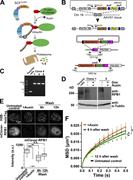
Figure 5. Rapid degradation of RNAPII increased the chromatin dynamics. (A) A schematic illustration of the AID system (Natsume et al., 2016; Yesbolatova et al., 2019 Preprint). OsTIR1, which was expressed by addition of doxycycline, can form a functional SCFOsTIR1 E3 ligase complex with the endogenous components in human cells. In the presence of auxin, a protein of interest fused with mAID is rapidly degraded upon polyubiquitylation. (B) Experimental scheme used to introduce Tet-OsTIR1 at the safe-harbor AAVS1 locus in human colorectal carcinoma DLD-1 cells (top) and used to generate mAID-mClover-RPB1 (mAC-RPB1) cells (bottom) by a CRISPR/Cas9 genome editing method. Genomic PCR to test the genotype of clones after hygromycin selection was performed. Primer sets and expected PCR products are shown in B (bottom). After integration at the POLR2A gene encoding the largest subunit of RNAPII, RPB1, the PCR primers should give rise to ∼3.4-kb products in DLD-1 cells. (C) PCR confirmed that both alleles of POLR2A gene were tagged with mAID-mClover. (D) RNAPII degradation in DLD-1 cells (Clone 1 and Clone 5) after auxin treatment was verified by immunoblotting by using an antibody against the RPB1 CTD. α-Tubulin antibody was used as a control. Since the RPB1 in the AID cells was fused with mAID and mClover (totally ∼35 kD), the detected RPB1 in Clone 1 and Clone 5 has a slightly larger size than that of the parental cells. Note that the auxin treatment induced RNAPII degradation. (E) Fluorescent images of H2B-Halo-TMR (top) and mClover-RPB1 (middle) in living DLD-1 cells: From left to right, the cells before (untreated control) and after treatment with auxin for 1 h (+Auxin), the cells incubated for 6 h and 12 h after washing out auxin. Bottom: The median intensities of mClover-RPB1 in the indicated cells are the following: 931 (n = 10) in untreated control; 78.8 (n = 10) in +Auxin; 557 (n = 10) at 6 h after washing; 713 (n = 10) at 12 h after washing cells. ***, P < 0.0001 (P = 1.1 × 10⁻⁵), **, P < 0.01 (P = 7.2 × 10⁻⁴), and N.S. (P = 0.063) by the Wilcoxon rank sum test. (F) MSD plots (±SD among cells) of nucleosomes in DLD-1 cells with indicated conditions: The cells before (untreated control, black) and after treatment with auxin for 1 h (+Auxin, orange); after washing out auxin, the cells incubated for 6 h (dark green) and 12 h (light green). For each condition, n = 20 cells. The prompt degradation of RNAPII increased the chromatin dynamics. Note that DLD-1 cells have generally higher MSD values than RPE-1 cells due to unknown reasons. **, P < 0.01 for control versus +Auxin (P = 2.7 × 10⁻⁴) and N.S. (P = 0.83) by the Kolmogorov–Smirnov test.
Published: 01 March 2019
Figure 5. Rapid degradation of RNAPII increased the chromatin dynamics. (A) A schematic illustration of the AID system ( Natsume et al., 2016 ; Yesbolatova et al., 2019 Preprint). OsTIR1, which was expressed by addition of doxycycline, can More about this image found in Rapid degradation of RNAPII increased the chromatin dynamics. (A) A schema...
Images
Figure 6. Serum starvation increased chromatin dynamics. (A) Experimental scheme. Proliferating cells were starved by removing serum from the culture medium. Most of the cells entered the quiescent G0 phase. The starved cells were then stimulated with serum re-addition to re-enter them into the proliferating state. (B) MSD plots (±SD among cells) of nucleosomes in RPE-1 cells (black) and with the serum starvation for 3 d (light blue) or 7 d (dark blue). For each condition, n = 20 cells. Note that the chromatin dynamics increased depending on the serum starvation period. ***, P < 0.0001 by the Kolmogorov–Smirnov test for no starvation versus 3-d starvation (P = 1.1 × 10⁻⁸) and for no starvation versus 7-d starvation (P = 1.5 × 10⁻¹¹). (C) Top: Verification of RNAPII activity of RPE-1 cells without (0 d) or with the serum starvation for 3 d and 7 d by immunostaining of Ser5P of the RPB1 CTD in RNAPII. Bottom: Quantifications of RNAPII Ser5P signal intensity are shown as box plots. The median intensities of Ser5P are 45.5 (n = 38) at 0 d starvation, 24.4 (n = 47) at 3 d, and 17.3 (n = 42) at 7 d. RNAPII activity decreased after serum starvation. ***, P < 0.0001 by the Wilcoxon rank sum test for 0 d versus 3 d (P < 2.2 × 10⁻¹⁶) and for 0 d versus 7 d (P < 2.2 × 10⁻¹⁶). (D) Top: RNAPII activity observed by immunostaining in the RPE-1 cells without (untreated control), with serum starvation for 3 d, or with the re-addition of serum. Bottom: Quantification of RNAPII Ser5P signal intensity is shown as box plots. The median intensities of Ser5P are 54.5 (n = 101) in untreated control, 38.0 (n = 103) in 3-d starvation, and 56.3 (n = 79) in re-addition. Note that RNAPII activity decreased in the G0 phase and was restored with serum re-addition. The Wilcoxon rank sum test shows N.S. (P = 0.20), and ***, P < 0.0001 for untreated versus starvation (P < 2.2 × 10⁻¹⁶) and for starvation versus serum re-addition (P < 2.2 × 10⁻¹⁶). (E) MSD plots (±SD among cells) of nucleosomes in RPE-1 cells without (black) or with serum starvation for 3 d (light blue), and 1 d after serum re-addition (orange). For each condition, n = 39–40 cells. The up-regulated chromatin dynamics were restored to the untreated level upon serum re-addition. The Kolmogorov–Smirnov test shows N.S. (P = 0.93), and ***, P < 0.0001 for untreated versus 3-d starvation (P = 3.2 × 10⁻⁷) and for 3-d starvation versus serum re-addition (P = 4.8 × 10⁻⁶).
Published: 01 March 2019
Figure 6. Serum starvation increased chromatin dynamics. (A) Experimental scheme. Proliferating cells were starved by removing serum from the culture medium. Most of the cells entered the quiescent G0 phase. The starved cells were then More about this image found in Serum starvation increased chromatin dynamics. (A) Experimental scheme. Pr...
Images
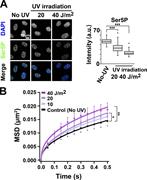
Figure 7. UV-induced increase in chromatin dynamics. (A) Left: RNAPII activity of RPE-1 cells before (no UV) and after 20-or 40-J/m2 UV irradiation observed by immunostaining of Ser5P in RNAPII. Right: Quantifications of RNAPII Ser5P signal intensity are shown as box plots. The median intensities of Ser5P are 46.7 (n = 114) in control, 32.7 (n = 94) in 20 J/m2, and 21.8 (n = 89) in 40 J/m2. Note that RNAPII activity decreased after the UV irradiation. ***, P < 0.0001 by the Wilcoxon rank sum test for no UV versus 20 J/m2 (P < 2.2 × 10⁻¹⁶) and for no UV versus 40 J/m2 (P < 2.2 × 10⁻¹⁶). (B) MSD plots (±SD among cells) of nucleosomes in RPE-1 cells before (no UV, black), after 10-, 20-, and 40-J/m2 UV irradiation (from light to dark purples). n = 12 cells in 10 J/m2; n = 10 cells in 20 J/m2; n = 9 cells in 40 J/m2; n = 27 cells in no UV. Note that the chromatin dynamics increased 6 h after UV irradiation. The Kolmogorov–Smirnov test shows **, P < 0.001 for untreated control versus 40 J/m2 UV (P = 1.9 × 10⁻⁴) and *, P < 0.05 for untreated control versus 20 J/m2 UV (P = 0.028).
Published: 01 March 2019
Figure 7. UV-induced increase in chromatin dynamics. (A) Left: RNAPII activity of RPE-1 cells before (no UV) and after 20-or 40-J/m2 UV irradiation observed by immunostaining of Ser5P in RNAPII. Right: Quantifications of RNAPII Ser5P signal More about this image found in UV-induced increase in chromatin dynamics. (A) Left: RNAPII activity of RP...
Images
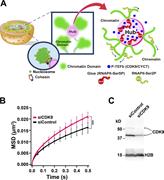
Figure 8. A model for chromatin networking via RNAPII-Ser5P. (A) A model for the formation of a loose spatial genome chromatin network via RNAPII-Ser5P, which can globally constrain chromatin dynamics. The P-TEFb complex (blue sphere in right panel) consisting of CYCT and CDK9 kinase, which interacts with RNAPII, forms a number of dynamic clusters/droplets in living cells (pink spheres in the center and right panels; Ghamari et al., 2013). Center: The P-TEFb cluster (pink sphere) can work as a hub to weakly connect multiple chromatin domains (green spheres) for a loose spatial genome network. Right: RNAPII-Ser5P (red) can function in the hub as glue for the weak interactions between P-TEFb (blue spheres) and transcribed DNA regions (green lines; Ghamari et al., 2013). Because after phosphorylation of RNAPII by P-TEFb, RNAPII-Ser2P seems to leave the hubs (P-TEFb clusters) for the elongation and processing process (Ghamari et al., 2013), it is unlikely to function as the glue for the connections (right). Note that this scheme is highly simplified. Besides the P-TEFb clusters, other clusters, including transcription factors, Mediator, and active RNAPII (Boehning et al., 2018; Boija et al., 2018; Cho et al., 2018; Chong et al., 2018; Sabari et al., 2018), might also work as hubs. (B) MSD plots (±SD among cells) of nucleosomes in CDK9-KD RPE-1 cells (siCDK9, pink) and control (siControl, black). For each condition, n = 20 cells. Note that the KD of CDK9 increased the chromatin dynamics. ***, P < 0.0001 (P = 1.3 × 10⁻⁶) by the Kolmogorov–Smirnov test. (C) CDK9 reduction in RPE-1 cells after RNA interference was verified by immunoblotting. H2B protein was used as a loading control.
Published: 01 March 2019
Figure 8. A model for chromatin networking via RNAPII-Ser5P. (A) A model for the formation of a loose spatial genome chromatin network via RNAPII-Ser5P, which can globally constrain chromatin dynamics. The P-TEFb complex (blue sphere in right More about this image found in A model for chromatin networking via RNAPII-Ser5P. (A) A model for the for...

or Create an Account

Close Modal
Close Modal