



Skip to Main Content

Advertisement

Skip Nav Destination
Newest Articles
Article
Jinglang Sun, Juan de la Rosa Vázquez, Adriana Hernández-González, Vladimir Yarov-Yarovoy, Amy Lee
Sun et al. show that the commonly used CaV3 T-type channel-selective antagonists, ML218 and Z944, modulate the activity of CaV1.4 L-type channels through a mechanism involving the dihydropyridine-binding site.
Article
Ha Nguyen, Jonathan Mount, Keino Hutchinson, Yihan Zhao, Yulin Zhao, Ian W. Glaaser, Peng Yuan, Avner Schlessinger, Paul A. Slesinger
Nguyen et al. show that Arg-92 in GIRK2 is essential for PIP2-dependent gating, with substitutions causing structural rearrangements that disrupt G protein and alcohol activation—likely a conserved mechanism among inward rectifier potassium channels.
Article | Voltage-Gated Na Channels 2026
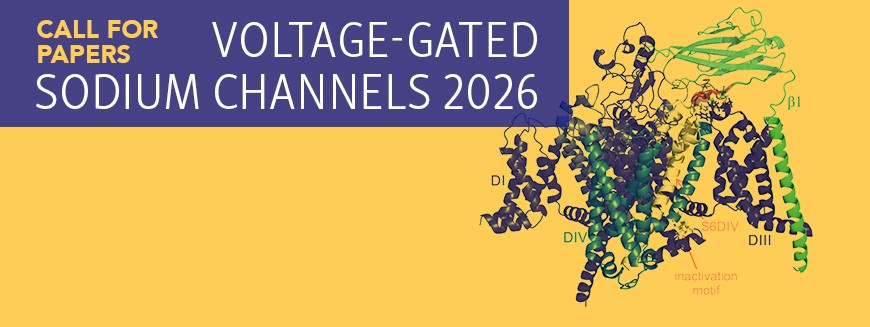
Diego Lopez-Mateos, Kush Narang, Vladimir Yarov-Yarovoy
Lopez-Mateos et al.’s study demonstrates AlphaFold2’s potential to sample multiple states of human NaV channels. Additionally, NaV α-subunit interactions with β-subunits and calmodulin reshape NaV α-subunit conformational landscape. This study reveals the potential of deep learning methods to model structural diversity of ion channels.
Article
Hridya Valia Madapally, Adel Hussein, Martin Wazar Eriksen, Bjørn Panyella Pedersen, David L. Stokes, Himanshu Khandelia
KdpFABC is a unique potassium pump that combines channel-like selectivity with ATP-driven transport. Using simulations, X-ray scattering, and biochemical assays, this study shows that its inter-subunit tunnel is mainly water-filled and has a single stable potassium site. The findings challenge the idea of a continuous ion-wire and highlight a key barrier at the KdpA–KdpB interface.
Hypothesis
Jenna L. Lin, Baron Chanda
Channel gating in cyclic nucleotide-binding domain (CNBD) channels has traditionally been described using allosteric models. This work by Lin and Chanda compares different gating models to account for the diverse gating phenotypes observed across the CNBD family, including those arising from targeted mutations and chimeragenesis.
Article
James S. Lotti, Jed T. Syrenne, Avery J. Benton, Ahmad Al-Mousawi, Lauren E. Cornelison, Christopher J. Trolinder, Feng Yi, Zhucheng Zhang, Cindee K. Yates-Hansen, Levi J. McClelland, James Bosco, Andrew R. Rau, Rasmus P. Clausen, Kasper B. Hansen
This study describes a novel negative allosteric modulator that engages previously unexplored structural determinants in an allosteric binding site between NMDA receptor subunits, enabling new opportunities for structure-based design of subtype-selective NMDA receptor modulators.
Article
Akshay Sharma, Christopher Marra, Nomon Mohammad, Vasilisa Iatckova, Lillian Lawrence, Mitchell Goldfarb
The CTD of voltage-gated sodium channels influences many properties of the channel. Here, Akshay Sharma et al. show the differential effects of CTD missense mutations of cardiac sodium channel activation, inactivation, persistent current, and accessory protein modulation and suggest the structural bases for these mutational effects.
Journal of General Physiology Cover Image for Volume 158, Issue 1
Current Issue
Volume 158,
Issue 1,
5 January 2026
Reviews & Opinions
Review | Contractile Function
Anthony L. Hessel, Katelyn M. Manross, Matthew M. Borkowski, Christopher D. Rand, Khoi Nguyen
Practical advice to those who use permeabilized muscle preparations for mechanics experiments. This article covers the storage and preparation of samples, equipment considerations, and best practices to make experimental protocols reproducible.
Tutorial
Joe Henry Steinbach, Gustav Akk
Electrophysiological potentiation is calculated from the ratio of amplitudes of responses to agonist in the presence and absence of a modulator. Steinbach and Akk show that potentiation depends on the relative magnitude of the control response and provide equations to calculate the expected potentiating effect at different levels of control responses.
Commentary
Godfrey L. Smith, David A. Eisner
This commentary focuses on a recently published article that featured manganese quench measurements in skeletal muscle, in particular a transient quench signal that was thought to represent Ca2+ transiently displacing Mn2+ bound to endogenous Ca2+ buffers inside muscle cells. The article explains these concepts in terms of the physical chemistry of calcium and manganese ligand binding.

Most Read

Advertisement

null

Special Collections

Highlighting recent articles addressing a wide variety of neuroscience research.

View Collections >

or Create an Account

Close Modal
Close Modal