Welcome to another year at JGP! As always, I would like to begin by thanking the whole JGP community for its support over the last year. This is particularly appreciated today when we are all challenged by so many difficulties. We are indebted to our authors, without whom there would be no science to publish. Equally important are the reviewers who give freely of their time and expertise to critique and improve submissions. Many of these reviewers are members of the Editorial Advisory Board (EAB). I would like to thank the following EAB members who have finished their terms: Bob Balaban, Olga Bouker, Jose Eltit, Peter Larsson, Eduardo Perozo, Janice Robertson, John Solaro, Sergei Sukharev, and Valeria Vasquez. It is also a pleasure to welcome three new members to the EAB: Wojciech Kopec (London, UK), Diederik Kuster (Amsterdam, Netherlands), and Tibor Rohacs (Newark, NJ, USA). Descriptions of their backgrounds and interests can be found below. Warm thanks are also due to our managing editor Meighan Schreiber and the rest of the Rockefeller University Press team for their continuous support.
At the heart of JGP is the group of dedicated associate editors: Henk Granzier, Chris Lingle, Joe Mindell, Jeanne Nerbonne, Crina Nimigean, and Eduardo Ríos. I am also delighted that we have been joined by Teresa Giraldez (Tenerife, Spain), who brings great expertise to the group, particularly in ion channel physiology.
While writing this editorial, my mind strayed to wondering what JGP was like 100 years ago. The January 4th, 1925, issue is fascinating. One point is that, of the nine articles, five have only a single author, while the others have two. Clearly, science was a much more individual activity in those days than it is today. The topics covered are also interesting. Two of the papers are on aspects of light and vision, with one relating the quantal nature of light to peripheral vision (Lasareff, 1926) and another considering the factors affecting the retraction of the siphon of a sea squirt in response to light (Hecht, 1926). Hecht analyzed the mechanism in terms of consecutive reactions, with a first light-sensitive one followed by a chemical reaction. Such a quantitative modeling approach is still a hallmark of JGP papers. Papers on vision and retinal mechanisms also continue to be well represented (Avilés et al., 2025; Horie et al., 2025; Thoreson et al., 2025). One article from 1925 that I found particularly fascinating was a study on geotropism and muscle tension in snails (Cole, 1926). The author studied the effect of moderate centrifugation and loading the shell with weights. Readers were reassured that the snails “were fed regularly every evening with all the fresh lettuce leaves they would eat.” Again, muscle physiology continues as a strength in JGP (Foy et al., 2025; Han et al., 2025; Holmes and Stelzer, 2025; McDonald et al., 2025; Scala et al., 2025; Tao and Corry, 2025; Vysma et al., 2025; Woods et al., 2025).
I hope that, as well as reading the science we publish today and submitting to JGP this year, you will find time to dip into the fascinating collection of historic papers.
New Editorial Advisory Board members
Wojciech Kopec
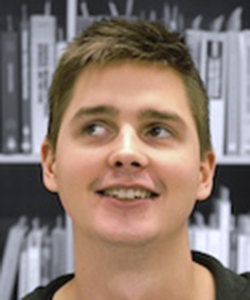
Wojciech Kopec is a lecturer in Computational Pharmaceutical Chemistry at the Department of Chemistry, working on biophysical mechanisms and pharmacology of ion channels using computational approaches. Before joining Queen Mary University of London in 2023, Wojciech worked for several years at the Max Planck Institute for Multidisciplinary Sciences in Goettingen, Germany, focusing on computational electrophysiology simulations. Wojciech enjoys integrating computational and experimental approaches in a truly interdisciplinary manner.
Dr. Kopec got his bachelor’s and master’s degrees in Chemistry from the Jagiellonian University in Kraków, Poland, where he worked on the application of graph theory in chemistry and molecular modeling of polycation interactions with lipid membranes. For his doctoral studies, he moved to Odense, Denmark, where he worked at MEMPHYS—Center for Biomembrane Physics, located at the University of Southern Denmark, where he focused on studying ion binding and selectivity of ion pumps. During his PhD, Dr. Kopec visited the University of Chicago, working with Prof. Benoit Roux on polarizable force fields. After obtaining his PhD degree, Dr. Kopec moved to Germany to work with Prof. Bert de Groot at the Max Planck Institute for Multidisciplinary Sciences in Goettingen on ion permeation and gating mechanisms of potassium channels. After working for a few years as a postdoc, Dr. Kopec became a project group leader at the same institute, continuing his work on ion channels. In August 2023, he moved to Queen Mary University of London. Photo credit Mathias Porsmose Clausen.
Diederik Kuster
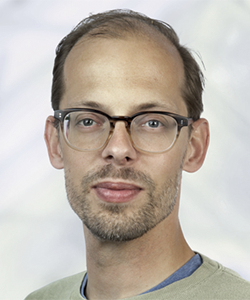
Diederik Kuster is an assistant professor at the Department of Physiology at Amsterdam University Medical Center (UMC) in Amsterdam, the Netherlands. He obtained his undergraduate degree in chemistry from the University of Utrecht (Netherlands). His PhD research focused on the regulation of physiological and pathological cardiac hypertrophy in the Biochemistry and Experimental Cardiology departments of Erasmus University Medical Center (Rotterdam, Netherlands), supervised by Dr. Adrie Verhoeven and Prof. Dirk Duncker. A postdoctoral fellowship in Prof. Jolanda van der Velden’s group at the Physiology department of Vrije University Medical Center (Amsterdam, Netherlands) followed, where he studied cardiac myosin-binding protein C function. After this, he continued working on cardiac myosin-binding protein C and its role in hypertrophic cardiomyopathy under the supervision of Prof. Sakthivel Sadayappan at Loyola University Chicago (Chicago, IL, USA). He returned as an assistant professor to Amsterdam UMC to set up his own research line focusing on understanding the molecular regulation of contraction/relaxation in cardiac disease. He performs translational research in hypertrophic cardiomyopathy and combines biochemistry, biophysics, and physiology. By building new methods to measure cardiomyocyte/cardiac tissue model contractility and combining that with molecular analysis and (phospho)proteomics, he aims to uncover new disease mechanisms and develop new therapies in hypertrophic cardiomyopathies. Photo credit Amsterdam UMC.
Tibor Rohacs
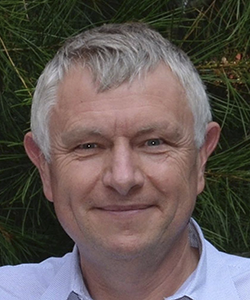
Tibor Rohacs is a professor and vice chair for research at the Department of Pharmacology, Physiology and Neuroscience at Rutgers—New Jersey Medical School in Newark, NJ, USA. He earned his MD and PhD degrees at Semmelweis University in Budapest, Hungary, where he studied the mechanism and consequences of cytoplasmic Ca2+ signaling in aldosterone-producing adrenal glomerulosa cells under the mentorship of András Spät. He did his postdoctoral training in the laboratory of Diomedes Logothetis at the Mount Sinai School of Medicine in New York, studying the regulation of inwardly rectifying K+ channels by plasma membrane phosphoinositides. He established his independent laboratory in 2005 and redirected his efforts to studying the regulation of transient receptor potential (TRP) ion channels, with initial focus on regulation by plasma membrane phosphoinositides, using electrophysiology, fluorescence imaging, and molecular biology. The laboratory also developed an interest in mechanically activated Piezo channels, studying their regulation by plasma membrane phospholipids and cellular signaling pathways. The scope of the lab was later extended to somatosensory physiology, pain, and itch, studying the roles of heat- and cold-activated TRP channels and mechanically activated Piezo channels using behavioral approaches and mouse genetics. Photo courtesy of Tibor Rohacs.