Skip to Main Content
Skip Nav Destination
1-20 of 87
Follow your search
Access your saved searches in your account

Would you like to receive an alert when new items match your search?
Close Modal
Sort by
Journal Articles
Images
Figure 1. m1Ψ-mRNA-LNPs are translated at higher levels than naked m1Ψ-mRNAs or U-mRNA-LNPs in mice. (A) Representative IVIS image (4 h after injection) of BALB/c mice i.d. injected with 5.0 µg of naked (uncomplexed) or LNP-complexed Luc m1Ψ-mRNA. (B) Quantitation of the bioluminescent signal measured after delivery of mRNA over time. (C) Total amount of protein produced from the mRNA over time. (D) Representative IVIS image (24 h after injection) of BALB/c mice i.d. injected with 5.0 µg of Luc U- or m1Ψ-mRNA-LNPs. (E) Quantitation of the bioluminescent signal measured over time after delivery of mRNA-LNPs. (F) Total amount of protein produced from Luc U- or m1Ψ-mRNA-LNPs over time. Area under the curve was calculated as described in the Materials and methods section. Error bars are SEM.
Published: 08 May 2018
Figure 1. m1Ψ-mRNA-LNPs are translated at higher levels than naked m1Ψ-mRNAs or U-mRNA-LNPs in mice. (A) Representative IVIS image (4 h after injection) of BALB/c mice i.d. injected with 5.0 µg of naked (uncomplexed) or LNP-complexed Luc More about this image found in m1Ψ-mRNA-LNPs are translated at higher levels than naked m1Ψ-mRNAs or U-mRN...
Images
Figure 2. Two immunizations with HIV-1 Env m1Ψ-mRNA-LNPs elicit potent antigen-specific CD4+ T cell responses. Mice received i.d. immunizations of Luc or HIV Env m1Ψ-mRNA-LNPs at weeks 0 and 4. Splenocytes were stimulated with Env peptides 2 wk after the second immunization, and cytokine production by CD4+ T cells was assessed by flow cytometry. (A–C) Percentages of CD4+ T cells producing IFN-γ (A), TNF-α (B), and IL-2 (C) are shown. (D) Frequencies of combinations of cytokines produced by CD4+ T cells. n = 5–8 mice, and each symbol represents one animal. Experiments were repeated at least two times to achieve statistical significance. Error bars are SEM. Statistical analysis: (A–C) one-way ANOVA with Bonferroni correction, *, P < 0.05; (D) Student’s t test, *, P < 0.05 compared with Luc mRNA–immunized mice.
Published: 08 May 2018
Figure 2. Two immunizations with HIV-1 Env m1Ψ-mRNA-LNPs elicit potent antigen-specific CD4+ T cell responses. Mice received i.d. immunizations of Luc or HIV Env m1Ψ-mRNA-LNPs at weeks 0 and 4. Splenocytes were stimulated with Env peptides 2 wk More about this image found in Two immunizations with HIV-1 Env m1Ψ-mRNA-LNPs elicit potent antigen-specif...
Images
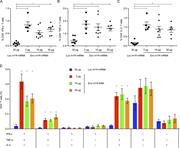
Figure 3. A single immunization with PR8 HA m1Ψ-mRNA-LNPs elicits strong antigen-specific CD4+ T cell responses. Mice received a single i.d. injection of 30 µg of m1Ψ-mRNA-LNPs or an i.m. immunization with 1,000 hemagglutinating units (HAU) of inactivated PR8 influenza virus. Splenocytes were stimulated 10 d after immunization with HA peptides, and cytokine production by CD4+ T cells was assessed. (A–C) The percentages of CD4+ T cells producing IFN-γ (A), TNF-α (B), and IL-2 (C) were measured by flow cytometry. (D) Frequencies of combinations of cytokines produced by CD4+ T cells. n = 8–10 mice, and each symbol represents one animal. Experiments were repeated three times to achieve statistical significance. Error bars are SEM. Statistical analysis: (A–C) one-way ANOVA with Bonferroni correction, *, P < 0.05; (D) Student’s t test, *, P < 0.05 compared with Luc mRNA–immunized mice.
Published: 08 May 2018
Figure 3. A single immunization with PR8 HA m1Ψ-mRNA-LNPs elicits strong antigen-specific CD4+ T cell responses. Mice received a single i.d. injection of 30 µg of m1Ψ-mRNA-LNPs or an i.m. immunization with 1,000 hemagglutinating units (HAU) of More about this image found in A single immunization with PR8 HA m1Ψ-mRNA-LNPs elicits strong antigen-spec...
Images
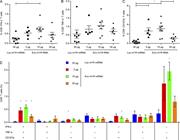
Figure 4. Nucleoside-modified Env mRNA-LNPs elicit antigen-specific CD8+ T cell responses. Mice received two i.d. injections of Luc or Env m1Ψ-mRNA-LNPs. (A–C) Percentages of CD8+ T cells producing IFN-γ (A), TNF-α (B), and CD107a (C) were analyzed. (D) Frequencies of combinations of cytokines and degranulation marker produced by CD8+ T cells. Splenocytes were stimulated with Env peptides, and cytokine production by CD8+ T cells was assessed by flow cytometry. n = 5–8 mice, and each symbol represents one animal. Error bars are SEM. Statistical analysis: (A–C) one-way ANOVA with Bonferroni correction, *, P < 0.05; (D) Student’s t test, *, P < 0.05 compared with Luc mRNA–immunized mice.
Published: 08 May 2018
Figure 4. Nucleoside-modified Env mRNA-LNPs elicit antigen-specific CD8+ T cell responses. Mice received two i.d. injections of Luc or Env m1Ψ-mRNA-LNPs. (A–C) Percentages of CD8+ T cells producing IFN-γ (A), TNF-α (B), and CD107a (C) were More about this image found in Nucleoside-modified Env mRNA-LNPs elicit antigen-specific CD8+ T...
Images
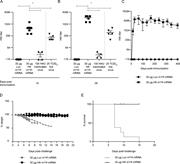
Figure 5. HA m1Ψ-mRNA-LNP immunization elicits strong antigen-specific B cell responses. Mice were immunized once with 30 µg of m1Ψ-mRNA-LNPs i.d. or 100 HAU of inactivated PR8 influenza virus i.m or infected with a sublethal dose (25 TCID50) of live PR8 influenza virus. (A–C) HA inhibition (HAI) titers from mouse serum were determined over time. The dashed lines indicate that HAI values for the live PR8 virus infection were assayed separately. (D and E) Mice were challenged with a lethal dose of PR8 influenza virus 13 mo after immunization and weight loss (D) and survival (E) were followed. n = 4–8 mice, and each symbol represents values for one animal. Experiments were repeated at least two times. Statistical analysis: (A–B) one-way ANOVA with Bonferroni correction, *, P < 0.05; (C) Student’s t test, comparing HA m1Ψ-mRNA with Luc m1Ψ-mRNA, *, P < 0.05 for each time point.
Published: 08 May 2018
Figure 5. HA m1Ψ-mRNA-LNP immunization elicits strong antigen-specific B cell responses. Mice were immunized once with 30 µg of m1Ψ-mRNA-LNPs i.d. or 100 HAU of inactivated PR8 influenza virus i.m or infected with a sublethal dose (25 TCID50) of More about this image found in HA m1Ψ-mRNA-LNP immunization elicits strong antigen-specific B cell respons...
Images
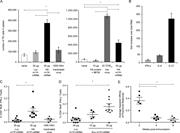
Figure 6. Potent Tfh cell responses are elicited by a single immunization with m1Ψ-mRNA-LNPs in mice. Mice were immunized once i.d. with 30 µg of Luc or HA m1Ψ-mRNA-LNPs, a single i.m. injection with 1,000 HAU of inactivated PR8 virus, MF59-adjuvanted recombinant PR8 HA protein, or intranasally infected with 25 TCID50 of live PR8 influenza virus, and immune responses were examined 10 d after immunization (A and B). (A) Total numbers of splenic Tfh cells were determined by staining for TCR+CD19−CD4+CD62L−CXCR5+PD-1+ T cells. (B) IFN-γ, IL-4, and IL-21 transcript levels in sorted Tfh cells from PR8 HA m1Ψ-mRNA-LNP–immunized mice were determined by quantitative real-time RT-PCR. Fold induction of cytokines compared with total universal RNA is shown. (C and D) Mice were immunized with a single i.d. injection of 30 µg of HA or Env m1Ψ-mRNA-LNPs, and immune responses were examined 12 d after immunization. Percentage of IFN-γ producing CD4+Bcl-6+ Tfh-like cells was measured by flow cytometry after HA (C) or Env (D) peptide stimulation. (E) Mice were immunized with a single i.d. injection of 30 µg of PR8 HA m1Ψ-mRNA-LNPs, and rates of binding to PR8 HA were examined 2, 4, and 8 wk later by biolayer interferometry. The apparent nanomolar affinity of anti–HA antibodies, derived from the mean rates of HA-binding in polyclonal sera, is plotted for each serum sample, with lower values corresponding to higher apparent affinity. n = 5–8 mice, and each symbol represents values for one animal. Experiments were repeated at least two times to achieve sufficient numbers of values for mice in each group. Error bars are SEM. Statistical analysis: one-way ANOVA with Bonferroni correction, *, P < 0.05.
Published: 08 May 2018
Figure 6. Potent Tfh cell responses are elicited by a single immunization with m1Ψ-mRNA-LNPs in mice. Mice were immunized once i.d. with 30 µg of Luc or HA m1Ψ-mRNA-LNPs, a single i.m. injection with 1,000 HAU of inactivated PR8 virus, More about this image found in Potent Tfh cell responses are elicited by a single immunization with m1Ψ-mR...
Images
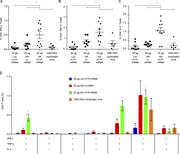
Figure 7. Potent Tfh cell and sustained neutralizing antibody responses are elicited by a single immunization with m1Ψ-mRNA-LNPs in nonhuman primates. (A and B) Rhesus macaques were immunized with 50 µg of CH505 Env m1Ψ-mRNA-LNPs or 100 µg of Env gp140 protein + poly-ICLC adjuvant, and Tfh cell responses in draining lymph nodes were analyzed 7 d after immunization. (A) The percentage of Tfh cells (CXCR5hiPD1hi) among total CD4+ T cells in lymph nodes is shown. (B) Lymph node cells were analyzed for Env-specific Tfh cells by activation-induced marker assay. The percentage of OX40+CD25+ cells in the Tfh gate (CD4+CXCR5hiPD1hi cells) after stimulation with Env peptide pool + protein is shown. The percentage of Env-specific Tfh cells for each sample was calculated as the percentage of OX40+CD25+ in Env-stimulated conditions minus the percentage of OX40+CD25+ in unstimulated conditions. Each point represents one animal. (C) Rhesus monkeys were immunized with 50 µg of 1086C Env m1Ψ-mRNA-LNPs at weeks 0, 4, 20, and 32, and neutralization titers (expressed as the reciprocal serum dilution resulting in ID50) from preimmune and week 34 sera were determined against the MW965.26 (tier 1A) and autologous Ce1086_B2 (tier 2) viruses. Each point represents one animal. (D) Rhesus macaques were immunized with 600 µg (n = 4) or 200 µg (n = 3) of ZIKV prM-E m1Ψ-mRNA-LNPs, and the antibody response was measured by PRNT against ZIKV MR-766. Points represent individual monkeys; horizontal lines indicate the mean. Statistical analysis: (A–B) two-way ANOVA with Bonferroni correction, *, P < 0.05; (D) dose groups were compared by Kruskal-Wallis test, *, P > 0.05 for all comparisons.
Published: 08 May 2018
Figure 7. Potent Tfh cell and sustained neutralizing antibody responses are elicited by a single immunization with m1Ψ-mRNA-LNPs in nonhuman primates. (A and B) Rhesus macaques were immunized with 50 µg of CH505 Env m1Ψ-mRNA-LNPs or 100 µg of More about this image found in Potent Tfh cell and sustained neutralizing antibody responses are elicited ...
Images
Figure 8. Nucleoside modification induces superior CD4+ T cell responses compared with unmodified mRNA. Mice received a single i.d. injection of 30 µg of Luc m1Ψ-mRNA-LNPs, HA U-mRNA-LNPs, HA m1Ψ-mRNA-LNPs or an i.m. immunization with 1,000 HAU of inactivated PR8 influenza virus. Splenocytes were stimulated 10 d after immunization with HA peptides and cytokine production by CD4+ T cells was assessed. (A–C) The percentage of CD4+ T cells producing IFN-γ (A), TNF-α (B), and IL-2 (C) was measured by flow cytometry. (D) Frequencies of combinations of cytokines produced by CD4+ T cells. n = 5–10 mice, and each symbol represents one animal. Experiments were repeated at least two times to achieve statistical significance. Error bars are SEM. Statistical analysis: (A–C) one-way ANOVA with Bonferroni correction, *, P < 0.05; (D) Student’s t test, *, P < 0.05 compared with Luc mRNA–immunized mice.
Published: 08 May 2018
Figure 8. Nucleoside modification induces superior CD4+ T cell responses compared with unmodified mRNA. Mice received a single i.d. injection of 30 µg of Luc m1Ψ-mRNA-LNPs, HA U-mRNA-LNPs, HA m1Ψ-mRNA-LNPs or an i.m. immunization with 1,000 HAU More about this image found in Nucleoside modification induces superior CD4+ T cell responses c...
Images
Figure 9. A single immunization with m1Ψ HA mRNA-LNPs induces more potent Tfh cell responses, higher splenic GC B and plasma cell numbers, and higher HAI titers compared with unmodified mRNA-LNPs. Mice were immunized with a single i.d. injection of 30 µg of Luc m1Ψ-mRNA-LNP, HA U- or m1Ψ-mRNA-LNPs, or a single i.m. immunization of 1,000 HAU of inactivated PR8 virus, and immune responses were examined 10 d later. (A) The total number of splenic Tfh cells was counted by staining for TCRβ+CD19−CD4+CD62L−CXCR5+PD-1+ T cells. (B) Percentage of IFN-γ producing CD4+Bcl6+ Tfh-like cells was measured by flow cytometry. (C and D) Total numbers of splenic GC B cells (C) and plasma cells (D) were determined. (E) HAI titers from mouse serum were determined 10 d after immunization. n = 5–10 mice, and each symbol represents values for one animal. Experiments were repeated at least two times to achieve statistical significance. Error bars are SEM. Statistical analysis: one-way ANOVA with Bonferroni correction, *, P < 0.05.
Published: 08 May 2018
Figure 9. A single immunization with m1Ψ HA mRNA-LNPs induces more potent Tfh cell responses, higher splenic GC B and plasma cell numbers, and higher HAI titers compared with unmodified mRNA-LNPs. Mice were immunized with a single i.d. injection More about this image found in A single immunization with m1Ψ HA mRNA-LNPs induces more potent Tfh cell re...
Images
Figure 10. mRNA-LNPs provide potent adjuvant activity in a protein subunit vaccine. Mice were immunized with a single i.m. injection of 10 µg of recombinant PR8 HA protein alone or in combination with 30 µg of Luc U- or m1Ψ-mRNA-LNPs. (A and B) Total number of splenic Tfh cells (A) and GC B cells (B) were determined 12 d after immunization. (C) HAI titers were measured 4 wk after immunization. Error bars are SEM. n = 5 mice. Statistical analysis: one-way ANOVA with Bonferroni correction, *, P < 0.05.
Published: 08 May 2018
Figure 10. mRNA-LNPs provide potent adjuvant activity in a protein subunit vaccine. Mice were immunized with a single i.m. injection of 10 µg of recombinant PR8 HA protein alone or in combination with 30 µg of Luc U- or m1Ψ-mRNA-LNPs. (A and B) More about this image found in mRNA-LNPs provide potent adjuvant activity in a protein subunit vaccine. M...
Journal Articles
Images
Figure 1. Uhrf1 is specifically expressed in GC B cells. (A) RT-qPCR analysis of Uhrf1 transcripts from FoBs and GC B cells. n = 3. Error bars show means ± SEM. ***, P < 0.001. (B) Western blot of Uhrf1 proteins in FoB and GC B cells. Molecular weight is indicated in kilodaltons. (C) Immunohistochemistry analysis of serial splenic sections for SRBC-immunized mice. Anti-IgD stains for FoBs, anti-CD35 stains for follicular dendritic cells (LZ), and GL7 stains for GC B cells. T, T cell zone. Bars, 100 μm. Data are representative of two experiments.
Published: 04 April 2018
Figure 1. Uhrf1 is specifically expressed in GC B cells. (A) RT-qPCR analysis of Uhrf1 transcripts from FoBs and GC B cells. n = 3. Error bars show means ± SEM. ***, P < 0.001. (B) Western blot of Uhrf1 proteins in FoB and GC B cells. More about this image found in Uhrf1 is specifically expressed in GC B cells. (A) RT-qPCR analysis of Uhr...
Images
Figure 2. c-Myc–AP4 directly up-regulates Uhrf1 expression in GC B cells. (A) Primary B cells were stimulated on the CD40L-expressing feeders. Dynamic induction of c-Myc, AP4, and Uhrf1 were assessed with Western blotting. (B) Uhrf1 expression in subsets of GC B cells. Data were from GSE80669 (Chou et al., 2016). (C) Western blot analysis of AP4 and Uhrf1 expression in c-Myc shRNA transfected CH12F3 B cell lines. (D) Western blot analysis of Uhrf1 expression in AP4 shRNA-transfected CH12F3 B cell lines. Molecular weight is indicated in kilodaltons. (E) Snapshot of AP4 ChIP-Seq signals at Uhrf1 gene locus in GC B cells (from GSE80669; Chou et al., 2016). (F) Conserved AP4 binding sequence. Red asterisks indicate conserved AP4 binding sites. (G) ChIP-qPCR validation of AP4 binding at Uhrf1 gene locus with CH12F3 cells (left) and GC B cells (right). (H) AP4 promotes Uhrf1 transcription in luciferase (LUC) reporter assay. WT or AP4 binding site mutant Uhrf1 promoter luciferase reporter vectors were cotransfected with AP4 expression plasmid into 293T cells, and luciferase activity was measured as a function of AP4-dependent Uhrf1 transcription. (I) In vitro–activated B cells were transduced with retroviral shRNA or Uhrf1 as indicated, adoptively transferred into MD4 BCR transgenic mice, and then immunized with SRBCs for 7 d. GC response of transduced B cells was analyzed by flow cytometry. Data are representative of three (A, C, D, and H) or two (G and I) experiments. Error bars show means ± SEM. ***, P &lt; 0.001.
Published: 04 April 2018
Figure 2. c-Myc–AP4 directly up-regulates Uhrf1 expression in GC B cells. (A) Primary B cells were stimulated on the CD40L-expressing feeders. Dynamic induction of c-Myc, AP4, and Uhrf1 were assessed with Western blotting. (B) Uhrf1 expression More about this image found in c-Myc–AP4 directly up-regulates Uhrf1 expression in GC B cells. (A) Primar...
Images
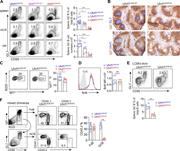
Figure 3. Uhrf1 is required for GC response. (A, B, and D) Mice of each genotype were immunized with SRBCs and analyzed at day 8. (A) Flow cytometric analysis of GC B cells (B220+CD95+GL7+) in spleen, mesenteric LN (mLN), and Peyer’s patches (PPs) from Uhrf1 WT, heterozygous, and KO mice. Data were pooled from three experiments. n = 6–10. (B) Cryosections from each genotype of mice were immunohistochemically stained for GC B cells (anti-GL7) and Uhrf1 expression (anti-Uhrf1, bottom in blue). Data are representative of three experiments. Bar, 100 μm. (C) Flow cytometry analysis of IgG1 class switch in GC B cells. n = 9. Data were pooled from four experiments 7 or 10 d after SRBC immunization. (D) Bcl6 expression were intracellularly stained by flow cytometry in GC B cells. Data were pooled from two experiments. n = 5–6. (E) Mice were infected with LCMV-Armstrong (LCMV-Arm) and analyzed for splenic GC B cells at day 12. Data were pooled from two experiments. n = 6. (F) Mixed BM chimeras generated with ∼50% Uhrf1GCBWT or Uhrf1GCBKO CD45.2 cells,∼50% CD45.1 WT cells were immunized with SRBCs, and the percentage of CD45.2+ FoB and GC B cells was analyzed by flow cytometry. Data were pooled from two experiments. In all bar graphs, bars represent means, and dots represent individual mice. Error bars show means ± SEM. *, P &lt; 0.05; ***, P &lt; 0.001.
Published: 04 April 2018
Figure 3. Uhrf1 is required for GC response. (A, B, and D) Mice of each genotype were immunized with SRBCs and analyzed at day 8. (A) Flow cytometric analysis of GC B cells (B220+CD95+GL7+) in spleen, mesenteric LN (mLN), and Peyer’s patches More about this image found in Uhrf1 is required for GC response. (A, B, and D) Mice of each genotype wer...
Images
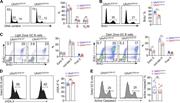
Figure 4. Uhrf1 loss impaired GC B cell proliferation without affecting cell survival. (A–E) Mice of each genotype were immunized with SRBCs and analyzed at days 7–10. (A) Cell cycle of GC B cells were analyzed by DNA content staining. n = 6. (B) Flow cytometry analysis of GC B cell BrdU incorporation 30 min after BrdU treatment. n = 6. (C) Mice were pulsed with Edu followed 1 h later by BrdU, and mice were then analyzed at 0.5 h after BrdU pulse for BrdU-Edu double staining. n = 5–6. (D) Representative dot plots of γH2a.X staining profile in GC B cells. n = 6. (E) Frequency of GC B cells with activated caspase 3 were analyzed by flow cytometry. Data were pooled from three (A, C, and E) or two (B and D) experiments. n = 9. In all bar graphs, bars represent means, and dots represent individual mice. **, P &lt; 0.01; ***, P &lt; 0.001.
Published: 04 April 2018
Figure 4. Uhrf1 loss impaired GC B cell proliferation without affecting cell survival. (A–E) Mice of each genotype were immunized with SRBCs and analyzed at days 7–10. (A) Cell cycle of GC B cells were analyzed by DNA content staining. n = 6. More about this image found in Uhrf1 loss impaired GC B cell proliferation without affecting cell survival...
Images
Figure 5. Uhrf1 promotes GC B cell proliferation via Cdkn1a DNA methylation. (A) Dot blot analysis of total 5mC in genomic DNA extracted from GC B cells of each genotype. (B) Comparison of all differentially expressed genes (P &lt; 0.05; fold change &gt; 1.5) in GC B cells from Uhrf1 WT and KO mice from RNA-seq analysis. (C) Heat map depicting the relative expression change of Cdk inhibitors in the absence of Uhrf1 in GC B cells. Data were from RNA-seq analysis. (D) RT-qPCR analysis of Cdkn1a transcripts in GC B cells. n = 3. (E) Methylation analysis of Cdkn1a was performed by bisulfite conversion of genomic DNA extracted from FACS-sorted WT and Uhrf1-deficient GC B cells. The selected genomic region is shown by red bar. Open circles, unmethylated; filled circles, methylated. The frequencies of methylation are shown below. Each row represents one bacterial clone, and each column represents one CpG site. Statistical analysis was done with Fisher’s exact test. (F and G) BM cells of WT or Uhrf1GCBKO mice were transduced with retrovirus expressing control shRNA or Cdkn1a shRNA and used as donors to generate BM chimeric mice (F). The frequency of GC B cells (CD95+GL7+) in transduced B cells of SRBCs-immunized chimeric mice was analyzed by flow cytometry (G). Statistical analysis was done with one-way ANOVA. Data are representative of two experiments. HSC, hematopoietic stem cell. In all bar graphs, bars represent means, and dots represent individual mice. Error bars show means ± SEM. *, P &lt; 0.05; **, P &lt; 0.01; ***, P &lt; 0.001.
Published: 04 April 2018
Figure 5. Uhrf1 promotes GC B cell proliferation via Cdkn1a DNA methylation. (A) Dot blot analysis of total 5mC in genomic DNA extracted from GC B cells of each genotype. (B) Comparison of all differentially expressed genes (P < 0.05; fold More about this image found in Uhrf1 promotes GC B cell proliferation via Cdkn1a DNA meth...
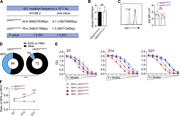
Images
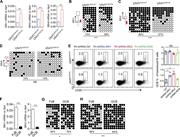
Figure 6. Uhrf1 methylates Slfn1/2 gene locus to promote GC B cell proliferation. (A) RT-qPCR analysis of Slfn transcripts in GC B cells. n = 3. (B–D) Methylation analysis of Slfn1 (B), Slfn2 (C), and Slfn8 (D) were performed by bisulfite conversion of genomic DNA extracted from FACS-sorted WT and Uhrf1-deficient GC B cells. The selected genomic region is shown by a red bar. Open circles, unmethylated; filled circles, methylated. The frequencies of methylation are shown below. Statistical analysis was done with Fisher’s exact test. (E) BM cells of Uhrf1GCBWT and Uhrf1GCBKO mice were transduced with retrovirus expressing control shRNA or Slfn shRNA and used as donors to generate BM chimeric mice as done in Fig. 5 F. Chimeric mice were immunized with SRBC 6 wk after reconstitution, and the frequency of GC B cells (CD95+GL7+) in transduced B cells of chimeric mice was analyzed by flow cytometry at day 7. n = 3. Statistical analysis was done with one-way ANOVA. (F) RT-qPCR analysis of Slfn1 and Slfn2 transcripts in sorted follicular and GC B cells. n = 3. (G and H) Methylation analysis of Slfn1 (G) and Slfn2 (H) was performed by bisulfite conversion of genomic DNA extracted from FACS sorted FoB and GC B cells as in B–D. Statistical analysis was done with Fisher’s exact test. Data are representative of two (B–F) or three (A, G, and H) experiments. Error bars show means ± SEM. *, P &lt; 0.05; **, P &lt; 0.01; ***, P &lt; 0.001.
Published: 04 April 2018
Figure 6. Uhrf1 methylates Slfn1/2 gene locus to promote GC B cell proliferation. (A) RT-qPCR analysis of Slfn transcripts in GC B cells. n = 3. (B–D) Methylation analysis of Slfn1 (B), Slfn2 (C), and Slfn8 (D) were performed by bisulfite More about this image found in Uhrf1 methylates Slfn1/2 gene locus to promote GC B cell proliferation. (A)...
Images
Figure 7. Uhrf1 loss compromised GC B cell SHM and affinity maturation. (A–F) Uhrf1GCB WT or Uhrf1GCB KO mice were immunized with NP-KLH and analyzed at time indicated. (A) Sorted GC B cells pooled from four mice of each genotype were used for the genomic DNA extraction and sequencing of VH186.2 exon and JH4 intronic region. Total mutation frequencies are shown. Statistical analysis was done with Fisher’s exact test. (B and C) RT-qPCR (B) and intracellular flow cytometry analysis (C) of AID expression in GC B cells. (D) The frequency of W33L mutations in the VH186.2 heavy chain, was determined by sequencing. The total numbers of clones sequenced are indicated at the center of the pies. Statistical analysis was done with Fisher’s exact test. (E and F) NP4 and NP41 binding antibodies in serum of immunized mice were analyzed by ELISA. OD value versus dilution factors are plotted (E). Ratios of NP4/NP41 were calculated with raw OD value in linear range (F). Statistical analysis was done with two-way ANOVA. Data are representative of three experiments. Error bars show means ± SEM. ***, P &lt; 0.001.
Published: 04 April 2018
Figure 7. Uhrf1 loss compromised GC B cell SHM and affinity maturation. (A–F) Uhrf1GCB WT or Uhrf1GCB KO mice were immunized with NP-KLH and analyzed at time indicated. (A) Sorted GC B cells pooled from four mice of each genotype were used for More about this image found in Uhrf1 loss compromised GC B cell SHM and affinity maturation. (A–F) Uhrf1...
Images
Figure 8. Uhrf1 in GC B cells is required for control of chronic LCMV infection. (A) GC B cell frequency and number in mice infected with LCMV cl13 were assessed by flow cytometry at day 40. n = 8. (B) Body weight before and after infection. Results are presented relative as original body weight (day 0; D0). n = 9. (C) Virus load in the serum of mice after LCMV cl13 infection. n = 9. Data were pooled from two (A and B) or three (C) experiments. Statistical analysis was done with two-way ANOVA. Error bars show means ± SEM. *, P &lt; 0.05; **, P &lt; 0.01; ***, P &lt; 0.001.
Published: 04 April 2018
Figure 8. Uhrf1 in GC B cells is required for control of chronic LCMV infection. (A) GC B cell frequency and number in mice infected with LCMV cl13 were assessed by flow cytometry at day 40. n = 8. (B) Body weight before and after infection. More about this image found in Uhrf1 in GC B cells is required for control of chronic LCMV infection. (A) ...

or Create an Account

Close Modal
Close Modal