1-20 of 701
Follow your search
Access your saved searches in your account

Would you like to receive an alert when new items match your search?
Close Modal
Sort by
Journal Articles
Journal Articles
Journal Articles
Journal Articles
Images
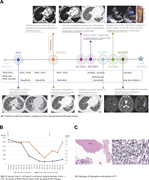
Chest CT scan and laboratory data from the patient. (A) Chest CT scanners of the patient at the start of her respiratory symptoms (left), referral to our center (middle), and 38 days after immunoglobulin replacement therapy initiation (right). (B) Laboratory data. These data were collected in 2024. The patient’s initial blood test for immunoglobulin concentration, performed in December 2023, showed a level of 3.4 g/L. LLN, lower limit of normal. (C) Total serum IgG level and anti-SARS-CoV2 spike IgG level in the patient's serum before and after immunoglobulin replacement therapy initiation. dsDNA, double-stranded DNA; ENA, extractable nuclear antigens; ANCA, anti-neutrophil cytoplasmic antibodies.
Published: 26 December 2025
Figure 1. Chest CT scan and laboratory data from the patient. (A) Chest CT scanners of the patient at the start of her respiratory symptoms (left), referral to our center (middle), and 38 days after immunoglobulin replacement therapy initiation More about this image found in Chest CT scan and laboratory data from the patient. (A) Chest CT scanners ...
Images
CTLA-4 Y218* mutation in four generations of a family. (A) Pedigree of the affected family, with proband identified by the arrow (patient 16); filled symbols signify clinically affected family members, with the heterozygous CTLA4 c.654T>A, p.(Tyr218*) variant noted in individuals who harbor it. WT denotes family members sequenced and found to have no mutation. Squares represent males, and circles represent females; a diagonal line (as in family member 5) indicates a deceased individual. (B) Biopsy of the terminal ileum from P12 showing diffuse lymphocytic infiltrates (arrows).
Published: 26 December 2025
Figure 1. CTLA-4 Y218* mutation in four generations of a family. (A) Pedigree of the affected family, with proband identified by the arrow (patient 16); filled symbols signify clinically affected family members, with the heterozygous CTLA4 More about this image found in CTLA-4 Y218* mutation in four generations of a family. (A) Pedigree of the...
Images
CTLA-4 Y218* mutation leads to reduced protein levels in primary patient cells. (A) Representative histograms of CTLA-4 mean fluorescence intensity (MFI) levels in Treg cells in one healthy donor and P16 with p.(Tyr218*) variant after 24 h of incubation in IL-2 media alone (Unstim), with stimulation (5 μg/ml plated anti-CD3 and 1 μg/ml soluble anti-CD28; Stim) or stimulation and Baf treatment (20 ng/ml; Stim + Baf); quantified MFI on the right using multiple Mann–Whitney tests (N = 3 independent repeats). (B) Representative histograms of CTLA-4 MFI in CD4 T cells of one healthy donor and P16 after 24 h of incubation in IL-2 media alone (Unstim), with stimulation (5 μg/ml plated anti-CD3 and 1 μg/ml soluble anti-CD28; Stim) or stimulation and Baf treatment (20 ng/ml; Stim + Baf); quantified MFI on the right using multiple Mann–Whitney tests (N = 3 independent repeats). (C) Quantified fold-change data from A, normalized to the unstimulated condition. Statistical significance calculated using Kruskal–Wallis test. (D) Quantified fold-change data from B, normalized to the unstimulated condition. Statistical significance calculated using Kruskal–Wallis test. (A–D)N = 3 independent experiments with eight healthy donor (HD) samples (eight individuals) and eight patient samples (five patients: P16, P17, P12, P13, and P2). P16 and P12 contributed longitudinal samples at multiple time points (red = P16; pink = P12), with only one sample per individual used in any single experiment. Each black dot represents a distinct healthy donor or patient sample. **P < 0.001. number represents fold change. ns: not significant.
Published: 26 December 2025
Figure 2. CTLA-4 Y218* mutation leads to reduced protein levels in primary patient cells. (A) Representative histograms of CTLA-4 mean fluorescence intensity (MFI) levels in Treg cells in one healthy donor and P16 with p.(Tyr218*) variant after More about this image found in CTLA-4 Y218* mutation leads to reduced protein levels in primary patient ce...
Images
CTLA-4 Y218* mutation leads to protein instability. (A–C) (A) Representative histogram showing MFI of CTLA-4 levels in Jurkat cells with WT or Y218* CTLA-4 treated with CHX to block protein translation, Baf to block lysosome acidification, or untreated. Jurkat cells lacking CTLA-4 (−CTLA4) shown as negative control. MFI quantified in B, and fold change quantified in C; the y-axis in C shows fold change relative to the untreated condition. The mutant panel uses a different scale due to higher fold-change values compared to WT. Fold-change values in the statistical comparison bar represent relative differences between the indicated conditions; repeated measures one-way ANOVA test. N = 5 independent repeats. **P < 0.001, ***P < 0.001, and ****P < 0.0001; ns: not significant; number represents fold change.
Published: 26 December 2025
Figure 3. CTLA-4 Y218* mutation leads to protein instability. (A–C) (A) Representative histogram showing MFI of CTLA-4 levels in Jurkat cells with WT or Y218* CTLA-4 treated with CHX to block protein translation, Baf to block lysosome More about this image found in CTLA-4 Y218* mutation leads to protein instability. (A–C) (A) Representati...
Images
CTLA-4 Y218* mutation leads to dysfunctional TE. (A–C) (A) Experimental design and (B) representative dot plot of CD80 donor levels following TE by Jurkat recipient cells with WT (blue blots) or Y218* CTLA-4 mutation (red blots), with relative ligand loss quantified in C using multiple unpaired T test. N = 6 independent repeats for each condition. ***P < 0.001; ns: not significant.
Published: 26 December 2025
Figure 4. CTLA-4 Y218* mutation leads to dysfunctional TE. (A–C) (A) Experimental design and (B) representative dot plot of CD80 donor levels following TE by Jurkat recipient cells with WT (blue blots) or Y218* CTLA-4 mutation (red blots), with More about this image found in CTLA-4 Y218* mutation leads to dysfunctional TE. (A–C) (A) Experimental de...
Images
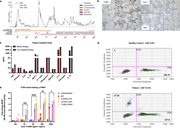
Clinical and immunophenotyping data for hospitalized patients compared to controls. (A) Clinical data from the “all hospital,” severe, and mild cohort. Data expressed as frequencies, mean (standard deviation), or mode (interquartile range; IQR). (B) Box and whisker plot for immune cell frequency in the hospitalized cohort as compared to healthy control patients (top) and hospitalized cohort as compared to healthy controls with patients receiving any steroids prior to blood draw were removed from the hospitalized cohort (bottom). Hypothesis testing was executed by the non-parametric Mann–Whitney U test. Upper and lower hinges of boxplots correspond to 25th and 75th percentiles and whiskers extend 1.5× IQR from the hinges. (C) Bar graph with scatter plot for pDCs in severe patients compared to mild, severe patients compared to control, and mild patients compared to control (left) and eosinophils in severe patients compared to mild, severe patients compared to control, and mild patients compared to control (right). Hypothesis testing was executed by the non-parametric Kruskal–Wallis Test. Upper and lower hinges correspond to 25th and 75th percentiles. Statistical significance is annotated on the graph with P values < 0.05. (D) Principle component analysis (PCA) of cytokine expression. Points are colored by sample group classification. Ellipses reflect a 95% confidence interval around the colored group centroid. PCA in severe, mild, and control patients (left). PCA in severe, mild, and control patients with patients receiving any steroids prior to blood draw were removed (right). (E) Box and whisker plot for cytokine expression in the hospitalized cohort as compared to healthy control patients (top) and hospitalized cohort as compared to healthy controls with patients receiving any steroids prior to blood draw removed from the hospitalized cohort (bottom). Hypothesis testing was executed by the non-parametric Mann–Whitney U test. Upper and lower hinges of boxplots correspond to 25th and 75th percentiles and whiskers extend 1.5× IQR from the hinges. (F) Bar graph with scatter plot for selected cytokine expression in severe patients compared to mild, severe patients compared to control, and mild patients compared to control. Hypothesis testing was executed by the non-parametric Kruskal–Wallis Test. Upper and lower hinges correspond to 25th and 75th percentiles. Statistical significance is annotated on the graph with P values <0.05. Naïve B, naïve B cells; Memory B, memory B cells; Total Mono, total monocytes; C. Mon, classical monocytes; I Mono, intermediate monocytes; N.C. Mono, non-classical monocytes; Total NK, total natural killer cells; Early NK, early natural killer cells; Late NK, late natural killer cells; pDC, plasmacytoid dendritic cells; mDC, mature dendtric cells; Cent. Mem., central memory; Eff. Mem., effector memory; MAIT, mucosal-associated invariant T cells; DN T cells, double-negative T cells.
Published: 26 December 2025
Figure 1. Clinical and immunophenotyping data for hospitalized patients compared to controls. (A) Clinical data from the “all hospital,” severe, and mild cohort. Data expressed as frequencies, mean (standard deviation), or mode (interquartile More about this image found in Clinical and immunophenotyping data for hospitalized patients compared to c...
Images
Clinical and genetic findings in a 4-year-old patient with RSV-induced fever and seizures. (A) Chest x-ray at day 1 of hospital admission showing pulmonary infiltration with fluid and atelectasis of the right upper lobe. (B) Magnetic resonance scan of the brain on day 4 after admission, showing extensive diffusion restriction predominantly involving subcortical white matter with sparing of the cortex described as “bright tree appearance.” (C) Genetic information of a novel rare variant in PARK7 leading to a premature stop codon at R28, identified by WGS. ACMG, American College of Medical Genetics; GDI, gene damaging index. (D) PopViz results showing the CADD and MAF of pLOF variants in PARK7 as identified in the patient (red) and variants reported in gnomAD, including variants leading to an early stop codon (stop gained, red), missense (grey), in-frame insertions and deletions (indel, black), start loss (yellow), alterations in mRNA splicing (splice region variant, blue), and frameshift (pink). The c.82C>T variant identified in the patient is indicated in the plot. No homozygous pLOF variants in PARK7 have been reported in gnomAD. The dashed line indicates the mutation cutoff score (MSC) at 95% confidence interval (CI). (E) Family pedigree for the PARK7 variant. The patient has two brothers whose DNA was not analyzed for the variant. (F) PARK7 RNA quantification relative to housekeeping gene (TBP) in patient PBMCs compared to healthy controls by RT-PCR. (G) PARK7 immunoblot of patient (P) fibroblast lysates compared to healthy control (C). Vinculin (VCL) was used as loading control. (H) Linear protein structure of PARK7. Amino acid (aa) residues and protein domains are indicated: the N-terminal region (light blue), DJ-1/ThiJ/Pfp I domain (dark blue), and the C-terminal region (blue). The red arrow indicates the location of PARK7 R28 that is mutated into a stop codon in the patient. DWI, diffusion-weighted imaging; ADC, apparent diffusion coefficient. Statistics were calculated using the unpaired two-tailed T test with Welch’s correction (E). **P < 0.01. Source data are available for this figure: SourceData F1.
Published: 26 December 2025
Figure 1. Clinical and genetic findings in a 4-year-old patient with RSV-induced fever and seizures. (A) Chest x-ray at day 1 of hospital admission showing pulmonary infiltration with fluid and atelectasis of the right upper lobe. (B) Magnetic More about this image found in Clinical and genetic findings in a 4-year-old patient with RSV-induced feve...
Images
Hyperinflammatory cytokine and IFN responses in patient PBMCs. (A–H) PBMCs from the patient (red) and three controls (grey) were left untreated (UT), stimulated with TLR4 agonist LPS, TLR7/8 agonist R848, transfected with PolyIC for TLR3/MDA5/RIG-I stimulation, or mock transfected (transf ctrl). Cells were harvested 24 h after treatment, and RNA was isolated and analyzed for IFNB1 (B), CXCL10 (C), IL6 (D), and TNF (E) gene transcription by RT-PCR, and cell culture supernatants were collected and analyzed for CXCL10 (F), IL6 (G), and TNF (H) protein by ELISA. Bars indicate mean values ± standard deviation (SD) of a single experiment performed in triplicates. Statistics were calculated using the ordinary One-way ANOVA with Šídák’s multiple comparisons test. * = P < 0.05, ** = P < 0.01, *** = P < 0.001, **** = P < 0.0001, and ns = not significant.
Published: 26 December 2025
Figure 2. Hyperinflammatory cytokine and IFN responses in patient PBMCs. (A–H) PBMCs from the patient (red) and three controls (grey) were left untreated (UT), stimulated with TLR4 agonist LPS, TLR7/8 agonist R848, transfected with PolyIC for More about this image found in Hyperinflammatory cytokine and IFN responses in patient PBMCs. (A–H) PBMCs...
Images
Inflammatory cytokine and IFN responses in PBMCs following RSV infection. PBMCs from the patient (P, red) and three controls (C, grey) were mock infected (mock) or infected with RSV (RSV-A strain Long, MOI 1). (A–G) Cells were harvested 24 h after treatment, and RNA was isolated and analyzed for intracellular RSV RNA (A), IFNB1 (B), CXCL10 (C), IL6 (D), and TNF (E) gene expression by RT-PCR. Cell culture supernatants were harvested and analyzed for CXCL10 (F) and TNF (G) protein by ELISA. Bars indicate the mean ± SD values of a single experiment performed in triplicate. Statistics were calculated using the ordinary two-way ANOVA with Šídák’s multiple comparisons. ns = not significant. SD, standard deviation.
Published: 26 December 2025
Figure S1. Inflammatory cytokine and IFN responses in PBMCs following RSV infection. PBMCs from the patient (P, red) and three controls (C, grey) were mock infected (mock) or infected with RSV (RSV-A strain Long, MOI 1). (A–G) Cells were More about this image found in Inflammatory cytokine and IFN responses in PBMCs following RSV infection. ...
Images
Impaired RSV-induced apoptotic cell death and reduced autophagy in patient primary fibroblasts. (A and B) Whole cell lysates from dermal fibroblasts from three controls (C, grey) and the patient (P, red) were analyzed for phosphorylation of ASK1/2 (pASK1/2), total ASK1, and vinculin (VCL) as loading control by immunoblotting (A). Graph depicting the densitometric quantification of pASK1/2 relative to total ASK1 (B). Bars show mean ± SD values of four experiments. (C–E) Primary fibroblasts from two controls (C, grey) and the patient (P, red) were stained with Annexin-V (apoptosis) and SYTOX Green (viability dye) to analyze induction of noninflammatory apoptotic cell death by flow cytometry. Cells were left untreated (UT) or treated with staurosporine (1 mM, 4 h) (C), mock transfected (transf ctrl) or transfected with PolyIC (tPolyIC, 500 ng/ml, 24 h) (D), or infected with mock virus (mock) or RSV (RSV-A strain Long, MOI 3, 24 h) (E). Bars show mean ± SD values of two experiments performed in duplicate and triplicate. (F–H) Primary fibroblast from three controls (C1–3) and the patient (P) were left untreated (UT), stimulated with rapamycin (Rapa, 500 nM, 24 h), HSV-2 (MS strain, MOI 1, 24 h), starved by culture in EBSS (4 h) or stimulated with H2O2 (300 nM, 30 min), in the absence or presence of chloroquine (+CQ, 20 μM, 4 h) to evaluate autophagy flux. Whole cell lysates were analyzed by immunoblot for LC3 lipidation and conversion of LC3-I into the smaller LC3-II with VCL as loading control. (H) Graph showing the ratio LC3-II/LC3-I as indicator for autophagy induction in primary fibroblasts from three controls (C, grey bars) and the patient (P, red). The ratio of LCR3-II/LC3-I was quantified using densitometry analysis of immunoblots in F and G. Bars show mean ± SD values. Statistics were calculated using the unpaired T test (B) and ordinary two-way ANOVA with Šídák’s multiple comparisons (C–E). ** = P < 0.01, *** = P < 0.001, and ns = not significant. SD, standard deviation. Source data are available for this figure: SourceData F3.
Published: 26 December 2025
Figure 3. Impaired RSV-induced apoptotic cell death and reduced autophagy in patient primary fibroblasts. (A and B) Whole cell lysates from dermal fibroblasts from three controls (C, grey) and the patient (P, red) were analyzed for More about this image found in Impaired RSV-induced apoptotic cell death and reduced autophagy in patient ...
Images
Quantification of apoptotic and necrotic cells in patient and control fibroblasts. (A–D) Representative density plots showing the analysis of noninflammatory apoptotic and inflammatory necrotic cells by flow cytometry. (A and B) Cells were gated for single cells by FSC-H and FSC-A (A), followed by cell selection to exclude cell debris from the analysis with SSC-A and FSC-A (B). These events were then analyzed for the frequency of apoptotic cells (Annexin-V positive, SYTOX Green negative, C) and necrotic cells (Annexin-V negative, SYTOX Green positive). (D) Representative density plots showing the frequency of Annexin-V– and SYTOX Green–positive cells in primary fibroblasts from the patient (P, top) and two controls (C1, middle and C2, bottom) that were mock transfected (transf ctrl, left) or transfected with PolyIC (500 ng/ml, 24 h, right). (E–G) Graphs showing the frequency of inflammatory necrotic cells in primary fibroblasts from two controls (C, grey) and the patient (P, red). Cells were left untreated (UT) or treated with H2O2 (2 mM, 24 h, E), infected with mock virus (mock) or RSV (RSV-A strain long, MOI 3, 24 h, F), or mock transfected (transf ctrl) or transfected with PolyIC (500 ng/ml, 24 h, G). Bars show the mean ± SD values of two experiments (E–G) performed in duplicate and triplicate. Statistics were calculated using the ordinary two-way ANOVA with Šídák’s multiple comparisons. ns = not significant. SD, standard deviation.
Published: 26 December 2025
Figure S2. Quantification of apoptotic and necrotic cells in patient and control fibroblasts. (A–D) Representative density plots showing the analysis of noninflammatory apoptotic and inflammatory necrotic cells by flow cytometry. (A and B) More about this image found in Quantification of apoptotic and necrotic cells in patient and control fibro...
Images
Generation of PARK7-deficient A549 and SH-SY5Y cells and cytokine responses to RSV infection. (A and B) Immunoblot and RT-PCR demonstrating absence of RSV replication in primary fibroblasts. Primary fibroblasts from a healthy donor were infected with RSV (RSV-A strain Long, MOI 1), and cells were collected at indicated time points. Whole cell lysates were analyzed by immunoblotting for expression of RSV matrix protein (RSV-M2) and compared to vinculin (VCL) as loading control (A), and cells were collected for RNA extraction and quantification of RSV RNA by RT-PCR (B). (C and D) Immunoblot demonstrating KO of PARK7 in A549 pulmonary cells (C) and PARK7 KO in neuronal SH-SY5Y cells (D). Vinculin (VCL, C) and GAPDH (D) were used as loading control. (E) Repeat of experiment shown in Fig. 4 A, showing additional replicates of two experiments performed in duplicate of human pulmonary A594 cells deficient in PARK7 (red) and control AAVS1KO (grey) mock treated or infected with RSV (RSV-A strain Long, MOI 1) for 24 and 48 h, and cells were collected for RNA isolation and analysis of RSV RNA by RT-PCR. (F–M) PARK7KO (red) and control AAVS1KO (grey) A549 cells were mock treated or infected with RSV (RSV-A, strain Long, MOI 1) for 24 h. (F–I) Cells were collected for RNA isolation, and quantification of IFNL1 (F), CXCL10 (G), IL6 (H), and TNF (I) gene transcription was performed by RT-PCR. (J–M) Cell culture supernatants were collected for IFNλ1 (J), CXLC10 (K), IL6 (L), and TNF (M) protein quantification by ELISA. (N–U) Repeats of experiment shown in Fig. 4, D–G, showing an additional two repeat experiments performed in triplicate (N–Q shows the second experiment and R–U shows the third experiment) where neuronal SH-SY5Y cells deficient in PARK7 or control AAVS1KO were mock transfected (transf ctrl) or transfected with PolyIC (500 ng/ml). Cells were collected after 6 h, and RNA was isolated, and IFNB1 (N and R), CXCL10 (O and S), IL6 (P and T), and MX1 (Q and U) gene transcription quantification by RT-qPCR. Bars indicate mean ± SD values. Statistics were calculated using the two-way ANOVA with multiple comparisons. * = P < 0.05, ** = P < 0.01, *** = P < 0.001, and ns = not significant. SD, standard deviation. Source data are available for this figure: SourceData SF3.
Published: 26 December 2025
Figure S3. Generation of PARK7-deficient A549 and SH-SY5Y cells and cytokine responses to RSV infection. (A and B) Immunoblot and RT-PCR demonstrating absence of RSV replication in primary fibroblasts. Primary fibroblasts from a healthy donor More about this image found in Generation of PARK7-deficient A549 and SH-SY5Y cells and cytokine responses...
Images
Enhanced cellular stress pathways and hyperinflammatory cytokine responses in PARK7-deficient neuronal SH-SY5Y cells. (A) Human pulmonary A594 cells deficient in PARK7 (red) and control AAVS1KO (grey) were mock treated or infected with RSV (RSV-A strain Long, MOI 1) for 24 and 48 h, and cells were collected for RNA isolation and analysis of RSV RNA by RT-PCR. Bars indicate mean ± SD values of two experiments, performed in duplicate. Repeats of the experiments are shown in Fig. S3 E. (B and C) Whole cell lysates from SH-SY5Y with PARK7KO (red) or AAVS1KO (control, grey) were analyzed for phosphorylation of ASK1/2 (pASK1/2) and expression of total ASK1 and vinculin (VCL) as loading control by immunoblotting (B). Graph depicting the densitometric quantification of pASK1/2 relative to total ASK1 (C). Bars indicate the mean ± SD values of three experiments. (D–G) Neuronal SH-SY5Y cells deficient in PARK7 or control AAVS1KO were mock transfected (transf ctrl) or transfected with PolyIC (tPolyIC, 500 ng/ml). Cells were collected after 6 h, and RNA was isolated, and IFNB1 (D), MX1 (E), CXCL10 (F), and IL6 (G) gene transcription quantification by RT-PCR. Bars indicate mean ± SD values of a representative experiment performed in triplicate. Repeats of the experiment are shown in Fig. S3, N–Q and R–U. (H–J) Neuronal SH-SY5Y cells deficient in PARK7 or AAVSKO (control) were left untransduced (−) or were transduced with lentiviral vectors to express PARK7 or GFP (control). Cells were collected after 48 h for RNA isolation to determine PARK7 mRNA expression (H), and whole cell lysates were analyzed by immunoblotting for GFP and PARK7 expression with VCL as loading control (I). (J) Cells were transfected with PolyIC (tPolyIC, 500 ng/ml) and collected after 6 h for quantification of IFNB1 transcription by RT-PCR. Bars indicate mean ± SD values of a representative experiment performed in duplicate. (K–M) Neuronal SH-SY5Y cells deficient for PARK7 were transduced with lentiviral vectors to express PARK7 WT, the patient PARK7 variant R28*, the R98Q variant frequent in the healthy population (MAF>10−3), and the L166P variant associated with Parkinson’s disease. Cells were collected for RNA isolation to determine PARK7 mRNA expression (K), and whole cell lysates were analyzed by immunoblotting for PARK7 expression with VCL as loading control (L). (M) Cells were transfected with PolyIC (tPolyIC, 500 ng/ml) and collected after 6 h for quantification of IFNB1 transcription by RT-PCR. Bars indicate mean ± SD values of a representative experiment performed in duplicate. (N–P) Primary fibroblasts from the patient (P) were left untransduced (−) or were transduced with lentiviral vectors to express GFP, PARK7WT, PARK7 R28*, PARK7 R98Q, or PARK7 L166P. As control (C), primary fibroblasts from a healthy donor were left untransduced or were transduced to express GFP. Cells were collected for RNA isolation to determine PARK7 mRNA expression (N), and whole cell lysates were analyzed by immunoblotting for GFP and PARK7 expression with VCL as loading control (O). Cells were infected with mock virus (mock) or RSV (RSV-A strain Long, MOI 3, 24 h) and stained with Annexin-V (apoptosis) and 7-AAD (viability dye) to analyze induction of noninflammatory apoptotic cell death by flow cytometry (P). Bars show mean ± SD values of a single experiment performed in duplicate and triplicate. Statistics were calculated using the multiple paired t test (A), the unpaired t test (C), the one-way ANOVA (H and K), and ordinary two-way ANOVA with Šídák’s multiple comparisons (J, M, and P). * = P < 0.05, ** = P < 0.01, *** = P < 0.001, and ns = not significant. SD, standard deviation. Source data are available for this figure: SourceData F4.
Published: 26 December 2025
Figure 4. Enhanced cellular stress pathways and hyperinflammatory cytokine responses in PARK7-deficient neuronal SH-SY5Y cells. (A) Human pulmonary A594 cells deficient in PARK7 (red) and control AAVS1KO (grey) were mock treated or infected with More about this image found in Enhanced cellular stress pathways and hyperinflammatory cytokine responses ...
Images
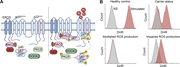
Illustration of the working hypothesis on dysregulated responses to viral infection and damage by oxidative stress in PARK7 deficiency. In healthy individuals with PARK7-sufficient cells (left), viral infection activates PPRs (MDA5/RIG-I) following sensing of viral RNA and oxidative stress signals (ROS) through stress kinases (ASK1), together inducing the production of inflammatory cytokines. Apoptosis and autophagy pathways reduce inflammation and facilitate a balanced cytokine and IFN responses to regain homeostasis. PARK7 (in green) can regulate ROS via Nrf-2 (47) and NADPH (48) (not shown) and inhibit ASK1/2 signaling pathways (49), thereby reducing inflammation. PARK7 can also modulate the activity of the specific autophagic receptor SQSTM1/p62 and contribute to the degradation of targeted proteins under oxidative stress conditions (41). In the patient with PARK7-deficient cells (right), the suppressive effect on ROS and the activating effect on autophagy are lost, resulting in enhanced inflammatory cytokine production (see Fig. 2 and Fig. 4) and reduced cellular apoptosis and autophagy (see Fig 3). Thus, PARK7 deficiency affects cellular responses during infection and cellular stress and is dominated by impaired apoptosis and autophagy, ultimately resulting in hyperinflammatory responses and pathology. NADPH, nicotinamide adenine dinucleotide phosphate; Nrf-2, nuclear factor erythroid 2-related factor 2.
Published: 26 December 2025
Figure 5. Illustration of the working hypothesis on dysregulated responses to viral infection and damage by oxidative stress in PARK7 deficiency. In healthy individuals with PARK7-sufficient cells (left), viral infection activates PPRs More about this image found in Illustration of the working hypothesis on dysregulated responses to viral i...
Journal Articles
Journal Articles