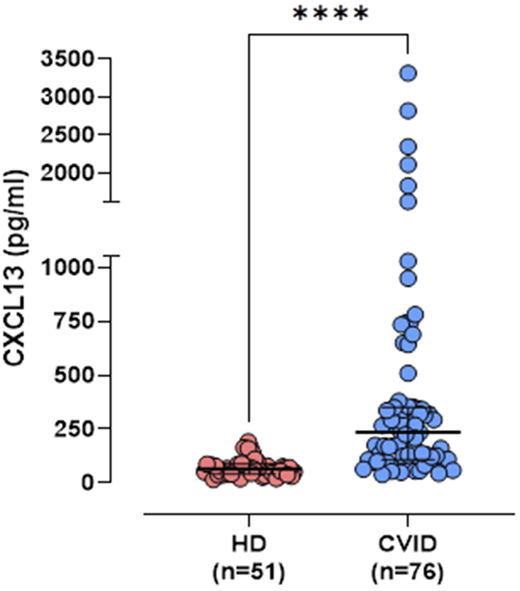
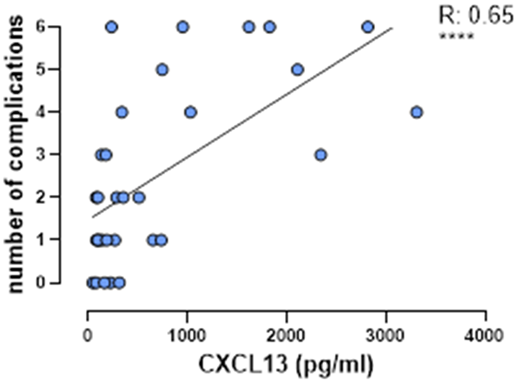
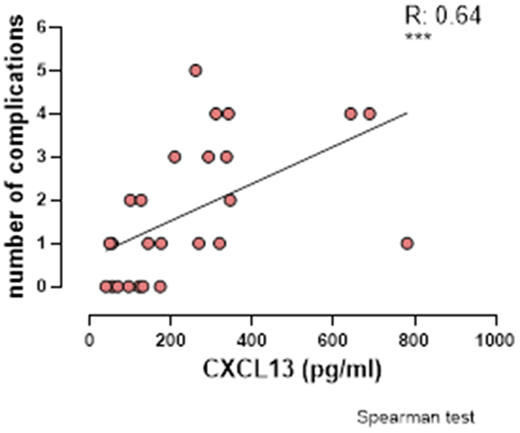
Common variable immunodeficiency (CVID) is a group of heterogeneous disorders with common denominators of impaired antibody production and function and recurrent infections. Currently, prognostic biomarkers for CVID are limited. CXCL13 is a critical regulator of germinal center responses and antibody production, with T follicular helper (Tfh) cells as a major source, and acts as a potent B cell chemoattractant. Serum levels of CXCL13 are increased in chronic inflammatory conditions and malignancy. We aimed to explore whether serum CXCL13 levels are altered in CVID and whether they can categorize the patients based on their clinical and immune phenotype. We compared the serum levels of CXCL13 between CVID and healthy donors (HD) and associated them with the clinical and immune phenotype of the patients. The serum levels of CXCL13 were higher in CVID, especially in female patients, as compared to HD, and were positively correlated with the number of clinical complications in CVID and the total peripheral circulating Tfh cells (cTfh). CVID patients with higher levels of CXCL13 were more likely to have clinical complications and/or a high frequency of CD21low B cells or low frequency of switched memory B cells. CXCL13 can stratify heterogeneous patients with CVID and serve as a biomarker for complex disease.