We describe two Turkish patients with tyrosine kinase 2 (TYK2) deficiency who experienced recurrent infections ranging from viral to bacterial and intracellular pathogens.
An 8-year-old male patient was first admitted as a 2-year-old with fever, fatigue, and recurrent draining cervical, inguinal, and axillary lymph nodes (Figure 1). He was the third child of first-cousin parents. He was vaccinated with Bacillus Calmette-Guérin (BCG) at the age of two months. At eight months, left axillary lymphadenopathy was detected. Serum IgE concentration was 115 IU/ml (N: 1.2-52 IU/ml). Histologic examination of his left axillary lymph node showed a positive staining for acid-fast bacilli. M. bovis BCG was isolated from the discharging cervical sinuses. The patient was treated with a regimen of isoniazid (INH), rifampicin, streptomycin, and pyrazinamide.
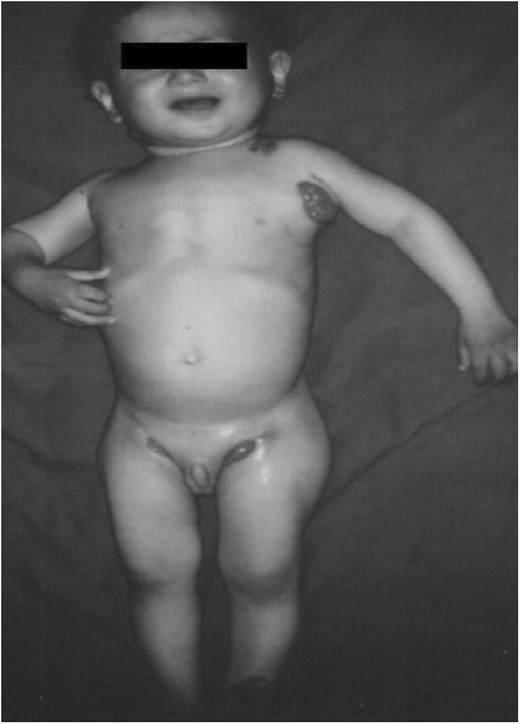
Disseminated BCGitis.
At eight years, he had brucella meningitis, and at 11 years, he suffered from herpes zoster of the right maxillary branch of the trigeminal nerve.
Genetic evaluation revealed a homozygous for a 9 bp deletion in exon 16 of TYK2, c.2302_2310del or 2302del9, which creates a premature termination codon at position 767. Informed consent for publication was obtained from the patient’s parents.
A 3-year-old female patient exhibited recurrent infections and oral candidiasis since early infancy. Febrile episodes are frequently accompanied by recurrent vesicular skin eruptions consistent with herpetic infections (Figure 2). The patient had a history of three hospitalizations due to bronchiolitis and pneumonia. She underwent a surgical correction for omphalocele when she was 5 days old.
The parents were cousins. Ig E level was: 570 IU/ml. Clinical exome sequencing (CES) identified a homozygous pathogenic variant in the TYK2 gene (p.Pro216ArgfsTer14). Intravenous immunoglobulin (IVIG) therapy was started every three weeks. Recurrent herpetic skin infections were treated with acyclovir. However, due to organ involvement and resistance to prophylactic valacyclovir, hematopoietic stem cell transplantation was planned. Informed consent for publication was obtained from the patient’s parents.
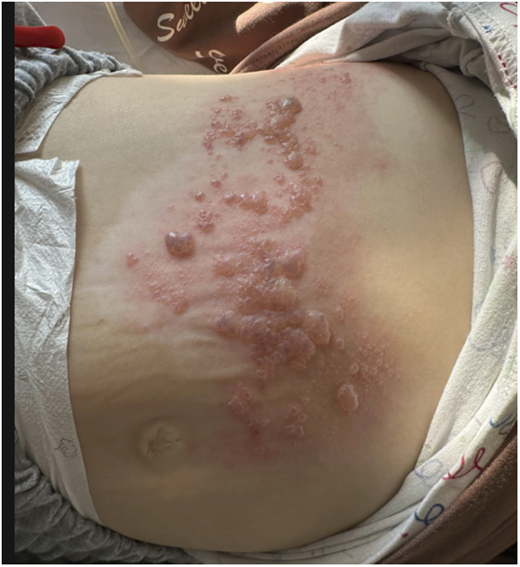
Vesicular eruption of case 2.
TYK2 plays a crucial role in cytokine signaling pathways involved in both innate and adaptive immunity, including those for IL-12, IL-23, IFN-α/β, IL-6, and IL-10.
TYK2-deficient patients typically present with intracellular bacterial infections, particularly mycobacterial infections, as well as viral infections. Some patients may also experience fungal infections, allergic diseases, and adverse events following BCG vaccination.