Dedicator of cytokinesis 8 (DOCK8) deficiency is a rare autosomal recessive combined immunodeficiency marked by severe atopy, recurrent viral and bacterial infections, high immunoglobulin E, eosinophilia, and lymphopenia. Although opportunistic infections may occur, central nervous system (CNS) involvement is uncommon, and susceptibility to Mycobacterium leprae has not previously been documented. We report the first recognized adult presentation of DOCK8 deficiency complicated by JC-virus encephalitis and biopsy-proven tuberculoid leprosy, representing an unreported infectious pattern.
A 21-year-old male came to clinical attention after two months of progressive neurological symptoms, including dysgraphia, dysarthria, headache, and right-sided ataxia. He had a background of long-standing but undiagnosed immune problems and severe atopy. MRI demonstrated T2/FLAIR hyperintense lesions in the pons and cerebellum, raising concern for rhombencephalitis. Cerebrospinal fluid showed lymphocytic pleocytosis with persistently positive JC-virus PCR. Immunological assessment revealed markedly low CD4 counts, low immunoglobulin M, raised immunoglobulin E and immunoglobulin G, and eosinophilia. Genetic testing confirmed compound heterozygous pathogenic variants in DOCK8, establishing the diagnosis at the age of 20.
A chronic nasal bridge lesion, originally nonspecific on biopsy, was resampled and showed granulomatous lymphohistiocytic inflammation consistent with tuberculoid leprosy. Screening for HIV and viral hepatitis was negative. The case was reviewed through a multidisciplinary approach, with continuation of antimicrobial prophylaxis and referral for assessment for hematopoietic stem cell transplantation (HSCT).
JC-virus infection of the CNS has been described in a small number of DOCK8-deficient patients but remains rare. Mycobacterial infection, usually tuberculosis, is reported infrequently in this condition. To date, leprosy has not been associated with DOCK8 deficiency and is more typically seen in defects affecting the interleukin-12/interferon-γ pathway. This case, therefore, widens the recognized infectious vulnerability of DOCK8 deficiency and illustrates that adult diagnosis remains possible despite longstanding symptoms.
This report underlines the need for early recognition of atypical infections in adults with suspected combined immunodeficiency and supports timely consideration of curative HSCT in DOCK8 deficiency.
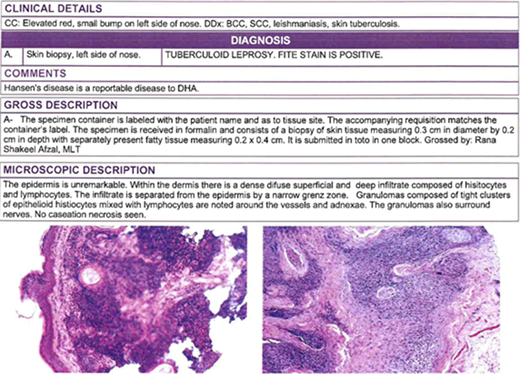
Histopathology report—FITE stain is positive.
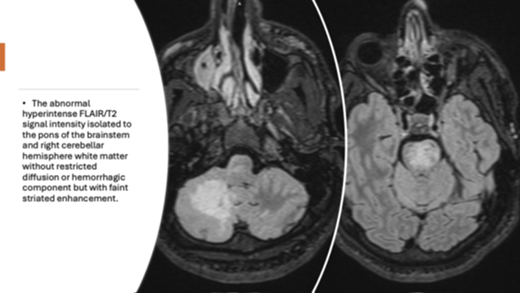
MRI scans demonstrating T2/FLAIR hyperintense lesions in the pons and right cerebellar hemisphere.
MRI scans demonstrating T2/FLAIR hyperintense lesions in the pons and right cerebellar hemisphere.
Reference