Looking back at 2023, it is a pleasure to see so much excellent science in the papers published in JGP. As well as articles submitted in the traditional way, we published others in Special Issues in areas including Excitation–Contraction Coupling (Dirksen et al., 2022), Mechanotransduction by Membrane Proteins (Goodman et al., 2023), Myofilament Function (e.g., Nelson et al., 2023; Tanner et al., 2023), Structure and Function of Ion Channels in Native Cells, and Macromolecular Complexes (e.g., Kriegeskorte et al., 2023). The last of these Special Issues is based on the 2022 Annual Meeting of the Society of General Physiologists (SGP). This is but one example of the active links between SGP and JGP. Another is the Junior Faculty Network which was relaunched last month under the mentorship of Janice Robertson (Washington University, St. Louis). In this program, a group of early career faculty who are setting up their first laboratory are mentored by a senior researcher. We are fully subscribed for this year, but applications for January 2025 will be announced later this year.
It is good to see that the return to in-person meetings following the pandemic has continued. It was a particular pleasure for JGP to highlight work done by early-career authors at a session at the Biophysical Society’s Annual Meeting. We heard excellent talks from Brooke Ahern, Fayal Abderemane-Ali, and Polina Lishko.
I would like to thank those colleagues who work tirelessly on behalf of JGP. Special mention should go to the Associate Editors (Henk Granzier, Chris Lingle, Joe Mindell, Jeanne Nerbonne, Crina Nimigean, and Eduardo Ríos) and to Meighan Schreiber, the Managing Editor, as well as the rest of the staff at Rockefeller University Press. I am also grateful to Olaf Andersen who, in his role as Consulting Editor, ensures that submissions from the editors are handled independently and fairly.
The continued success of JGP also owes an enormous amount to those of you who review papers. Many of our most active reviewers are members of the Editorial Advisory Board (EAB), and I would like to thank those members who are stepping down after completing their terms: Frances Ashcroft, Nancy Carrasco, Edwin Chapman, Heping (Peace) Cheng, Cynthia Czajkowski, Katherine Henzler-Wildman, Vascanthi Jayaraman, Youxing Jiang, Amy Lee, Joseph Metzger, Ruth Murrell-Lagnado, Geoffery Pitt, Stephan Pless, Benjamin Prosser, Indira Raman, Rajini Rao, Lucia Sivilotti, and Justin Taraska. It is a special pleasure to thank Fred Sigworth and Tsung-Yu Chen who have served for, respectively, 30 and 20 years.
We have appointed the following new members to the EAB: Hugues Abriel (University of Bern, Switzerland), Hailan Hu (Zhejiang University, China), Sara Liin (Linköping University, Sweden), Robyn Murphy (La Trobe University, Australia), and Han Sun (Technical University of Berlin, Germany). Details of their research and backgrounds can be found here, and the Associate Editors and I look forward to interacting with them all.
As we enter 2024, in a competitive environment for journals, we are determined that JGP should continue to be an attractive destination for high-quality submissions. Since 2023, there have been no publication charges for authors who do not require Open Access for 6 months, and the fee for immediate Open Access has been reduced to $2,000. Please contact me or one of the other editors if you want to discuss a potential submission.
I would like to end by wishing all our authors, reviewers, and readers a happy and productive 2024.
New EAB members
Hugues Abriel

Hugues Abriel completed his life sciences education at the Swiss Federal Institute of Technology in Zurich in 1989 and earned his M.D. from the University of Lausanne, Switzerland, in 1994. He obtained his Ph.D. in physiology in 1995. Afterwards, Abriel spent 2 years conducting research at Columbia University in New York. Since 2016, he has been a Professor of Molecular Medicine at the Institute of Biochemistry and Molecular Medicine at the University of Bern. He was a member of the Swiss National Science Foundation Research Council from 2012 to 2020 and chaired the Biology and Medicine division for 2 years. He is the vice-rector for research at the University of Bern and an executive board member. His research focuses on ion channels and their role in human channelopathies, with a specific interest in cardiac arrhythmias’ genetic, molecular, and cellular aspects. For over a decade, Abriel has collaborated with geneticists and physiologists from Africa, emphasizing the importance of recognizing and integrating African academic contributions into global research. Recently, he began working with African colleagues to explore the numerous unresolved questions related to cystic fibrosis in African populations. Photo courtesy of Annette Boutellier.
Hailan Hu

Hailan Hu is Professor and Director of School of Brain Science and Brain Medicine at Zhejiang University. She received a BA in Biochemistry from Beijing University and a Ph.D. in neuroscience with Corey Goodman from UC Berkeley. After a postdoc training with Roberto Malinow at Cold Spring Harbor Laboratory, she joined the faculty of the Institute of Neuroscience, Chinese Academy of Sciences. Since 2015, she has been Professor at Zhejiang University. Her laboratory seeks to understand how emotional and social behaviors are encoded and regulated in the brain, with a main focus on the neural circuitry underlying depression and social dominance. Her team has identified the neural mechanism underlying the winner effect, by which individuals increase their chance of winning after previous victories. Her recent work has uncovered a new model to explain the etiology of depression and the rapid antidepressant actions of ketamine, involving NMDA receptor-dependent burst activity of lateral habenular neurons. Her work has led to the identification of several new molecular targets, including the βCaMKII, T-type calcium channel, and glial Kir4.1 channel, for developing new antidepressant drugs. She is a recipient of the IBRO-Kemali International Prize and the L’Oreal-UNESCO for Women in Science International award. Photo courtesy of Hailan Hu.
Sara Liin

Sara Liin earned her doctoral degree under the direction of Dr. Fredrik Elinder at Linköping University in Sweden, where she used electrophysiology to study fatty acid modulation of the Shaker voltage-gated potassium, Kv, channel. She conducted postdoctoral research at University of Miami under the guidance of Dr. H. Peter Larsson, where she learned to combine fluorescence and electrophysiology to study the gating and modulation of human Kv7.1 channels. She moved back to Sweden for a brief combined postdoctoral training at Linköping University and Stockholm University, Sweden, guided by Dr. Erik Lindahl, focusing on computational approaches to study Kv channels. Dr. Liin is now an Associate Professor at the Department of Biomedical and Clinical Sciences at Linköping University, Sweden. Her group investigates molecular mechanisms of how Kv7 channels are modulated by endogenous factors and can be pharmacologically targeted. Moreover, she has an interest in understanding how inherited mutations in the genes encoding for Kv7 channels impact endogenous and pharmacological effects. Photo courtesy of Erik Thor.
Robyn Murphy

Robyn Murphy is a Professor and Deputy Dean in the School of Agriculture, Biomedicine and Environment, La Trobe University, Melbourne, Australia. After a Ph.D. at Deakin University, Melbourne, she joined the Muscle Cell Physiology group at La Trobe University under the mentorship of Professors Graham Lamb and George Stephenson. She was awarded a Peter Doherty Early Career Research Fellowship by the National Health and Medical Research Council of Australia, following which she began her tenured academic position with La Trobe University. Robyn’s research is in the area of skeletal muscle in health and disease, and she has published over 110 research articles in areas of calpains, calcium regulation, glycogen, and AMPK, predominantly in skeletal muscle. She pioneered single muscle fiber Western blotting, now being referred to as calibrated Western blotting, allowing muscle heterogeneity to be addressed quantitatively with respect to protein abundances. Her research brings together physiology and biochemistry at the cellular level. Photo courtesy of La Trobe University.
Han Sun
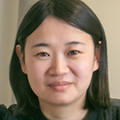
Han Sun is an Associate Professor at the Leibniz Institute for Molecular Pharmacology (FMP) and the Technical University of Berlin, Germany. She earned her diploma degree (equivalent to a Master’s degree) in chemistry from the University of Göttingen, Germany, in 2009. She pursued her Ph.D. studies under the supervision of Christian Griesinger at the Max Planck Institute for Biophysical Chemistry in Göttingen, training as an experimental nuclear magnetic resonance (NMR) spectroscopist. During this period, she developed a growing interest in protein dynamics and computational biophysics. After completing her Ph.D., she joined Bert de Groot’s group at the same institute, where she delved into molecular dynamics and developed a passion for ion channels. In 2015, she transitioned to the FMP and started to combine her expertise in computational simulations, NMR spectroscopy, and drug discovery in her research on ion channels and membrane proteins. Currently, she is focusing on using large-scale molecular dynamics simulations to study ion permeation, selectivity, gating, and the pharmacological modulation of potassium-selective and nonselective cation channels. Photo courtesy of Technical University of Berlin.