Happy New Year to all of JGP’s authors, reviewers, and members of the Editorial Advisory Board. I hope that 2025 will bring you both personal happiness and scientific fulfilment. We are grateful to you all for contributing to the success of the journal. I would also like to acknowledge the dedication of the Editors (Henk Granzier, Chris Lingle, Joe Mindell, Jeanne Nerbonne, Crina Nimigean, and Eduardo Ríos) and of Meighan Schreiber, the Managing Editor, as well as the rest of the staff at Rockefeller University Press. Thanks are also due to the Consulting Editor, Olaf Andersen, for his care in ensuring that manuscripts from the Editors, or where there are other conflicts, are handled fairly and independently.
In recent years, it has become fashionable in some quarters to deride the peer review system. My experience at JGP is that peer review usually works well. The vast majority of referees’ reports show careful consideration of the manuscript. Having read the paper, the handling editor leads the discussion at our weekly editors’ meeting, and a final decision is taken by the group of editors, based on the reviewers’ and editors’ opinions. This meeting is one of the highlights of my week, and I have learned an enormous amount of science outside my own research area by participating. Of course, there are alternatives to peer review, but I would not like to move to a free-for-all where all of science is simply posted on a website. It is already an impossible task to keep up with the literature that I want to read, and I am grateful that peer review provides a filter.
The new year is the time to thank departing members of the Editorial Advisory Board for their services and to welcome new colleagues. We are grateful to those who are stepping down: Jianmin Cui, Rachelle Gaudet, Ulrik Gether, Ryan Hibbs, Cecilia Hidalgo, Yasuko Ono, Jennifer Pluznick, and Jolanda van der Velden. It would particularly like to thank Tzyh-Chang Hwang for his 20 years of service.
It is a particular pleasure to welcome the following new members to the Editorial Advisory Board: Elisabetta Brunello (King’s College London), Kathy Engisch (Wright State University), Marcel Goldschen-Ohm (University of Texas at Austin), Christian Jorgensen (University of Portsmouth), Godfrey Smith (University of Glasgow), and Wandi Zhu (Ohio State University). Details of their backgrounds and research can be found below.
New Editorial Advisory Board members
Elisabetta Brunello
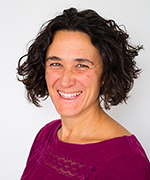
Elisabetta Brunello is a lecturer in physiology at the Randall Centre for Cell and Molecular Biophysics, King’s College London, London, UK. After an undergraduate degree in Physics at the University of Turin (Turin, Italy), she joined the laboratory of Professor Vincenzo Lombardi at the University of Florence (Florence, Italy) for a PhD in Physiology to study the structure–function relationship in skeletal muscle using small-angle X-ray scattering. She continued her studies on skeletal muscle with a postdoc at the Randall Centre at King’s College London in the laboratory of Professor Malcolm Irving, where she learned another structural technique, time-resolved fluorescence polarization. She was awarded a FIRB-Future in Research fellowship at the University of Florence, and, at the end, she moved back to London first as a Research Career Establishment Fellow at the British Heart Foundation Center of Research Excellence at King’s, then as a British Heart Foundation Intermediate Basic Science Research Fellow at the Randall Centre. Her research focuses on the dynamic control of muscle contraction at the cellular and subcellular level, in particular on the novel dual-filament regulation by the thick myosin-containing and thin actin-containing filaments. The techniques used in the lab combine mechanical protocols at the sarcomere level and time-resolved structural techniques (small-angle X-ray scattering and fluorescence polarization) to study dynamic structural changes in the myofilaments and the myosin motors in beating heart muscle cells or demembranated heart samples. Photo credit Luca Fusi.
Kathy Engisch
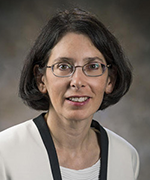
Kathy Engisch is in the Department of Neuroscience, Cell Biology, and Physiology at Wright State University in Dayton, OH, USA. She earned her doctoral degree under Dr. Gerry Fischbach at Washington University in St. Louis, MO, USA. During a postdoctoral fellowship with Dr. Brad Alger at University of Maryland, Baltimore, MD, USA, she developed Ca2+-buffering conditions that preserved the slow AHP Ca2+-activated K+ current in whole-cell recordings of CA1 hippocampal neurons in acute slices. After working with Dr. Martha Nowycky at Medical College of Pennsylvania–Hahnemann University, where she studied the Ca2+ dependence of exo- and endocytosis in bovine adrenal chromaffin cells using capacitance measurements, she began her faculty career at Emory University. Later, she joined Wright State University as part of an effort to grow neuroscience research at the Boonshoft School of Medicine. Her work has focused on the small GTPase Rab3A as a modulator of vesicle fusion. After a stint in administrative positions, including interim dean of the College of Science and Mathematics, she has returned to the lab to study the role of Rab3A in homeostatic plasticity of miniature synaptic current amplitude. As part of this work, she has become interested in how to determine the mathematical transformation of a treatment/experimental manipulation on the distribution of mini current amplitudes. Photo courtesy of Wright State University.
Marcel P. Goldschen-Ohm
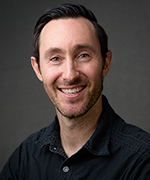
Marcel Goldschen-Ohm is an assistant professor in the Department of Neuroscience at the University of Texas at Austin, TX, USA. After earning his PhD in the lab of Mathew V. Jones working on GABAA receptor biophysics, he studied voltage- and ligand-gated ion channel gating mechanisms as a postdoc under the mentorship of Baron Chanda at the University of Wisconsin, Madison, WI, USA. Thereafter, he started his own lab in the Department of Neuroscience at the University of Texas at Austin. He has also served in editorial roles for several journals. Marcel’s research combines electrophysiology with fluorescence imaging and noncanonical amino acid substitution to investigate ion channel biophysics and mechanisms of small molecule regulation. He pioneered new approaches for optically resolving ligand-binding events at single channels, enabling resolution of the dynamics of early electrically silent binding events that drive channel gating. Recently, he has shed light on functional asymmetry between subunits during binding–gating coupling in GABAA receptors. Photo courtesy of the Department of Neuroscience at the University of Texas at Austin.
Christian Jorgensen

Christian Jorgensen is an assistant professor at Portsmouth University in the UK. He received an MChem in Chemistry from the University of Oxford and a PhD in Chemistry from King’s College London. In 2018 he moved to Johns Hopkins University in Baltimore, MD, USA at the Institute for NanoBioTechnology to work on a computational model of the blood–brain barrier under the mentorship of Prof. Peter Searson. He later moved to Washington, DC, for a second postdoc at Georgetown University with Prof. Peter Olmsted, working on multilayer membrane simulations as well as permeability calculations by the Green-Kubo equations. In 2022, he was awarded a Marie Skłodowska-Curie Fellowship by the European Commission to work on computational modelling of the human brain lipidome at Aarhus University in Denmark, in the group of Prof. Birgit Schiøtt. Since 2024, Dr. Jorgensen is an assistant professor of pharmacy at Portsmouth University, Portsmouth, UK. His group builds novel blood–brain barrier models for widespread screening of small molecule brain penetration, with a particular focus on the mechanism, the permeability, and the development of predictive machine learning models. Photo courtesy of the Biophysical Society.
Godfrey Smith
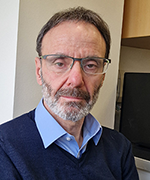
Godfrey Smith (PhD, Glasgow 1983) is a professor of cardiovascular physiology and Director of Innovation, Engagement, and Enterprise (Cardiovascular & Metabolic Health). He held postdoctoral research positions in the Department of Biophysics, University of Texas Medical Branch, Galveston, Texas, USA and the Department of Physiology, University College London. He obtained a tenured academic position at the University of Glasgow in 1989 and was appointed professor of cardiovascular physiology in 1998. He is a member of staff at the Institute of Cardiovascular and Metabolic Health and currently Director of Innovation, Enterprise, and Engagement. He has served on several national and international committees and editorial boards, including the Physiological Society, Biophysical Society, and the European Society of Cardiology (ESC). Godfrey was president of the ESC working group on Cellular Cardiac Electrophysiology (2014–2016). He was awarded the G.L. Brown Prize Lecture (Physiological Society 2005–06) and recently gave the Carmeliet, Coraboeuf, and Weidman Lecture (ESC 2024). In addition to his tenured position at the University of Glasgow, he held a Professor II position at the University of Trondheim, Norway (2006–2021), was awarded an honorary professorship an Imperial College London in 2012, and has recently been appointed as a Senior Researcher at the Institute for Experimental Medical Research at Oslo University Hospital. He was made a member of the Academia Europaea in 2023.
Godfrey Smith’s academic research concerns the cardiac excitation–contraction process and the control of intracellular calcium in health and disease, focusing on mechanisms of contraction failure, small molecule modulators of Ca2+ signaling, and the electrophysiological basis of cardiac arrhythmias. This work has resulted in over 200 publications in peer-reviewed journals. Over the past 20 years, his research group has pioneered the application of novel biophysical techniques to assess cardiac electrophysiology within the ventricular wall, including combined wide-field and multiphoton imaging techniques. In 2012, he and his colleagues at Glasgow University formed a spinout company (Clyde Biosciences Ltd.), he is currently an executive of the company, a board member, and honorary Chief Scientific Officer. The company sells instrumentation and a service for medium throughput cardio-toxicology studies of the effect of drugs on the excitation–contraction coupling process in cultures of human-induced pluripotent stem cell–derived cardiomyocytes. This experience and the associated commercial research work lead to his appointed as co-chair of the Stem Cell subgroup of the Cardiac Safety Committee of the Health and Environmental Sciences Institute (USA) in 2021. Photo courtesy of Godfrey Smith.
Wandi Zhu
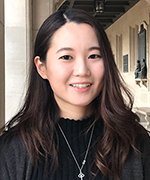
Wandi Zhu is an assistant professor in the Department of Molecular Medicine and Therapeutics at the Ohio State University College of Medicine. She earned her PhD in Biomedical Engineering from Washington University in St. Louis, where her thesis, mentored by Dr. Jonathan Silva, examined the impact of genetic variants and NaV channel accessory subunits on Class-Ib drug interactions with the cardiac NaV channel. After a brief work experience at Genentech, Inc., where she worked in Dr. Jun Chen’s group on high-throughput electrophysiology platforms, Wandi pursued postdoctoral training in Dr. Calum MacRae’s lab at Brigham and Women’s Hospital. There, she developed human blood phenotyping platforms to identify genetically determined latent blood traits, which were used to stratify risks for various common complex diseases. Wandi’s current research focuses on studying electrical and mechanoelectrical signaling in both excitable and non-excitable cell types, including cardiomyocytes, endothelial, and blood cells. With expertise in bioengineering, electrophysiology, hematology, and genetics, her group uses interdisciplinary approaches to investigate the intricate interplay between mechanoelectrical signaling and other cellular processes, aiming to identify novel therapeutic targets for cardiovascular and inflammatory diseases. Photo courtesy of Runjia Wang.